Since the beginning of statehood, Californians have pursued education at a steep cost to produce a free society in the frontier along the Pacific Ocean.
Isbell filled the roles of founder, principal, and teacher and valiantly provided the children an education and respite from the hostilities around them—not because the state required it, but because the children needed it. Her legacy challenges the narrative that only government can create schools and ensure children are educated.
This vision allowed churches and other charitable organizations to build our first “public” schools. In most communities, these schools were a true private-public partnership and were open to nearly everyone in the community, including those who couldn’t pay basic tuition.
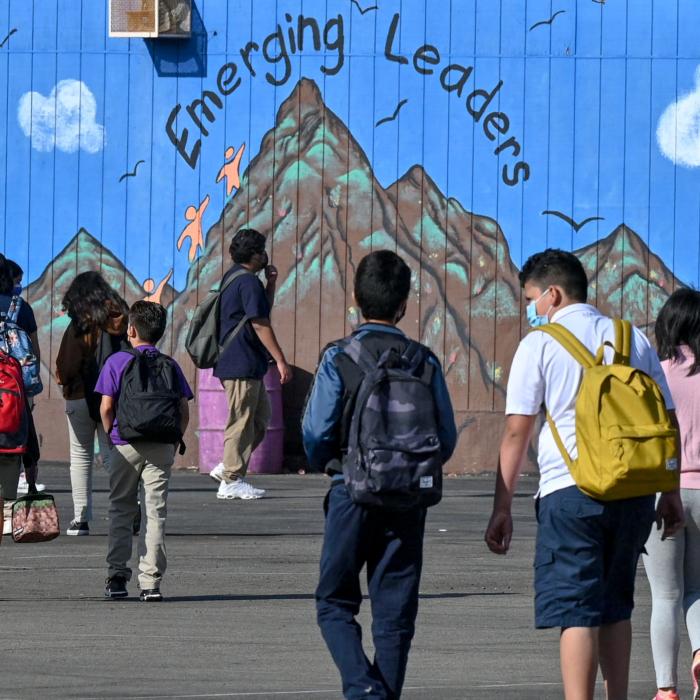

California’s compulsory education laws continued to expand without regard for its ability to provide an adequate education for every child. By 1903, the law covered more ages, and by 1961, it required all children ages 6 to 18 to attend school or face penalties. What started as a modest encouragement to keep children from being exploited as laborers became a legal obligation enforced by truancy officers, fines, and even jail time, effectively replacing parental discretion with government compulsion.
Education Begins in the Home
Looking at the status of our government-provided public schools now and the failure they’ve become for millions of students over the last few generations, it’s time to reconsider state laws that require or compel education at the threat of imprisonment. Putting aside the poor argument from government school boosters and teachers’ unions that parents are capable neither of educating their children nor of finding a suitable academic pathway for them, eliminating compulsory education laws does not mean that government warehouses for children will cease to exist; rather, it means that we’ll send fewer parents to court to justify their preference for not sending their children to schools that are dangerous and academic failures.This shift was paired with the creation of hundreds of new school districts across the state and, eventually, an expansive Education Code that is tens of thousands of pages long, designed not to guide but to control every aspect of education from preschool through adulthood.
California School Rankings
Despite nearly universal attendance and a public school system that consumes more than 40 percent of California’s state budget, student outcomes are abysmal. Reading and math proficiency have flatlined—or declined. California ranks near the bottom nationally in literacy. Even before the pandemic shutdowns, more than half of our high schoolers couldn’t read or do math at grade level. Afterward, outcomes continued to decline.The broken promises of compulsory education have led many parents to opt out of the government-run system. Homeschooling numbers have surged. Microschools have become a thing. Private schools remain in high demand, even as tuition rises. Despite constant political attacks and threats of elimination by the teacher-controlled Legislature, charter schools are thriving as a middle ground between government control and parental choice.
To quote from the opinion: “Parents are not being asked simply to forgo a public benefit. They have an obligation—enforceable by fine or imprisonment—to send their children to public school unless they find an adequate substitute. And many parents cannot afford such a substitute.”
State-Sponsored Monopoly
The uncomfortable truth is this: We cannot fix a system that was built on faulty assumptions. We can’t reform our way out of a structure designed to limit choice, stifle innovation, and enforce one-size-fits-all solutions on millions of unique children.Public schools may still play a role as a safety net for families who need them, but they should no longer operate as a state-sponsored monopoly. We don’t mandate that every family use a single government food line or shop at assigned state-run clothing stores. We let families decide what works best for them. Why should schooling be any different?
As the appetite for more control over our children has increased, but the value being offered has decreased commensurately, it’s time to review our collective fascination with perpetuating mandatory government school attendance.
Ending compulsory education doesn’t mean ending education. It means trusting families to take ownership of how, when, and where their children learn. It means giving parents—not bureaucrats—the final say. It means shifting from a top-down mandate to a bottom-up model of accountability, choice, and opportunity.
Some will argue this is radical. But what’s truly radical is continuing to force children into a system that fails them academically, socially, and morally while punishing families who dare to choose a different path. It’s not enough to offer alternatives at the margins. We must dismantle the assumption that the state knows best.
Returning to Isbell’s success as a renegade teacher is to be commended. The formalized education project that would eventually grow out of her and others’ efforts, mixed with a progressive Prussian model of putting children on a conveyor belt to produce efficient economic automatons, is understandable, but regrettable. It eventually led the way to a regime of compulsory education laws that have incrementally deprived parents of rights and responsibilities over their own children and have led to poor academic outcomes.
It’s time to end compulsory education. Let families lead. Let communities support. We need more renegade parents to let a thousand forms of learning flourish.