Patience doesn’t quite describe it. They put one hoof in front of the other at slow tempo as if doing a job. It creates a kind of parade, each with attentive eyes and purposeful deliberation. They are headed to eat on rich and gorgeous pastures that look today probably like they looked two centuries ago.
The dairy manager knows most of the two dozen cows headed out by name, as if each has a distinct job and personality.
The scene is beautiful. Would that we all worked this way, not in a rush but with determination and undistracted purpose. It occurred to me that I could learn from how these cows go about their business.
One point amuses me. Cows have a problem with common house flies, as one might imagine. When you are barbecuing outside or at a picnic, you know that beef attracts them and you have to keep shooing them away. Imagine if the whole of your body were one big hamburger. This is the cow’s plight.
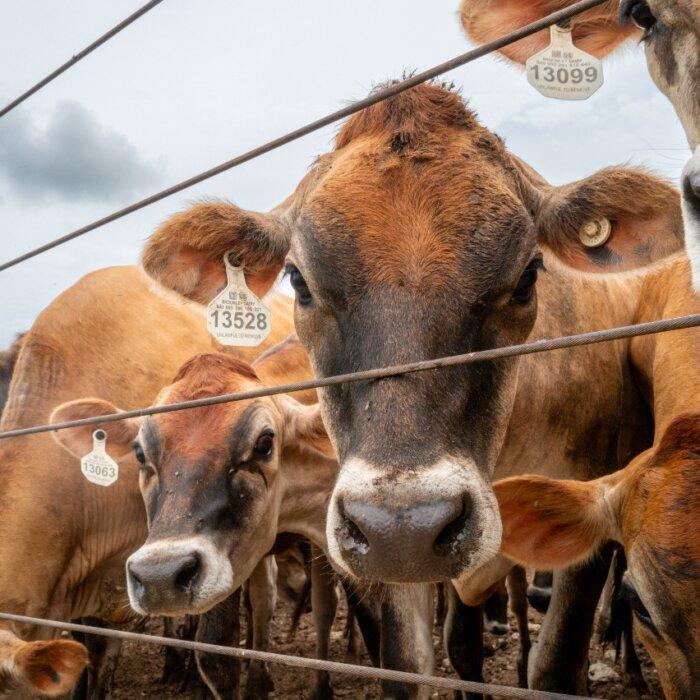
Cows seem to be annoyed by flies so they are always shaking them off their heads. It’s a pointless undertaking because they come back instantly and the cow has to do it again. It’s pretty funny to me because each time there is a look in their eyes as if the situation were an aberration and the head shaking move will fix it. It never does. This is the cow’s whole life.
Closer to the barn are the calves who are just the friendliest, warmest, and most charming animals. Leaning over the wall, they like to walk over to you and get a nice head scratch or pat on the neck. I was startled the first time one wrapped his long sticky tongue around my hand with affection in hopes of tasting something interesting.
The dairy has a total of 75 cows in various rotations. These are the summer months so the barn is used for other purposes. That evening there was a Shakespeare performance of “A Comedy of Errors” by a local theater group. There were perhaps 150 people there to laugh and cheer. On other nights, there are concerts of chamber music.
The acoustics remind me of the best chapels of Europe. If you stand right in the middle and sing straight up, a funnel of sound appears and bounces right back at you. I have no idea how this works. Even the architect said he had not planned that.
In a few months, the stage will be removed and the barn will become the winter home as the hay substitutes for the green grass they enjoy in season.
The milking of cows never stops. It cannot. The locals rely on this farm for fresh milk daily plus the many cheeses are legendary. The farm cheese is addictive. I cannot get enough of it. The more specialized cheeses are stunning.
The signature item is the milk that sells out daily. Once you get used to real milk—not homogenized, not pasteurized—it is hard to go back to the stuff you buy at the store. It tastes like a watery industrial product.
This is why people pay extra for the real deal. People here even talk of the “milk cure,” a full week or two or more of just drinking milk. Compelling.
This whole valley is a place where you can live a wholly organic life, with garden vegetables and meat for sale on small farms in all directions.
Spending the day at Churchtown and driving around would lead one to believe that the small farm is thriving. It’s not true. They are in grave danger of extinction.
In 1934, there was a counting done of how many dairy farms there were in this country. The numbers came in at 5.2 million. The collapse from then through the 1990s to today has been precipitous, with only 25,000 remaining. The combination of high costs, taxes, and subsidized consolidation has created a catastrophe for the small dairy even as milk production has soared.
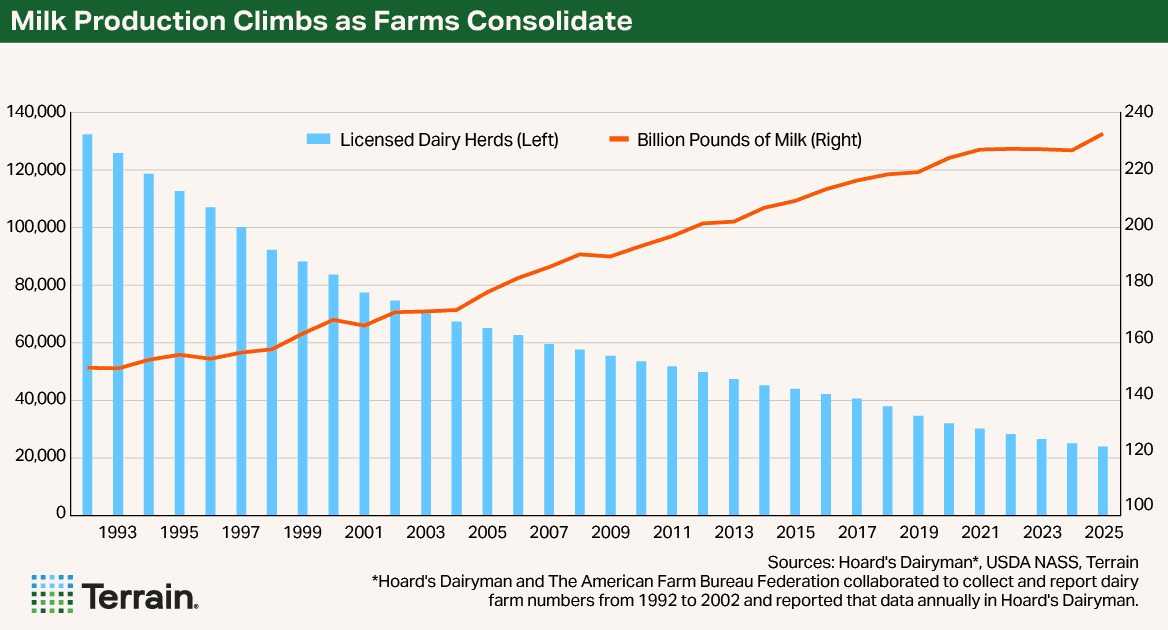
Sure, there is plenty of milk. The problem is that mentioned above. Once you taste real milk, the industrial product called milk that you buy at the store does not measure up. The health and medical issues are not my area but people swear by the “raw” version that you get at Churchtown. I’ve heard many stories of near-miraculous healings that come from this product. Intuitively, this makes sense to me. You feel it in your bones, as it were.
The best and most famous part of this dairy I’ve not mentioned. It’s the barn itself, which is a singular architectural achievement. Designed by Rick Anderson, who is clearly a genius, the barn is 80 feet in diameter and features a score of 36-foot tall pine columns. The dome is itself astonishing, even cathedral-like in its majesty.
For ventilation, there are these shutters that seem like gills on a fish and they circle the entire barn. To see them all open and shut at once feels like a trick of digital synchronization or artificial intelligence. It’s not. There is a wooden handle with a wood lock. Move the lock and lift up the handle. It’s connected to tight wires that spool up and over. Up and down, closed and opened—I kept playing with the system and marveling at its simplicity and effortless functionality.
You find things like this all over the property. Anderson designed and built it all from the creamery to the farm store to the welcome center to the greenhouse and the guest house, all made from reclaimed material from an 1839 New Hampshire farmhouse. The place takes one’s breath away.
The toilet system on the entire property is based not on flushing but composting. The idea was brought over from Sweden by the dairy’s founder Abby Rockefeller. She became the leading proponent of the idea. Implausibly, I’m a big convert myself. It seems cleaner and just makes more sense than traditional systems of sewage. Designed for agricultural life, it embraces the lifecycle of waste to compost to healthy soil to good food.
Composting became a passion of hers and this farm allows her to combine that with another family interest. Her great-grandfather John D. Rockefeller experienced a remarkable recovery on a raw milk diet when conventional medicine had failed him, a point discussed in the best book on the entire subject called “The Germ in the Dairy Pail.”
Another feature of this property is beauty, which you find in this glorious integration of innovative architecture rooted in tradition plus flowering and herbal gardens plus the world’s most fortunate dairy cows living a happy life in this idyllic and bucolic setting.
Only 10 years old, Churchtown Dairy has become essential to the life of this community, as one can observe from the constant stream of cars and foot traffic that come for the farm store and stay just to take it all in.
A theme of our times is the evident brokenness of the systems that we believed were so modern and invulnerable because they are based on the best science. The last six years have revealed otherwise. The experts have been wrong. The systems are broken. The mechanisms of food, medicine, government, culture, and society seem to have collapsed all at once.
We are discovering myriad problems related to the health and well-being of these consolidated and highly industrialized cartels. We are all being called to rediscover truths left behind. None of this has anything to do with left and right. These concerns over industrialization and the call toward organic and regenerative ways have roots in the left but now they are more associated with the right, as if any of this matters much.
It’s not really about politics at all. It is about rediscovering what is true in a world dominated by systems that lied to us all. It takes vision and hard work to restore what’s been lost in ways that genuinely serve the community. Imagine a place where architectural excellence, animal husbandry, community service, and aesthetics all work together. This is what Churchtown Dairy is achieving daily. It gives us a rare and living look at what life was like and what it can be again. You can read about it in history books or see it all working again in our times.