This is the age of science. We are led by facts and data, not faith and superstition.
That’s what we’ve been told for centuries. And mostly we have believed it. We have good medicines, tremendous technologies, and instant information about everything. This is the product of science.
And yet, every orthodoxy is subject to abuse when it is no longer questioned. This is what we’ve experienced for some years now. When the scientists come along with schemes to change our lives in ways that contradict intuition, we are right to question them.
It does not matter how many times we are told that the “science is settled”; we should still not give up the use of our own rational faculties, in case there might be some funny business going on.
This weekend presented me with an incredible example of just such a thing. To understand it requires us to travel back to June. A newly formed committee was meeting to consider the efficacy and safety of various products being pushed by industry on the Centers for Disease Control and Prevention (CDC) and the Food and Drug Administration. The committee is called the Advisory Committee on Immunization Practices. It is served by various other committees from the CDC.


This hearing might have been the most watched in history simply because the technology is available, and also everyone was curious how the new committee would operate following the summary dismissal of the entire old committee.
Among other products, the committee considered and voted on a new RSV monoclonal antibody for babies made by the company Merck. It seemed to be a new version of an already approved drug, so controversies were expected. The CDC threw around some data and assured the committee that all was great.
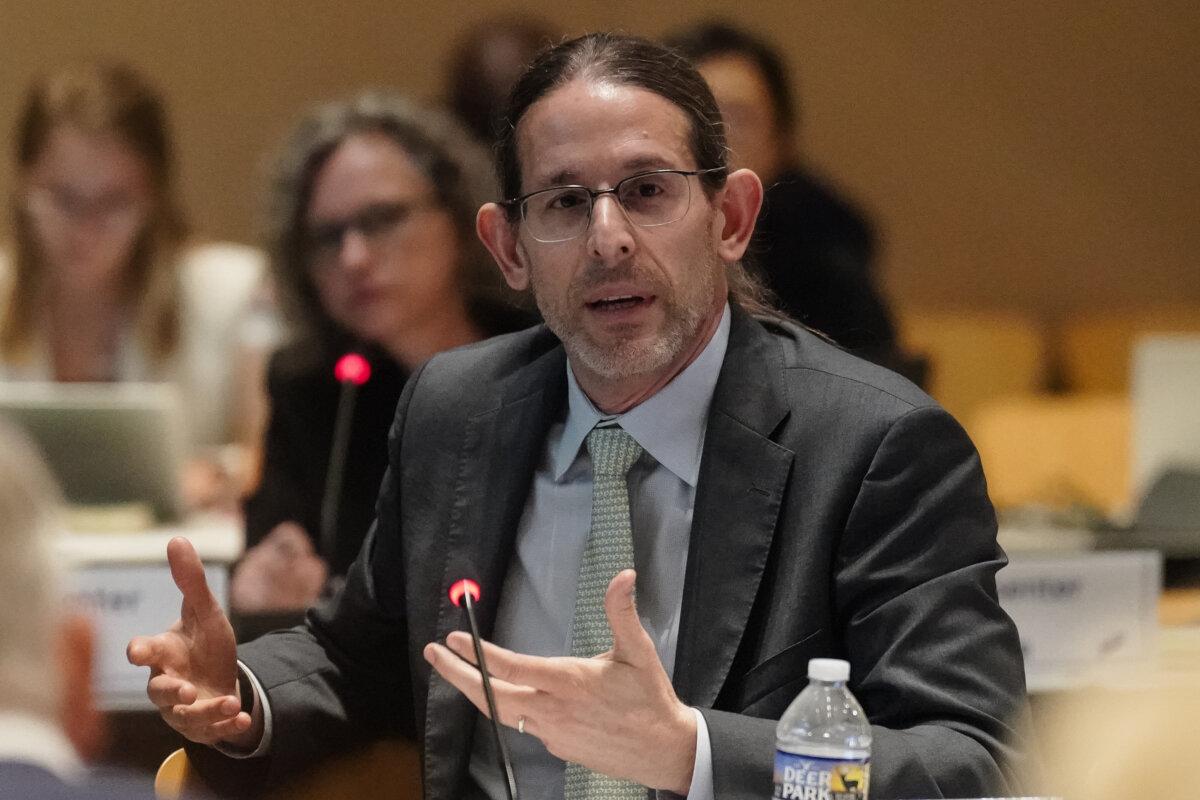
One member, however, raised some questions. Retsef Levi of MIT had noted some unusual safety signals in the data. He had not had time to look carefully but expressed reservations. He spoke in very human terms that he would not be entirely comfortable giving this drug to his own child. As a result, he voted no. He was joined by one other member, but it was not enough to stop passage.
Months have gone by, and outside experts have had a chance to examine the post-market safety data more carefully. The journalist Maryanne Demasi discovered a serious anomaly that was so deeply buried that it was easily overlooked. The data show no significant signal among groups of tests divided between babies aged zero to 37 days and babies aged 38 days to younger than 8 months.
Sounds boring, right? That is precisely what the company and the CDC committee hope you will think. But actually, if you pool the exact same data, you get different results.
There’s another problem, too. They used a nonvariable risk window, counting seizures only in the first week after injection (days zero to seven) and treating the following two weeks (days eight to 21) as a “control” period. If the seizure happened on the eighth day, it was treated as unrelated.
Between the two, the study cited as proof that the treatment was fine was essentially bogus. Retsef’s intuition was exactly correct. But now it is too late. The CDC has already signed off on the drug, and millions of babies will receive this on the promise that it protects against RSV, when, in fact, it might be unsafe.
Astounding, isn’t it? You only need to discover one of these incidents to raise profound questions about the whole, including the merchants who are making drugs, running tests, and pushing them on agencies they partially fund, and also the committees that are serving these outside advisory groups.
You get the impression of a system that is locked up at all ends, without any real accountability.
What gets my goat is how these companies and agencies are abusing public trust in science. When the numbers are flying at us from credentialed and high-paid people with erudition, we don’t feel qualified to contradict them. Also, we assume they will have an answer for everything, and then we’ll feel dumb.
I began to notice this during the COVID-19 period. Thousands of studies were being tossed around that so happened to accord perfectly with the advice being issued by public health authorities.
I learned over time to spot obvious problems.
The first problem is modeling. This is easiest to spot. Models are constructed with certain assumptions built in. They are then run with large numbers, and the implications are traced out. But all of this is subject to the old problem of garbage in and garbage out. You can reject all of this out of hand.
The second problem is subject bias. This is an interesting case of using a study group that is more likely than the control group to engage in the behavior that is being tested. For example, you might conclude that a certain treatment is effective based on how a certain population receiving it is healthier than the population that did not. But it might be the case that the treated group simply cares for their health more in general, while the control group does not.
A third problem is the time period bias. Researchers can manipulate the start dates to keep away results they don’t like. For example, a major study came out last year that associated less stringent lockdowns with more deaths. I didn’t believe it, so I took a second look. As it turns out, the dating of the study excluded a period in which the most deaths occurred in the most locked-down states.
A fourth problem confuses correlation with causation, an amateur error but one that is extremely common. If I told you that eating caviar and drinking champagne would make you rich, you would immediately see that I had made a mistake. But if I said that drinking red wine improves your heart condition, would you still see the error?
The fifth problem is biased data assembly, as in the case of the monoclonal antibody study. The researchers clearly divided up test groups to get the results they wanted. Reassemble the data differently, and you get entirely different results that indicate serious problems.
These are just some of the ways science is abused. There are many more. These problems all result from the way in which our cultures have come to be impressed and intimidated by anyone with a credential claiming to fling around high-level data.
How much of “the science” is actually fake? We don’t really know. Is it any wonder that so many people have lost trust? We talk about the Age of Science, but is it really? Or is this just an age in which we are encouraged to let go of critical thinking skills in favor of deference to experts?
We need not be against science. We need more skepticism toward all the ways in which science is being abused.