Every day, I sit down in front of a camera or my computer, trying to communicate something to the world. I do it on Instagram and through the articles I write.
And almost every day, someone asks the same question.
“Mollie, what’s the solution?”
It’s a fair question. I spend a lot of time pointing out the cracks in the system. I write about disappearing farms, policies that hurt producers, drought, debt, regulation, and consolidation. Again and again, I try to explain how our food system is drifting further and further away from the land that sustains it.
Sometimes, when you are living inside a system that is breaking down, it can begin to feel almost like a plan—a slow demolition of the world you love and believe is important. Farms disappear. Ranches consolidate. Policies stack up. Those of us still working the land find ourselves shouting from hilltops, trying to explain what is happening before it is too late.
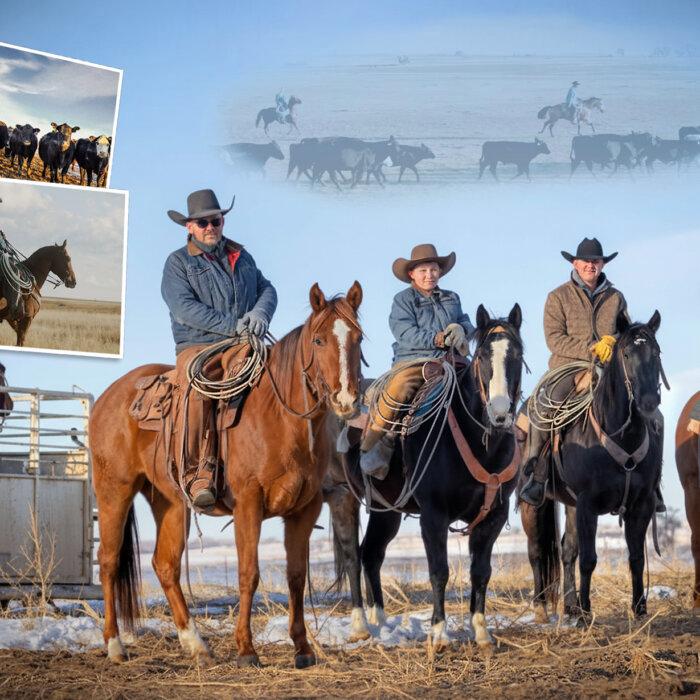
That is why it matters when you see others willing to stand up and do the same. When someone is willing not only to point out what is missing, but also to start building something different.
Those people stand out.
Wyoming rancher Casey Parker is one of those people.
Parker, known online as WyoWagyu, spends her days doing the same work many ranchers do—raising cattle, caring for land, and raising a family. But she has also stepped into a larger role, helping organize producers and build new structures that give independent ranchers a stronger voice in the marketplace.
She founded the American Rancher Alliance, a producer-owned cooperative designed to reconnect independent cattle producers directly with processors, retailers, and consumers while rebuilding parts of the beef supply chain that have steadily disappeared over the past several decades.
For generations, America’s cattle producers have raised some of the highest-quality beef in the world. Yet many ranching families today find themselves squeezed between rising input costs and a marketplace that increasingly favors large corporate packers and imported beef. Grocery store prices continue climbing, but the families raising the cattle often see little of that value.
The American Rancher Alliance was created to help change that dynamic.
The alliance is designed as a producer-owned cooperative and national supply chain network built by ranchers, for ranchers. Its purpose is to reconnect America’s independent cattle producers directly with processors, retailers, and consumers while restoring transparency and fair opportunity in the American beef marketplace.
For many ranchers today, the path to market runs almost entirely through a highly consolidated system. A small number of massive processors control the overwhelming majority of beef processing capacity in the United States. That level of concentration leaves independent producers with very few options when it comes time to sell cattle.
The American Rancher Alliance is working to create another path.
By organizing ranchers and building relationships with independent processors and regional markets, the alliance gives producers a way to move cattle outside of the traditional system that has come to dominate the industry. It helps coordinate cattle movement between regions, rebuild regional supply chains, and open marketing opportunities that many independent producers have not had access to for decades.
Farmers and ranchers do not need fewer markets.
They need more options.
Consumers today are also asking new questions about their food. Where did it come from? How was it raised? Who produced it?
The alliance believes American families deserve clear answers.
Beef moving through the network will carry QR code traceability, allowing consumers to see the story behind their food—the ranch where the cattle were raised, the region they came from, and information about how the animals were cared for and produced. In a food system that has become increasingly anonymous, that transparency reconnects the American consumer directly with the American ranching family.
But rebuilding market access is only part of the conversation about the future of ranching.
Parker has also been a strong advocate for the importance of stable price bottoms in cattle markets.
Agriculture cannot function like a factory assembly line where production simply stops when markets fall. A cow does not pause pregnancy because prices drop. Grass continues growing. Calves continue being born. Generations of genetics and stewardship cannot simply be turned off when the market dips.
When cattle markets collapse below the cost of production, ranchers are often forced into liquidation. Herds shrink, families leave the land, and the next generation looks at the instability and decides the risk is too great.
This is one of the hidden reasons the United States now has the smallest cattle herd in modern history.
Stability in the marketplace allows ranchers to plan beyond the next market cycle. It allows producers to invest in healthier soils, stronger genetics, better grazing systems, and the long-term stewardship that good ranching requires. Without that stability, ranching becomes less a vocation and more a gamble.
What Parker and others working through the American Rancher Alliance are trying to build is a producer-centered marketplace—one where independent ranchers collaborate rather than compete in a race to the bottom. It is an effort to restore the connections among the land, the ranching family, and the American consumer.
Sounding the alarm matters. People need to understand how fragile our food system has become. But alongside the warnings must come builders—people willing to organize producers, test new models, and push back against a marketplace that increasingly favors size over stewardship.
Casey is building pathways that allow ranchers to get their food out into the world.
I am building pathways that invite people to come onto the ranch and experience why this way of life still matters.
Both are important.
We will continue to sound the alarm and build solutions. But we can only be part of the answer.
The individual consumer is the other half.
Every time people choose to support American ranchers, they strengthen the people still working the land and caring for the animals that feed this country.
That is where each of us can make a difference.
Because the future of American ranching will not be decided only on ranches or in boardrooms.
It will be decided at the dinner table.