The phrase “America First” is once again a major topic in American politics. Some people see it as a call to restore national sovereignty and focus on issues at home. Others think it means pulling back from foreign commitments and questioning the value of alliances. But history shows these ideas are not the same.
The United States has often put its own interests first. However, it has rarely succeeded when trying to pursue those interests by itself.
America First has never meant America Alone.
The United States was founded with help from allies. The victory at Yorktown happened because George Washington’s army worked together with French military and naval forces. This did not mean America depended on foreign powers. Instead, it showed that partnerships could help achieve American goals when they matched American interests.
People often point to George Washington’s warning against permanent alliances as proof of an isolationist tradition. In truth, Washington wanted to keep the young nation flexible at a time when it was surrounded by stronger countries. Being careful was necessary, but that did not mean withdrawing from the world.

As American power expanded, so did American responsibilities.
The Monroe Doctrine showed this understanding. Even though the United States lacked the power to fully enforce it, the doctrine made clear that what happened in the Western Hemisphere mattered for American security. Events outside the country could directly affect the nation.
Abraham Lincoln faced a similar challenge during the Civil War. While Union armies fought the Confederates, Lincoln also worked to stop Britain and France from recognizing the Confederacy. Winning on the battlefield was not enough. Diplomacy and international support were important too.
The 2oth century strengthened these lessons.
Franklin Roosevelt knew that the United States could not ignore Nazi Germany and imperial Japan just because it was separated by two oceans. The alliance formed during World War II was not just about ideals; it was a strategic need.
After the war, Harry Truman saw that stopping Soviet expansion needed more than just American effort. It needed a group of nations strong enough to balance Soviet power.
The Truman Doctrine, the Marshall Plan, and the North Atlantic Treaty Organization (NATO) were the key parts of this strategy. The United States won the Cold War because it led a group of countries whose combined strength was greater than the Soviet bloc.
The difference between NATO and the Warsaw Pact is still a useful lesson. The Warsaw Pact relied on Soviet military power and fell apart after the Soviet Union collapsed. NATO, on the other hand, survived the Cold War and still exists today.
Ronald Reagan understood this lesson. His administration rebuilt America’s military, but he also saw that alliances made the country stronger. Working with NATO allies put more pressure on the Soviet Union and improved the position of the West.
After Sept. 11, President George W. Bush brought together a coalition against terrorism with allies from Europe, Asia, and other regions. NATO invoked Article 5 for the first time. People still debate parts of the Bush Doctrine, but the main lesson is clear: threats that cross borders often need responses that do the same.
Throughout American history, successful presidents have usually seen that national strength and international involvement go hand in hand. In my book, “The National Security Doctrines of the American Presidency,” I argued that ideas such as American exceptionalism, internationalism, democracy promotion, realism, and leadership keep recurring because they reflect enduring American interests, not just passing trends.
Alliance systems became part of that tradition.
American internationalism has never meant giving up sovereignty or putting international organizations above American interests. Instead, it has shown that American security can often be made stronger by working with countries that share similar interests and political traditions.
The question has always been whether they serve American interests.
Yet interests alone do not explain why some alliances endure while others collapse.
Authoritarian and totalitarian states often work together. The Hitler–Stalin Pact, the Sino–Soviet alliance, and other revolutionary partnerships show that dictatorships can cooperate when it suits them. But these agreements are usually short-lived because they are based on convenience rather than trust.
Democratic alliances operate differently.
The United States has had disagreements with Britain, France, Germany, Japan, and South Korea at different times. Still, these relationships have lasted because they are built on deeper foundations.
The moral roots of Western civilization played a big role in this. Biblically-given edicts promoted accountability to God and His natural law. Constitutional government shaped shared beliefs about individual dignity, limited government, and the rule of law. These were not just abstract ideas. They affected how democratic societies saw power, authority, and legitimacy.
The strategic consequences were substantial.
Countries that shared similar views about law and government often found it easier to work together over time. Trust was possible because their relationships did not depend only on the goals of individual leaders.
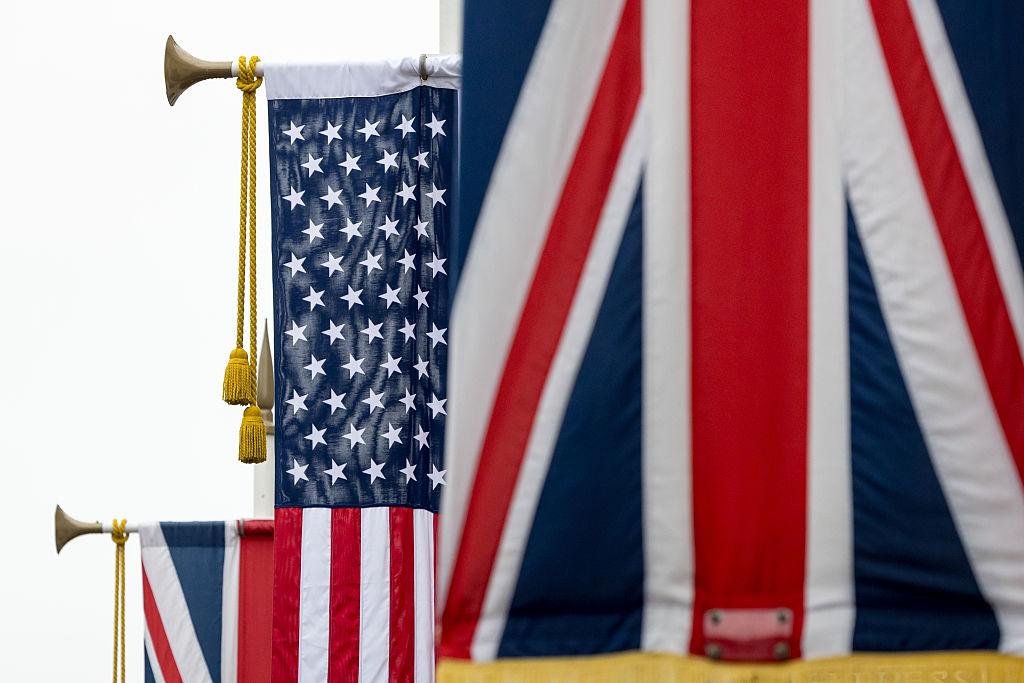
The relationship between Britain and the United States is a good example of this pattern. Even amid disagreements and rivalries, they built a lasting partnership grounded in shared language, legal traditions, representative government, and similar cultural values. The same factors helped make NATO, the U.S.–Japan alliance, and intelligence groups like Five Eyes strong and lasting.
None of these partnerships are perfect. Still, they have often helped American interests by strengthening deterrence, improving intelligence, and giving the United States greater diplomatic influence.
The importance of these advantages is likely to grow.
For much of its history, America’s geography gave it great security. The Atlantic and Pacific Oceans provided a level of protection that most other powers lacked. Geography still matters, but new technology is making it less protective. Cyber attacks do not care about oceans. Artificial intelligence speeds up competition. Space is now a battleground. Long-range, hypersonic weapons make distance less important.
The United States is still lucky to have its geography, but that is no longer enough on its own.
In the 21st century, America will need both strength and strong partnerships.
Americans should discuss the pros and cons of each alliance. They should ensure allies share the load and that partnerships advance American interests. These kinds of debates are healthy and needed.
History does not support the idea that the United States became safe, successful, and powerful by acting alone.
From Yorktown to the Cold War, and from Truman to Reagan, American leaders learned again and again that alliances could make American power much stronger. They knew that being patriotic did not mean being isolated, and that keeping sovereignty did not mean being alone. First remains a legitimate principle.
History reminds us that America First has never meant America Alone.