In July, as America turned 250, a reactor the size of a minivan went critical in the red-rock desert of Emery County, Utah.
The company that built it, Valar Atomics, isn’t a Utah company at all. It’s based in El Segundo in the shadow of the aerospace giants that once made Southern California the undisputed capital of American engineering.
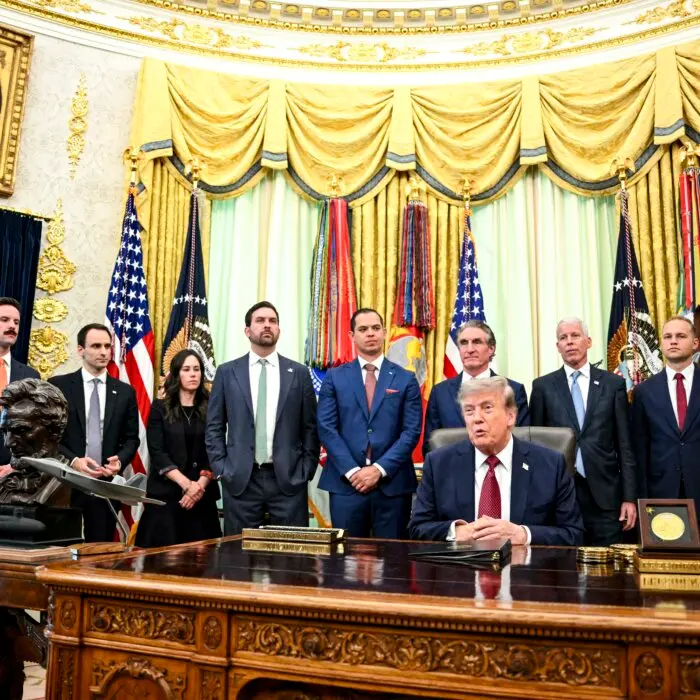
But when President Donald Trump challenged American industry to bring a new nuclear reactor to life by Independence Day, Valar didn’t build its test site in California. It built it in Utah. That single fact says more about where these two states are headed than any think tank report could.
I have deep roots in my birthplace of Utah and a considered love for California, the state I have chosen to call home. So, without picking a winner, we need to ask which state will actually do the work of building the next 50 years of American abundance, and why one of them keeps getting in its own way.
The Founders wrote the Declaration of Independence with the vision of building something more expansive than the servitude they endured for hundreds of years. “Life, liberty, and the pursuit of happiness” doesn’t happen by accident but can only be possible when a people reject the “multitude of New Offices, and … swarms of Officers [that] harrass [sic] our people, and eat out their substance.”
The men and women of the 18th-century revolution were dedicated to turning scarcity into abundance through sheer, sustained will and effort that would make its way westward in the mid-19th century without anyone’s permission.
As destinations for those migrations, Utah and California would asymmetrically benefit from these ambitious renegades over the years as they tamed the hostile landscapes of sagebrush, salt flats, and mountains.
My fourth-great-grandfather, Alexander Beckstead, was among the first to dig irrigation canals in Utah and construct blacksmith shops in the barren Great Salt Lake Valley. My wife’s family left Prussia to settle the Central Valley south of Sacramento as the unpredictable inland sea wreaked havoc on farms and cities.
Sam Brannan, the man who sailed from New York into sleepy Yerba Buena with 200 other Mormon ocean pioneers and announced the gold discovery on the streets of San Francisco, refused to make the trek eastward to the Great Salt Lake. He believed California’s beauty, resources, and location made it the better place to build, and he created town sites across the state and amassed a fortune that made him California’s first millionaire before dying in poverty.
Yet, Brigham Young rejected the allure of California and, looking over the Wasatch Front, proclaimed, “This is the right place,” trusting that the desert would eventually “blossom as the rose.” And it has, with affluence oozing out of every corner of the state.
While Utah’s population is a smaller portion of California’s post-World War II boom, it is presently blowing California’s deserts in Los Angeles, San Diego, the Central Valley out of the water and doing so despite Brannan’s failed hustle a century and a half ago.
Young’s executive successor, Utah Gov. Spencer Cox, has spent this anniversary year arguing that the Founders’ “pursuit of happiness” was never about comfort. It was about character, self-mastery, purpose, and the discipline to build something larger than oneself. It is a high standard the state keeps reaching for.
In California, by contrast, it appears that the spirit of Eureka is lost, and there is less interest in the unglamorous work of actually building success.
That gap is largely political, not geological, resulting in a broken permitting and licensing structure. California’s sun, wind, water, energy, brainpower and burgeoning AI industry are no longer capable of producing some of the biggest innovations in the world as industries are drawn to other places with better regulatory environments.
My colleague Ed Ring has spent years documenting how California’s energy rules were designed for an era of managed scarcity, not abundance.
Ho Nieh, the current chairman of the Nuclear Regulatory Commission, likes to say the country needs more power plants, not more PowerPoints. Utah took that injunction seriously and got a working reactor in less than a year.
California, home to the very engineers who designed it, seems unconcerned that Utah is eating our lunch while allowing the decline of its aging nuclear infrastructure.
California does not need to imitate Utah, but she needs to return to the instincts that once defined this state as the destination for every adventurer. The legislature needs to pass predictable, consistent regulation instead of duct-taping rules that shift to the whims of progressive activists every legislative session.
We need public officials to plan for both baseload power and the demand spikes an AI-driven economy will throw at the grid. We need a culture that rewards the people willing to meet our mountains instead of celebrating those who are content to rope them off. We need to refuse the doom-laced climate rhetoric that treats every power plant as an enemy rather than a tool.
Two deserts, two centuries, two paths. Only one of these states is currently spawning nuclear reactors. The other one is still capable of it, if we can find the political will to pursue an abundance agenda with the seriousness and discipline required to build and sustain it.