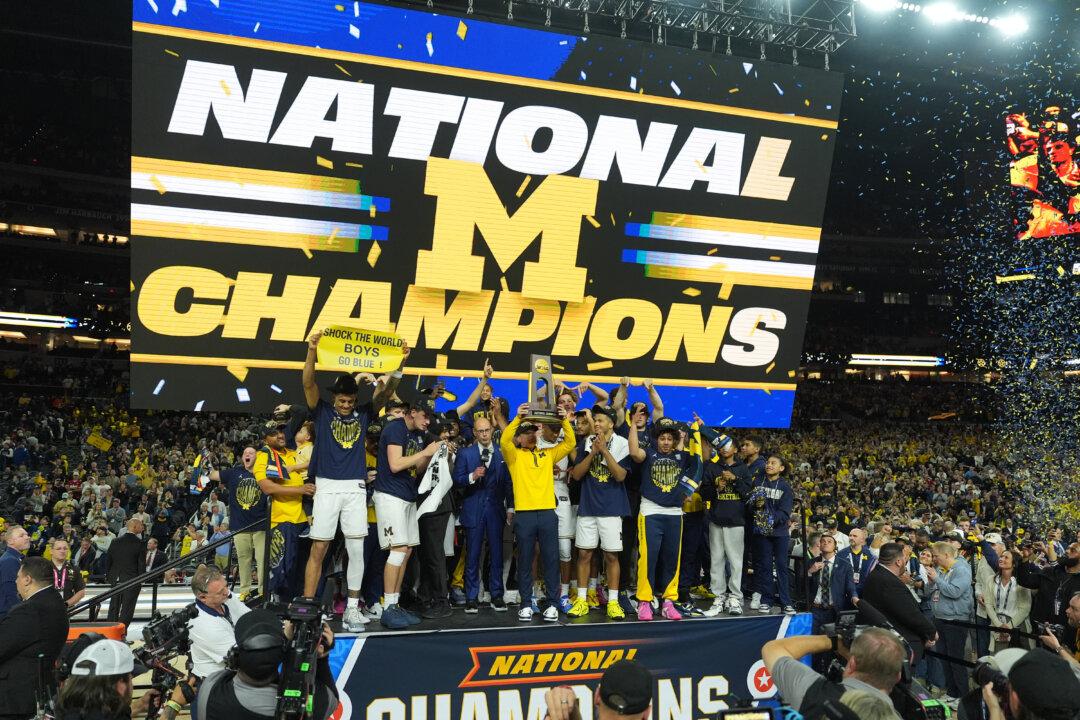
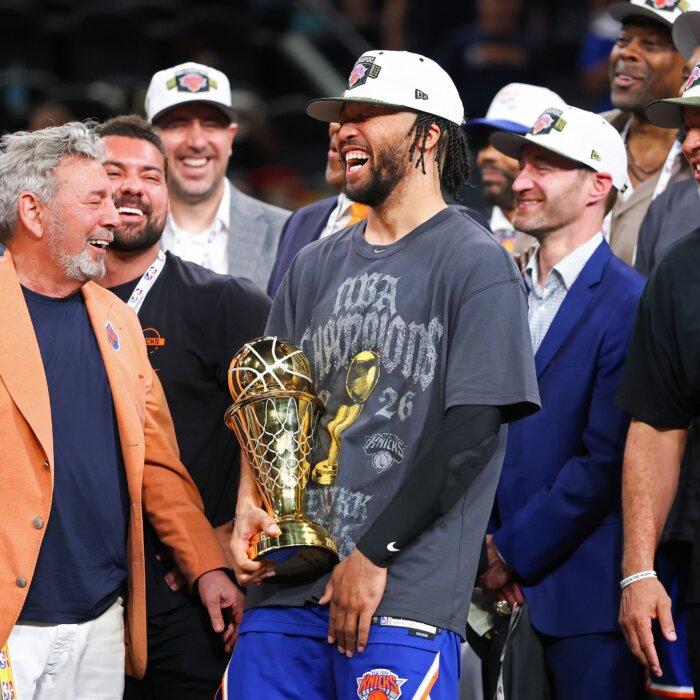
Last weekend was unusually eventful for fans of American team sports. On Saturday, the New York Knicks clinched the National Basketball Association (NBA) championship by defeating the San Antonio Spurs by a score of 94-90 in the fifth game of their best-of-seven series. The very next evening, the Carolina Hurricanes were crowned champions of the National Hockey League (NHL), winning the coveted Stanley Cup in a Game 6 victory over the Vegas Golden Knights in their best-of-seven series.
I don’t have any particular aptitude for predicting the future, whether it be financial markets or winners of athletic contests, but I had felt strongly that there was a high probability that both series—basketball and hockey—would be decided for the victors over the weekend rather than either series being extended into this week. For once, I was right. Momentum is a major factor in sports, and momentum can turn on a dime, but it just seemed apparent that both the Knicks and the Hurricanes had the number of their Finals opponents. Neither team looked as though it could be denied, and so it proved.
The NBA Finals might have unveiled a new, even revolutionary strategy by the victorious Knicks. (Warning: Don’t take me too seriously here. I am going to be facetious.) In all four of their victories, the Knicks fell behind by double digits. Their play was often cringeworthy, to the point where fans who were going to have to get up early the next morning for a busy day might be tempted to turn off the TV and hope for a better performance in the next game. In all four of those games, though, the Knicks turned it up a few notches in the fourth quarter, stifling the Spurs’ offense while their own offense came alive and poured in the points. In fact, in Game Four, the Knicks set an all-time NBA Finals record by coming from 29 points down to defeat the Spurs. Personally, I wouldn’t recommend that basketball coaches adopt the “fall behind by double digits strategy” for their own team, but it sure worked for New York!
What made the Knicks’ victory so intriguing for sports fans was how improbable a championship seemed up until the Finals themselves. During the regular season, the Knicks finished in third place in the Eastern Conference, behind the conference champion Detroit Pistons and the Boston Celtics. In fact, in the three contests between the Pistons and Knicks during the regular season, the Pistons won all three games by an average of 28 points. And yet, in the playoffs, the Pistons were eliminated by the Cleveland Cavaliers, who in turn were swept by the Knicks en route to the Finals. Fans are left to ponder at least two possible explanations: one is that certain teams match up better against some teams than others (thus an inferior Cavaliers team knocked off the Knicks’s nemesis, the Pistons); the other is that what matters most in the playoffs of basketball, or indeed of any sport, is who gets hot at that crucial time of year. Whatever the underlying reasons, congratulations to the champion New York Knicks and their MVP, the modest, lion-hearted champion, Jalen Brunson.
The hockey Finals were rich with all sorts of storylines. Few had expected Vegas to go this deep into the playoffs, but management made a bold move, installing a new head coach with only eight games left in the regular season. That new coach, the crafty veteran John Tortorella, immediately galvanized the Golden Knights. They finished the regular season 7-0-1 under their new coach, and marched through the playoffs in convincing fashion, highlighted by a highly unexpected sweep of the mighty Colorado Avalanche in the semifinals. Hoping to become the coach with the longest span between winning two Stanley Cups (he won it with Tampa Bay in 2004), Tortorella led his team into the Finals with the wind at their back.

In the Finals, though, Vegas ran into a buzzsaw. The Carolina Hurricanes were relentless, unstoppable. Led by captain Jordan Staal, who set at least three records—longest interval between winning the Stanley Cup as a player (17 years), first player to ever score at least one goal in the first five games of a Cup Finals, and oldest player (37) ever to win the Conn Smythe Trophy as the most valuable player in the playoffs—the well-balanced Hurricanes’ tenacious, suffocating defense combined with fine offensive play-making and shot selection carried Carolina to its first Cup in 20 years.
Two more anecdotes about the Stanley Cup Finals:
A pivotal moment in the Finals came when Hurricanes coach Rod Brind‘amour sensed that his starting goalie, Frederik Andersen—who had been in goal every game in the playoffs, amassed 13 victories with an impressive 1.89 GAA (goals against average) and a commendable save percentage of .910—was tiring. Brind’amour made one of those coaching decisions which in retrospect appear to be pure genius: he pulled Andersen after two periods in Game Three and replaced him with 27-year-old rookie Brandon Bussi. Favorable results were far from guaranteed at the time of the gutsy move, but Bussi rose to the occasion. He stayed in goal for the final three games of the series—all Carolina wins. Bussi recorded a shutout in the Cup-clinching game—the first rookie to accomplish that feat since 1937. He made some astonishing saves, thoroughly frustrating the Golden Knights. In a post-game interview, Bussi showed himself to be one of those humble, unassuming, hard-working players that you can’t help but root for. What a wonderful model for young athletes to emulate!
The last anecdote: Carolina head coach Brind‘Amour was the captain of the ’Canes’ only other championship team 20 years ago, making him the first man since 1956 (way back when there were only six teams in the NHL) to have captained and coached the same team to a Stanley Cup championship. One of the most interesting stories emerging from the just-completed series was Brind‘Amour’s relationship with Carolina’s general manager, Eric Tulsky. Tulsky, a scientist specializing in nanotechnology and holder of 27 patents, was a hockey fan whose analytical brilliance became known through sports blogs and ultimately led to his hiring as GM. The pairing of superstar player Brind’amour with superfan and super-geek Tulsky has been pure magic.
Congratulations to the Carolina Hurricanes! After watching their impressive performance, I can hardly wait until next year’s Stanley Cup playoffs.