
However, the official figure understates joblessness because of seven structural gaps: migrant workers are excluded or undercounted; rural workers are presumed to have access to farm work; self-employed workers with no income are not counted; youth unemployment data was suspended and the methodology changed in 2023; the revised youth unemployment rate subsequently climbed back into double digits; gig-economy classifications keep hundreds of millions of underemployed workers off the books; and a multiyear loss of construction and manufacturing jobs has pushed a growing number of displaced workers into informal survival work rather than registered unemployment.
Migrant workers are included in the National Bureau of Statistics (NBS) survey only if they have lived in a surveyed region for more than six months, thereby excluding shorter-term and seasonal migrants from the count.
A study published by the National Bureau of Economic Research and based on China’s Urban Household Survey rather than official registered figures, found that the official unemployment series was an outlier among countries at similar stages of development. The study estimated that actual unemployment from 2002 to 2009 averaged nearly 11 percent, more than double the official rate during those years.
Rural hukou-holders working in cities remain officially classified as available for agricultural work in their home districts, whether or not such work exists. China’s surveyed unemployment rate excludes the country’s 149 million self-employed business owners, per the South China Morning Post.


After youth joblessness hit a record 21.3 percent in June 2023, the NBS said it would suspend publication of urban unemployment rates for youth and other age groups starting that August, citing the need to improve and optimize labor force survey statistics. Under the original methodology, a full-time college student who looked for a part-time job or internship but could not find one was classified as unemployed.
When publication resumed in January 2024, the new methodology excluded students currently enrolled in school from the 16 to 24 age group calculation, regardless of whether they were actively job-hunting, and the resumed youth unemployment rate for December 2023 was reported at 14.9 percent.
Some of the decline reflects delayed labor-market entry rather than reemployment. Postgraduate enrollment now exceeds undergraduate enrollment at Tsinghua, Peking, Lanzhou, and dozens of other leading universities.
State programs, including Three Supports and One Assistance, which pay graduates a stipend for two-year rural postings in education, agriculture, and healthcare, as well as the Ministry of Human Resources and Social Security’s Million Youth Skills Training Initiative, which reached more than 11 million participants in 2025, divert graduates into rural placements and vocational retraining rather than permanent employment.
The unemployment rate climbed to 18.9 percent in August 2025 as a record 12.2 million university graduates entered the job market, before easing to 16.5 percent by December 2025. It rose again to 16.9 percent in March 2026, reversing a downward trend seen since September, then eased to 15.6 percent in May 2026. The revised, lower result is still about three times China’s overall unemployment rate.
A gig and flexible-employment classification standard further compresses the headline number: anyone working even one hour a week is considered employed. The China New Employment Forms Research Center estimates that the number of workers in flexible employment, defined as employment without a permanent full-time contract, will rise to 320 million this year, up from 280 million in 2025, accounting for about 44 percent of China’s workforce.
A December 2025 government report found that by the end of 2024, only 70.6 million flexible workers, about 22 percent of the country’s 320 million people in flexible employment, were enrolled in the urban employee pension scheme, leaving more than 249 million outside the system that traditionally relied on salaried employment.
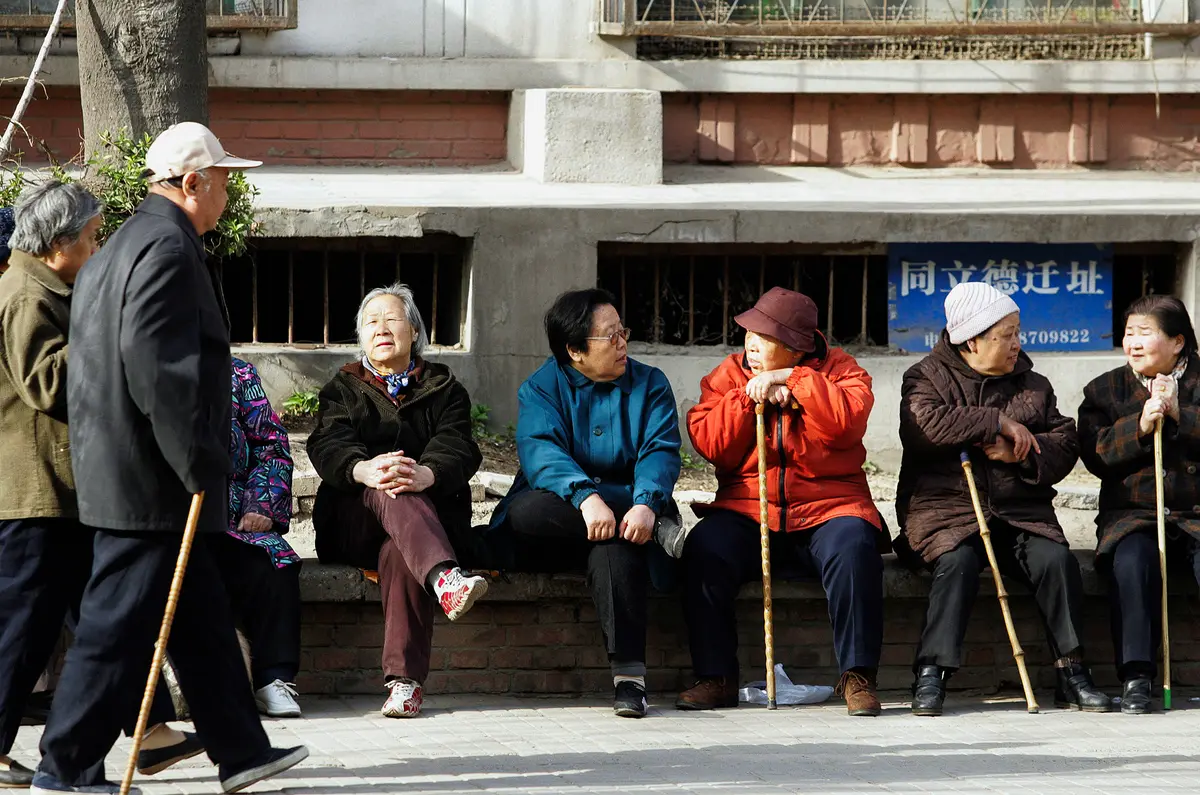
A 2019 report by the World Social Security Center at the Chinese Academy of Social Sciences projected that the national pension fund’s reserves could fall to zero by 2035, with a 2024 update pushing that timeline back by eight to nine years if the retirement age is delayed.
The scheme operates on a pay-as-you-go basis, with today’s benefits funded by today’s workers’ contributions rather than a pre-funded reserve set aside for each retiree, making its solvency dependent on the ratio of active contributors to retirees drawing benefits.
That ratio has been strained by China’s aging population, which reached 254 million people over 60 by 2019, about 18.1 percent of the total population, and by a 2020 pandemic-era reduction in employer contribution rates that cut pension revenue by 1.5 trillion yuan, producing the system’s first annual deficit.
The construction sector’s contraction has unfolded gradually over more than a decade. NBS-linked data show that the share of migrant workers employed in construction fell from an all-time high of 22.3 percent in 2014 to a record low of 13.8 percent in December 2025, consistent with developer defaults and stalled projects pushing blue-collar labor out of the urban survey pool and, in many cases, back to rural areas where it no longer registers in the surveyed urban rate.
At the same time, average weekly working hours for enterprise employees climbed from 47.5 hours in 2022 to 48.2 hours through early 2026, which means employers are extending hours for existing staff rather than hiring, leaving a backlog of displaced and underemployed workers competing for low-wage gig work that the headline unemployment rate does not capture.
Taken together, these seven structural gaps suggest that China’s official unemployment rate significantly understates the true extent of labor market weakness. Hundreds of millions of workers are excluded from the headline measure or pushed into insecure, often low-paying forms of flexible employment, thereby masking the true scale of China’s economic crisis.