Commentary
With a youth mental health crisis also sweeping the nation—rates of anxiety, depression, suicidal ideation, and diagnosed mental health disorders such as attention-deficit/hyperactivity disorder are all at record highs—it’s not hard to imagine that the correlation between kids’ indoor confinement and their mental health struggles is more than a coincidence.
The mental health ramifications of too much screen time are easy to track and are heavily studied. But the downstream effects of not enough time outside are equally startling. Free play and unstructured time are foundational to a child’s well-being, and in America, our kids aren’t getting it.
Why Aren’t the Kids Outside?
The 21st century has provided us with a perfect storm of conditions keeping kids away from the outdoors: Screens are alluring, the outside is “dangerous,” and parents encourage their kids toward sedentary “for your own good” activities—math olympiad! French tutoring! After school clubs!Parents fear the dangers of the outdoors. In the modern world, everything from crime statistics to urban design itself leads parents to keep their kids on a short leash. Urban settings don’t have much room for free play. Parks, playgrounds, and other child-centric outdoor spaces are strangely sparse, as if urban designers wanted a world without kids. More apartment complexes are built with dog-washing stations than playgrounds.


The modern world seems to have been built by people who forgot what childhood is, and fears of crime keep parents nervous about letting their kids freely use the spaces that do exist.
Separate from the kid-centric space or the lack thereof, kids are busy. Their days are consumed by ever-expanding school requirements, structured extracurricular activities and, of course, the ever-present lure of screen time—to the point that even in suburban neighborhoods with big backyards, kids are barely ever venturing outside.
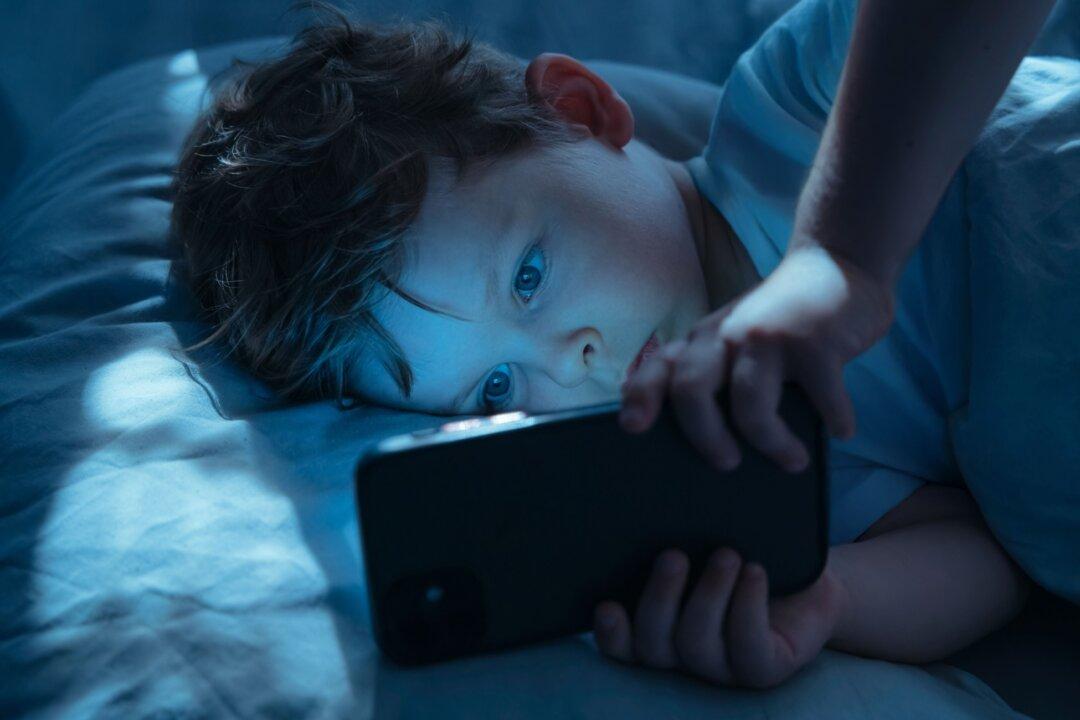
Which is how we end up with kids getting seven to eight hours of screen time per day but only four to seven minutes of unstructured free time outside—the latter of which people of our grandparents’ generation couldn’t even have imagined.
The “unstructured” part is important—“time outside” in a blanket sense isn’t enough. Spending an hour on the field for soccer practice gives kids the benefits of fresh air, sunshine, and physical movement, but it doesn’t provide the psychological benefits of free play.
Mental Health Crisis in Childhood
Parents worry about the dangers of the outside world, but what about the dangers of the on-screen world, where grooming and exploitation are common occurrences, where adults behind screens pose as other children and talk to young people too naive to know what to watch out for? What about the physical dangers of a sedentary life?And what about the psychological dangers of not getting time outside to play?
Kids Need Free Play Outdoors
As researcher and psychologist Peter Gray said, “Children are designed, by nature, to play and explore on their own, independently of adults.”And yet Skenazy was giving her son what so many others suffer for want of: freedom.
Letting your kids have outdoor time doesn’t require something as radical as giving them free range of New York City. Most parents would understandably balk at that. But there’s a wide swath of options between “wander New York City alone” and “have no time outside at all,” and frustratingly few find themselves in that median.
Even programs that give kids time outside—things such as private schools with on-campus gardens, forest schools, or homeschool groups focused on time in nature—are considered frivolous, peculiar, and radical, respectively.
These are all recommended baselines from some of America’s most mainstream health authorities. Many independent psychologists, developmental experts, and education researchers would consider those numbers to be the bare minimum.
Charlotte Mason, the 19th-century British educator whose methodology is still used today by large swaths of homeschoolers, argued that children should spend four to six hours per day outside whenever possible: “Never be within doors when you can rightly be without.”
Mason didn’t see outdoor time as “recess” but as a fundamental part of a child’s education in its own right. For the early years, she considered it even more important than formal instruction, helping children develop their attentiveness, wonder, and observational skills. She advocated nature walks, observations of weather patterns and wildlife, keeping a nature journal, and long uninterrupted swaths of free play.
This unstructured playtime is part of the whimsy of childhood, but it also plays a critical role. Free play supports kids’ cognitive development, imagination, and executive function. Physical activity develops strength, coordination, and motor skills and is shown to reduce anxiety. Studies suggest that exposure to the microbiome of dirt leads to a strengthened immune system and can decrease stress. Exposure to natural sunlight supports a child’s natural circadian rhythm.
And of course, exposure to sunlight also improves vitamin D levels—the lack of which can cause everything from fatigue and a weakened immune system to, you guessed it, anxiety and depression.
Our kids are struggling, physically and psychologically, for want of time for free play and time outdoors. That fresh air and freedom, no matter how basic it seems, is fundamental to their health and success, as necessary to their health—if not their survival—as air and water.
Our parents and grandparents knew this by intuition; our forebears never considered it could even be a question, but our culture has slowly let it erode to become only the tiniest fraction of our kids’ lives.
Free play and time outdoors are indivisible from health and success. If we want to raise a healthy, happy, and thriving generation, then their outdoor time is a resource we must defend.