NEW YORK—It’s being talked about in the blogosphere, the city has received public submissions and prepared a comprehensive report, and homegrown entrepreneurs like Ryan Rzepecki of The Social Bicycle System (SoBi) are preparing new technology for it, but nobody, including the NYDOT will say just when (and if) the city will implement a bike-share program.
A report released by the DOT in the spring of last year includes comprehensive studies and specific recommendations for a plan to phase in up to 50,000 bicycles that would be available to anyone who wished to use them in exchange for a nominal fee.
CBS recently reported that a New York bike-share program may be coming soon, but they didn’t say when. The DOT also confirmed today that there is no new information, yet said that they would keep the public informed.
“What is very obvious is that there is a lot of excitement about bike share around the world and a lot of growing excitement in this country,” said Carolyn Samponaro, director of Bicycle Advocacy for Transportation Alternatives, a New York-based group.
Bike share programs have taken off in recent years, after extremely successful programs in cities throughout the world. The Velib' in Paris, France (20,600 bikes), and Bicing Barcelona in Spain (6,000 bikes) have revolutionized the way city planners think about biking as valid public transportation alternatives.
U.S. cities, such as Denver, Minneapolis, and Washington D.C., have recently launched programs.
Dense populations, short distances between destinations, and a population where 50 percent live within 5 miles of their place of work, makes New York an ideal location for a robust bike-share program.
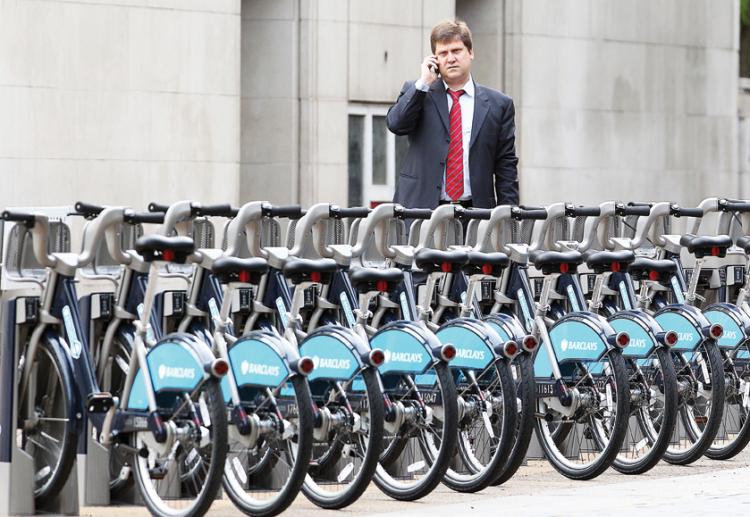
The concept of bike-share is to make bicycles available to anyone who needs one, when, and where they need it. There is no need to own a bike, nor worry about maintenance, theft, or where to lock it up.
The way it works is that the city would purchase a bike fleet, install thousands of matching racks, and essentially rent the bike out for as little as a dollar per half hour with a membership card. After reaching a destination, the idea is that you would just lock it up at a new rack and head to work or shopping, worry free.
Biking frequency in New York has increased significantly since 2007, alongside a substantial increase in designated bike lanes on city roads over the last two years. According to the DOT, the number of bicyclers increased 35 percent in 2008, and 26 percent in 2009.
The mayor has committed to installing 1,800 miles of designated bike lanes throughout the five boroughs by 2030. To kick start the plan, 200 miles of bike lanes were already installed in 2008, and 2009. An additional 50 miles are committed for each year after that.
Lower Manhattan, downtown Brooklyn, and western Queens saw most of the bike route installations. The goal is to create a robust network of connected bike routes, starting with the most densely populated areas first.
A large number of bicyclists would completely change the way bicyclists currently interact with vehicles, calming traffic and enhancing safety. The city’s recently installed bike lanes have already significantly reduced bicycle accidents, said Samponaro.
“People are mostly law abiding because everybody is riding and it is very common and it is not reckless and dangerous to get on a bike, so you don’t have a kind of survival of the fittest attitude when you are riding,” described Samponaro.
This fall, a local entrepreneur is planning to launch a small bike-share pilot program to test a novel social networking technology that would allow for either a phone app or a telephone call to locate, as well as unlock an available bike for use. His idea seeks to solve what he sees as New York City’s biggest challenge, the need for large amounts of public space for specialized racks.
European style bike-share programs require 40 percent more spots than bikes so as to accommodate irregular bike movement throughout the city. SoBi’s innovative lock box affixes directly onto the bike and allows riders to leave the bike anywhere.
“It is a bike-share system that is integrated into the existing bike culture. Not a separate thing,” said Rzepecki.
A report released by the DOT in the spring of last year includes comprehensive studies and specific recommendations for a plan to phase in up to 50,000 bicycles that would be available to anyone who wished to use them in exchange for a nominal fee.
CBS recently reported that a New York bike-share program may be coming soon, but they didn’t say when. The DOT also confirmed today that there is no new information, yet said that they would keep the public informed.
“What is very obvious is that there is a lot of excitement about bike share around the world and a lot of growing excitement in this country,” said Carolyn Samponaro, director of Bicycle Advocacy for Transportation Alternatives, a New York-based group.
Bike share programs have taken off in recent years, after extremely successful programs in cities throughout the world. The Velib' in Paris, France (20,600 bikes), and Bicing Barcelona in Spain (6,000 bikes) have revolutionized the way city planners think about biking as valid public transportation alternatives.
U.S. cities, such as Denver, Minneapolis, and Washington D.C., have recently launched programs.
Dense populations, short distances between destinations, and a population where 50 percent live within 5 miles of their place of work, makes New York an ideal location for a robust bike-share program.
The concept of bike-share is to make bicycles available to anyone who needs one, when, and where they need it. There is no need to own a bike, nor worry about maintenance, theft, or where to lock it up.
The way it works is that the city would purchase a bike fleet, install thousands of matching racks, and essentially rent the bike out for as little as a dollar per half hour with a membership card. After reaching a destination, the idea is that you would just lock it up at a new rack and head to work or shopping, worry free.
Biking frequency in New York has increased significantly since 2007, alongside a substantial increase in designated bike lanes on city roads over the last two years. According to the DOT, the number of bicyclers increased 35 percent in 2008, and 26 percent in 2009.
The mayor has committed to installing 1,800 miles of designated bike lanes throughout the five boroughs by 2030. To kick start the plan, 200 miles of bike lanes were already installed in 2008, and 2009. An additional 50 miles are committed for each year after that.
Lower Manhattan, downtown Brooklyn, and western Queens saw most of the bike route installations. The goal is to create a robust network of connected bike routes, starting with the most densely populated areas first.
A large number of bicyclists would completely change the way bicyclists currently interact with vehicles, calming traffic and enhancing safety. The city’s recently installed bike lanes have already significantly reduced bicycle accidents, said Samponaro.
“People are mostly law abiding because everybody is riding and it is very common and it is not reckless and dangerous to get on a bike, so you don’t have a kind of survival of the fittest attitude when you are riding,” described Samponaro.
This fall, a local entrepreneur is planning to launch a small bike-share pilot program to test a novel social networking technology that would allow for either a phone app or a telephone call to locate, as well as unlock an available bike for use. His idea seeks to solve what he sees as New York City’s biggest challenge, the need for large amounts of public space for specialized racks.
European style bike-share programs require 40 percent more spots than bikes so as to accommodate irregular bike movement throughout the city. SoBi’s innovative lock box affixes directly onto the bike and allows riders to leave the bike anywhere.
“It is a bike-share system that is integrated into the existing bike culture. Not a separate thing,” said Rzepecki.