Netanyahu Calls for Peace Talks After Palestinian Statehood Bid

September 25, 2011 Updated: October 1, 2015
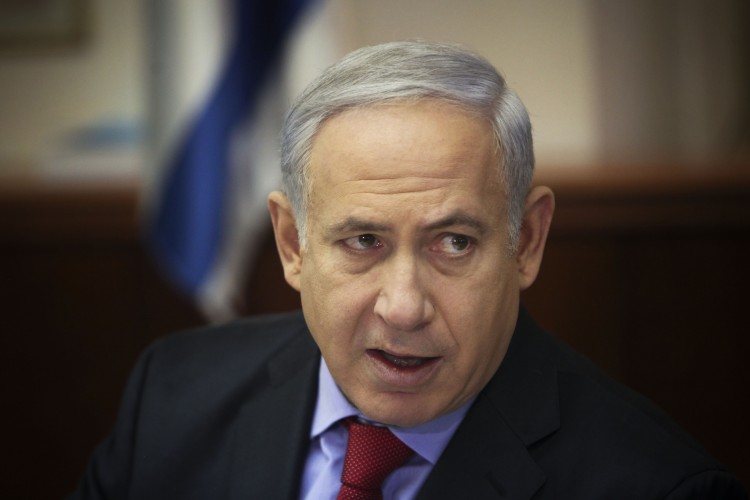
Israeli Prime Minister Benjamin Netanyahu at a meeting on September 18, 2011 in Jerusalem, Israel. (Tara Todras-Whitehill-Pool/Getty Images)

Following the Palestinians’ bid for statehood at the United Nations, Israeli Prime Minister Benjamin Netanyahu said in several interviews on Sunday that both sides need to hold talks without preconditions.

Palestinian President Mahmoud Abbas, while at the U.N. General Assembly on Friday, submitted an official request for Palestinian statehood.

In an interview with NBC’s "Meet the Press" with David Gregory on Sunday, Netanyahu expressed disappointment with Abbas’ push toward statehood.

“The Palestinians want a state, but they have to give peace in return. What they’re trying to do in the United Nations is to get a state without giving Israel peace or giving Israel peace and security,” said Netanyahu on the program, adding that the bid “should not succeed.”

“If we have their recognition of Israel as a Jewish state and the security requirements, there’s no reason that we won’t have peace,” he said.

If the bid makes it to the 15-member U.N. Security Council, President Barack Obama said the U.S. would use its veto to block it from going through.

Israel and Palestine should return to the peace talks to create “two states for two peoples,” but without any preconditions, Netanyahu said.

“I think the Palestinians are trying to get away without negotiating” by seeking statehood with the U.N. “They’re trying to get a state to continue the conflict with Israel rather than to end it,” he said.

Referring to Abbas speech at the U.N., Netanyahu said he “was so disappointed” because he is “going back” away from peace talks, while Netanyahu “was trying to move forward.”

Abbas, when he returned home to Palestine after making an impassioned speech at the U.N., was greeted as a hero among Palestinians. 

Addressing the crowd in Ramallah, Abbas called for a “Palestinian Spring,” drawing upon the wave of protests in 2011 that toppled the regimes of Egypt, Tunisia, and Libya, according to The Associated Press.

Abbas has said that he will resume the peace talks only if Israel stops constructing settlements and accepts requests to draw up a new Palestinian state including the West Bank, east Jerusalem and the Gaza Strip. 

These territories were taken over by Israel after it repulsed Arab attacks in the Six-Day War in 1967, with Israel then unilaterally withdrawing from the Gaza Strip in 2005. Since a 2006 election, in which Hamas defeated Abbas’s Fatah Party, the Gaza Strip has been governed by Hamas, which is classified by the United States and Israel as a terrorist organization. The Palestinians have walked away from previous negotiated peace offers that have included the territories Abbas is demanding.