Navigating New Waters of US Patent Law

September 28, 2011 Updated: October 1, 2015
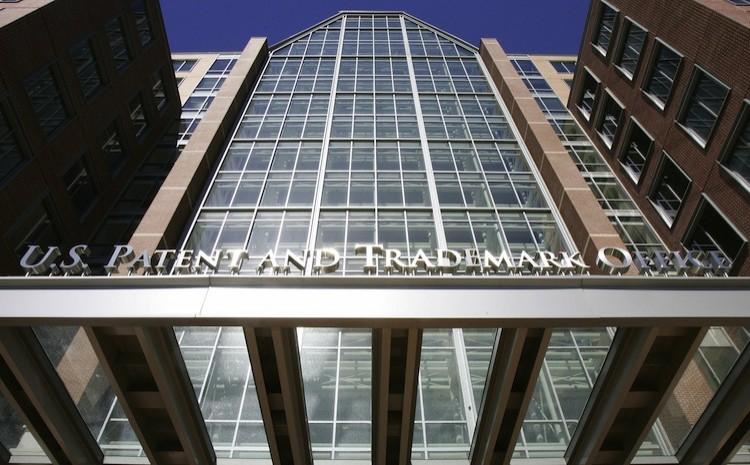
The U.S. Patent and Trademark Office in Alexandria, Va., in this file photo. President Obama recently signed the America Invents Act (AIA), the most significant reform of the patent system since 1952.  (Paul J. Richards/AFP/Getty Images )
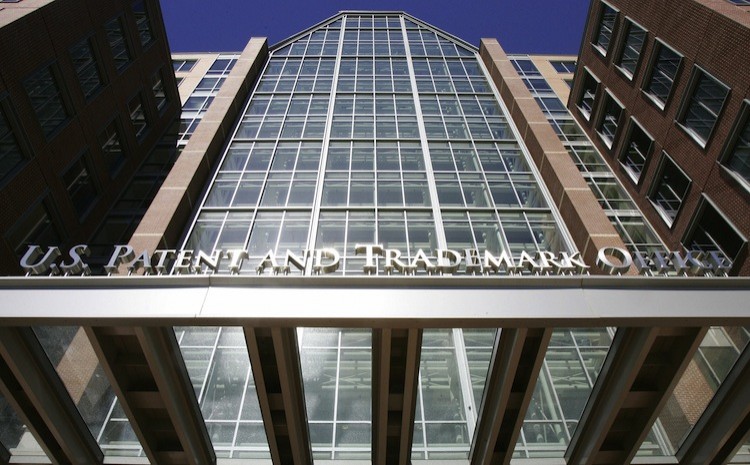
The U.S. Patent and Trademark Office in Alexandria, Va., in this file photo. President Obama recently signed the America Invents Act (AIA), the most significant reform of the patent system since 1952. (Paul J. Richards/AFP/Getty Images )


Got an innovative idea? Then consider that the rules governing new inventions are changing. President Barack Obama recently signed a long-awaited patent reform act, representing the most significant overhaul of the American patent system since 1952.

“In the past 50 years, we have seen technology evolve at a faster pace than any other period in history, but our patent laws have not kept up,” wrote U.S. Patent and Trademark Office (USPTO) Director David Kappos, in an agency blog.

Although not everyone greets the new act with open arms, a patent law update has been long overdue, and this new legislation echoes the money-saving mantra of a debt-conscious government.

According to Kappos, the America Invents Act (AIA) is designed to save cash by keeping patent disputes out of the courts. The legislation grants the USPTO a new in-house review process for challenging patents—one that promises to be faster and cheaper. It attempts to bypass the prolonged and costly litigation often characterized by such disputes, while speeding the growth of innovation.

In a statement, Kappos claimed that this review process will help accelerate our economic recovery, and ensure “that our nation’s innovators and job creators aren’t held back.”

While the USPTO may see more resources under these new laws, perhaps the most significant change in the AIA involves the rules governing qualifications for patent rights.

Until now, the United States has virtually been the only country in the world to feature a first-to-invent patent filing format—a system in which patent rights are awarded to the person who first invents something. The AIA changes U.S. patent law to the far more internationally popular first-to-file format. In essence, patent rights will favor the first individual who claims an idea, but may not have an actual invention to back it up.

In a recent policy report, the Brookings Institute provided a number of recommendations for the innovators who will be operating under these new rules. In this new legislative environment they caution companies to be more careful in disclosing development ideas at conferences and trade shows to avoid the risk of competitors jumping on an emerging innovation and filing first.

“Under the AIA, rights to an invention prior to a filing date will depend more on the history of relevant disclosures and less on nonpublic, internal company documents such as laboratory notebooks,” states the report. “All companies—large and small—should consider how to modify their procedures for protecting, evaluating, and filing patents on their inventions accordingly.”

Still, U.S. filers can’t just sit on an empty idea forever; they eventually have to produce a tangible product or process. The AIA allows a one-year grace period following the first disclosure of a concept for filers to present an actual invention. This grace period is designed to allow investors time to distinguish between the worthwhile ideas and the pie-in-the-sky propositions before pouring money into R&D.

Because of this combination of first-to-file language with a grace period, the Brookings Institute report characterizes the AIA as a unique “hybrid” between the two different filing systems—one designed to work in tandem with international standards.

Although the addition of a grace period might bring some comfort, Brookings warns inventors to think much more carefully about how to manage pre-filing disclosures. “Put simply, silence can be costly,” it stated, warning that companies who remain quiet about an invention while contemplating whether or not to pursue patent protection risk the possibility of losing the right to do so if a competitor files first. Under the AIA, in situations where companies contest the rights to an invention but did not make a disclosure, provision will favor the earlier filer.

“A company wishing to avoid this risk faces the additional challenge that the AIA does not specifically define what constitutes ‘disclosure’ sufficient to preserve patentability. The use of provisional patent applications, which offer advantages including a more formalized way to document the dates and content of disclosures than activities such as presentations at trade shows, should also be reevaluated in light of the AIA.”

While several aspects of the AIA became law when the legislation was passed on Sept. 16, companies still have time to update their policies for tracking and filing innovative developments—the first-to-file portion won’t take effect for another 18 months. When it does, the U.S. Patent Office will conduct a study examining the struggles of small businesses to protect their patents internationally under the new act.

Follow Conan on Twitter: @ConanMilner