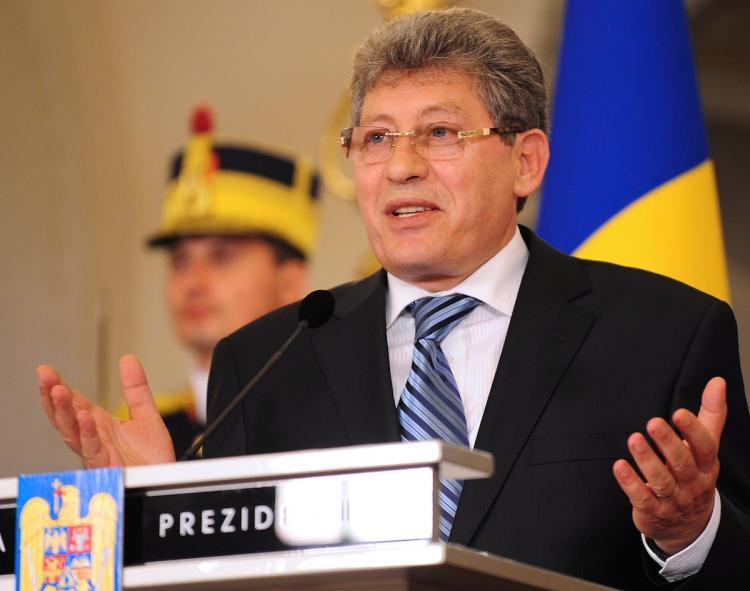
Acting Moldovan President Mihai Ghimpu dismissed Parliament and called new elections on Tuesday following a constitutional court ruling, a move which could break the political deadlock in the country that has lasted one year.
Ghimpu announced new elections for Nov. 28, the third election in the former Soviet republic since April 2009.
Moldova still does not have an elected president. After Parliament failed to elect a new president twice in 2009, Ghimpu, who was the speaker of Parliament, became interim president. Since then, a political stalemate has persisted.
Following the elections in April 2009 in which the Communists gained a disputed victory, protests that sparked in the eastern European nation of 3.6 million people, left the Parliament building and president’s office destroyed.
In July, re-run elections put an end to Communist rule. Ghimpu was elected to Parliament in April 2009 and became speaker after the July re-run election.
When Communist President Vladimir Voronin, who had ruled the country since 2001, resigned on Sept. 11, 2009, he was replaced by Ghimpu. Six months later Parliament still could not elect a new president.
Ghimpu is leader of the Alliance for European Integration, the ruling four-party coalition government, which includes the prime minister’s Liberal Democratic Party, the Liberal Party, the Democratic Party, and the Party Alliance Our Moldova.
However, the influence of the Communist opposition still exists in Parliament with it taking 48 seats.
Moldova is a parliamentary republic, with the president elected by Parliament rather than by popular vote. A candidate must have three-fifths of the votes of Moldova’s 101-seat Parliament to win.
The constitutional court ruled on Sept. 21 that the failure to elect a new president twice was sufficient grounds to dissolve Parliament.
In early September, authorities tried to hold a nationwide referendum to solve the political crisis in the country by changing the way of voting for a president, taking the right from Parliament and bringing it to a national vote.
However, the referendum produced a low turnout with only about 1 million people of the over 2.6 million eligible voters casting their votes.
Moldovan authorities had even changed the number needed for a successful vote by lowering it from 50 percent to 33 percent.
Following the results the parliamentary Assembly of the Council of Europe called on all Moldovan political leaders to resolve the political and constitutional deadlock on the election of president by holding new parliamentary elections this year.
Moldova, sandwiched between Romania and Ukraine, has been an independent republic since the collapse of the Soviet regime in 1991.
The country is one of the poorest in Europe with a large foreign debt and high unemployment. Also it heavily depends on Russian-supplied gas that passes through Ukraine.
Ghimpu announced new elections for Nov. 28, the third election in the former Soviet republic since April 2009.
Moldova still does not have an elected president. After Parliament failed to elect a new president twice in 2009, Ghimpu, who was the speaker of Parliament, became interim president. Since then, a political stalemate has persisted.
Following the elections in April 2009 in which the Communists gained a disputed victory, protests that sparked in the eastern European nation of 3.6 million people, left the Parliament building and president’s office destroyed.
In July, re-run elections put an end to Communist rule. Ghimpu was elected to Parliament in April 2009 and became speaker after the July re-run election.
When Communist President Vladimir Voronin, who had ruled the country since 2001, resigned on Sept. 11, 2009, he was replaced by Ghimpu. Six months later Parliament still could not elect a new president.
Ghimpu is leader of the Alliance for European Integration, the ruling four-party coalition government, which includes the prime minister’s Liberal Democratic Party, the Liberal Party, the Democratic Party, and the Party Alliance Our Moldova.
However, the influence of the Communist opposition still exists in Parliament with it taking 48 seats.
Moldova is a parliamentary republic, with the president elected by Parliament rather than by popular vote. A candidate must have three-fifths of the votes of Moldova’s 101-seat Parliament to win.
The constitutional court ruled on Sept. 21 that the failure to elect a new president twice was sufficient grounds to dissolve Parliament.
In early September, authorities tried to hold a nationwide referendum to solve the political crisis in the country by changing the way of voting for a president, taking the right from Parliament and bringing it to a national vote.
However, the referendum produced a low turnout with only about 1 million people of the over 2.6 million eligible voters casting their votes.
Moldovan authorities had even changed the number needed for a successful vote by lowering it from 50 percent to 33 percent.
Following the results the parliamentary Assembly of the Council of Europe called on all Moldovan political leaders to resolve the political and constitutional deadlock on the election of president by holding new parliamentary elections this year.
Moldova, sandwiched between Romania and Ukraine, has been an independent republic since the collapse of the Soviet regime in 1991.
The country is one of the poorest in Europe with a large foreign debt and high unemployment. Also it heavily depends on Russian-supplied gas that passes through Ukraine.