Irish ‘Gypsies’ Stay Despite Eviction Deadline (Update)

September 4, 2011 Updated: October 1, 2015
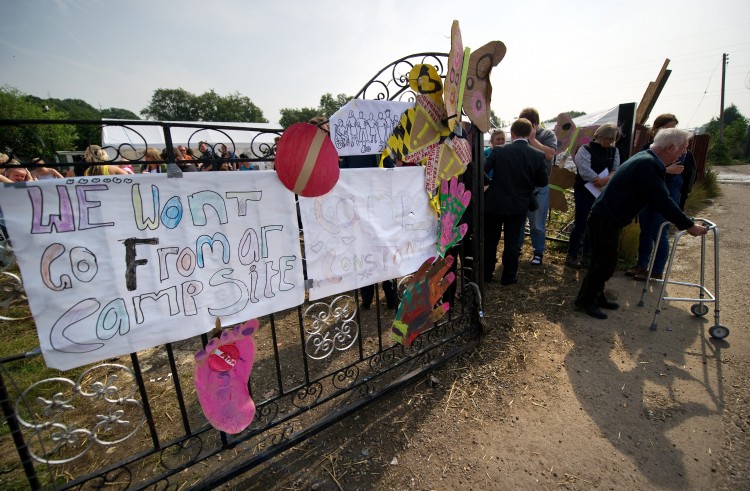
Residents of the Dale Farm travelers' site near Basildon in Essex, in southeast England, leave the communal area after addressing the media at a press conference, on September 2, 2011. (Leon Neal/AFP/Getty Images)

For the moment, things are quiet on Dale Farm in England’s Essex. The eviction notice served on the resident Irish Travelers, that would have sent them packing on Aug. 31, has not been enforced and the threatened families are carrying on with life as usual.

As a final stand against the impending evictions, the U.N. Committee on the Elimination of Racial Discrimination has stepped in and is due to hold a press conference at the farm.

The community of Irish Travelers is also seeking help from legal observers, which supporters are offering to train. The observers will be there to monitor the forced evictions if, and when, they occur.

Dale Farm in southeast England is home to the U.K.’s largest community of Travelers—a group similar to Gypsies and once known locally as “Tinkers.”

For years, the Travelers have been in dispute with the local council over the legality of their settlement. The latest round of the battle was due to come to a head at the end of last month, when the council said it would bulldoze all illegal dwellings.

According to local authorities, half of the land at Dale Farm, which the community lives on, is designated a Greenbelt and cannot, technically, be used for residential purposes. That means it can only be used for activities like horse rearing, agriculture, and renting vegetable gardens.

Jake Fulton, a spokesperson for the Dale Farm community, said bailiffs were supposed to arrive by midnight last Wednesday to physically remove the Travelers from the site, but they never did.

Blockades were also to have been placed on the roads around Dale Farm; something Fulton said will constitute a "significant violation of human rights."

Demand for Alternative

Fulton said Dale Farm residents are occupying themselves by doing trench work and building up camp centers. He confirmed that the bulldozers, which had been predicted to arrive, never showed up.

The Travelers do not know what will happen, he said. "The council is not likely to tell us anything. They’re just going to start doing things on their own."

Although the evictions have not yet happened, the Travelers are not reassured. “A lot of them are fairly upset,” said Fulton.

Dale Farm’s website describes the Travelers as “increasingly sleepless and stressed but undefeated” by the situation.

Pressure has been placed on the Basildon Council, the local government entity responsible for the evictions, to provide the Travelers with alternative places to go.

The Travelers now say that they would be willing to move if an alternate site with planning permission was provided. They reject the council’s previous offer of ‘bricks and mortar’ housing however, because of a cultural preference for trailers and small chalets.

The U.N., whose special rapporteur on housing previously wrote a statement to the U.K. government on the issue, released a stronger statement on Thursday, Sept. 1, condemning the eviction. The statement came from the Committee on the Elimination of Racial Discrimination.

Basildon Council originally gave the Travelers a 28-day eviction notice, but it has since been extended to two months after concerns were raised over the number of sick people and young children on the site.