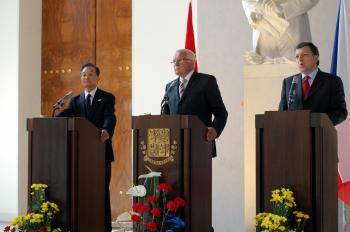
PRAGUE, Czech Republic—The 11th summit between China and EU opened in Prague castle on Wednesday May 20. The talks were chaired by Czech President, Vaclav Klaus, and President of the European Commission, Jose Manual Barroso, with Chinese counterpart Wen Jiabao.
Discussion centered on economic and environmental topics, with representatives signing an agreement on a proposed European-Chinese clean energy centre (EC2) to reduce greenhouse gas emissions. The second agreement is related to the future science and technology partnership (CESTY).
Two hours into the talks, President Klaus mentioned at the joint press conference that human rights were also mentioned in the discussion. “In Europe, we regard human rights issues as extremely important,” said Klaus.
Chinese Premier Wen Jiabao avoided the discussion with reporters by delivering a monologue, repeating the current Chinese leadership mantra of “development, stability and mutually useful relationships.” After mentioning the increase of the trade between China and EU, Wen expressed his discontent with the arms embargo imposed on China by European countries after the Tiananmen massacre in 1989. Towards the end, he didn’t forget to emphasize the “non-interference in internal affairs,” a typical response to human rights criticisms.
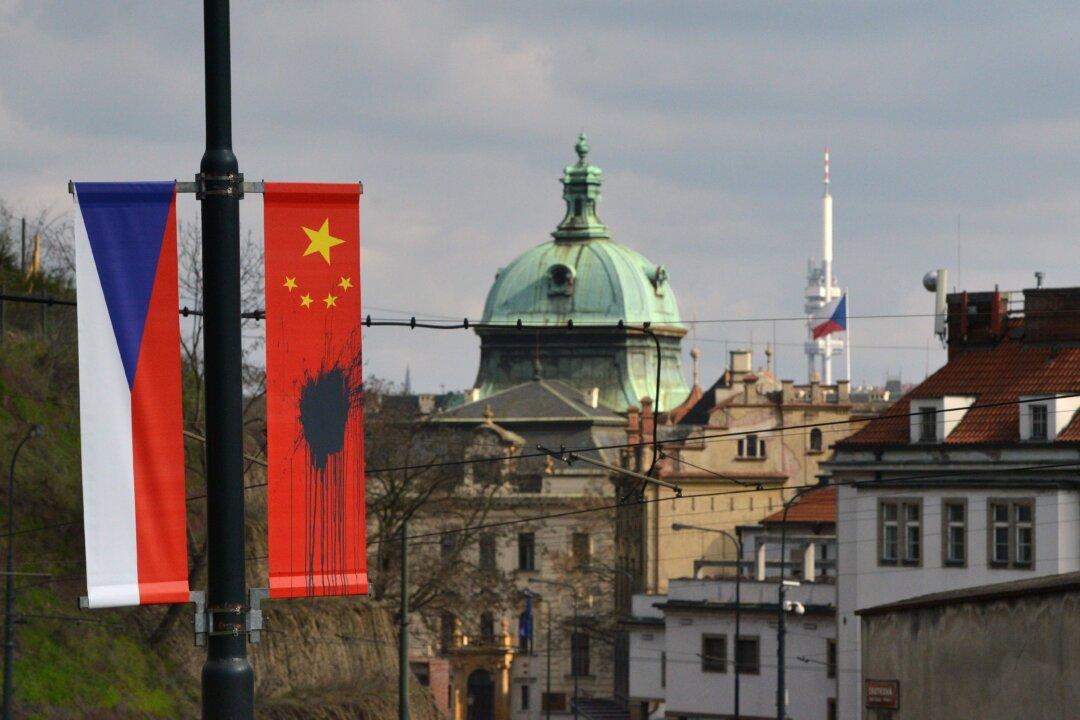
The Prague Summit was also accompanied by peaceful protests of human right advocates.
Discussion centered on economic and environmental topics, with representatives signing an agreement on a proposed European-Chinese clean energy centre (EC2) to reduce greenhouse gas emissions. The second agreement is related to the future science and technology partnership (CESTY).
Two hours into the talks, President Klaus mentioned at the joint press conference that human rights were also mentioned in the discussion. “In Europe, we regard human rights issues as extremely important,” said Klaus.
Chinese Premier Wen Jiabao avoided the discussion with reporters by delivering a monologue, repeating the current Chinese leadership mantra of “development, stability and mutually useful relationships.” After mentioning the increase of the trade between China and EU, Wen expressed his discontent with the arms embargo imposed on China by European countries after the Tiananmen massacre in 1989. Towards the end, he didn’t forget to emphasize the “non-interference in internal affairs,” a typical response to human rights criticisms.
The Prague Summit was also accompanied by peaceful protests of human right advocates.