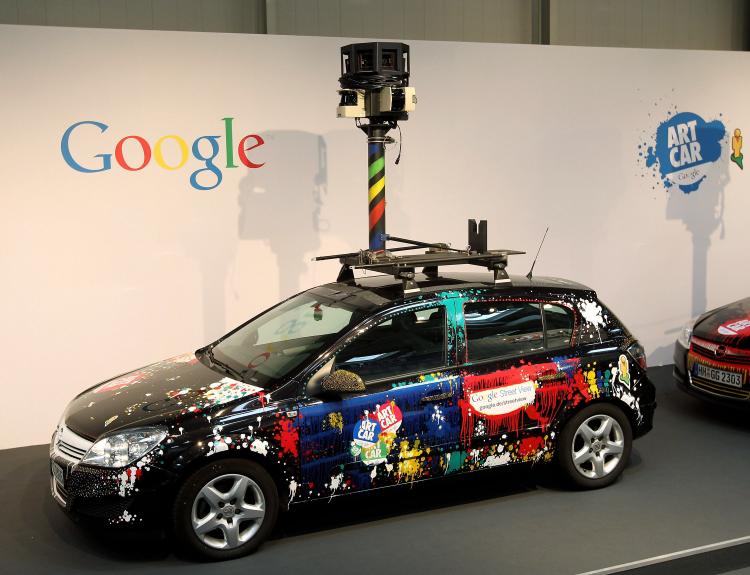
Prior to its launch in Germany, Google Street View has followed the country’s punctual culture by allowing people to remove or blur their homes from images, through cooperation with the German Data Protection Authority. German residents were able to send their privacy requests to Google by main mail since April 2009, and more recently, through the use of an online tool.
A total of 244,237 households have done so, adding up to 2.89 percent of the total households in 20 cities, Product Manager for Street View in Germany, Andreas Türk stated on the Google blog. Türk said that due to the complex process, the system is bound to have some mistakes, and some of the households may still appear clear in images.
The German government demanded the pre-launch objection process, and vowed in August 2010, to keep an eye on Google’s promise to respect individual privacy requests, and will intervene whenever necessary.
Google Street View allows users to see street-level images of everything on the street, including passersby, cars, and homes. The Web-based program is already available in more than 20 countries. Following its German launch, users will be able to use an online tool to report problems, in the case of unwanted views on their homes. They will also be able to report unblurred images of people’s faces or of vehicles’ license plates.
In the spring of this year, Google Street View ran into other privacy-related controversy. The company admitted that the Street View software collected unauthorized data, including e-mail passwords without users’ knowledge, from unprotected WiFi networks. The Internet search giant became the focal point of investigations by countries around the world, including in Europe, Canada, and Australia.
A total of 244,237 households have done so, adding up to 2.89 percent of the total households in 20 cities, Product Manager for Street View in Germany, Andreas Türk stated on the Google blog. Türk said that due to the complex process, the system is bound to have some mistakes, and some of the households may still appear clear in images.
The German government demanded the pre-launch objection process, and vowed in August 2010, to keep an eye on Google’s promise to respect individual privacy requests, and will intervene whenever necessary.
Google Street View allows users to see street-level images of everything on the street, including passersby, cars, and homes. The Web-based program is already available in more than 20 countries. Following its German launch, users will be able to use an online tool to report problems, in the case of unwanted views on their homes. They will also be able to report unblurred images of people’s faces or of vehicles’ license plates.
In the spring of this year, Google Street View ran into other privacy-related controversy. The company admitted that the Street View software collected unauthorized data, including e-mail passwords without users’ knowledge, from unprotected WiFi networks. The Internet search giant became the focal point of investigations by countries around the world, including in Europe, Canada, and Australia.