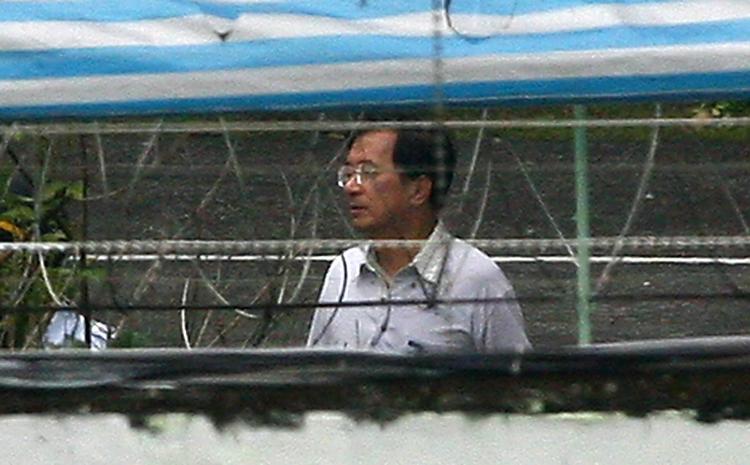
The life sentence imposed on former Taiwan President, Chen Shui-bian, and his wife on Sept 11 is considered by Chinese human rights defenders as a hallmark of democracy in Chinese society, highlighting the fundamental difference between Taiwan’s democratic system and China’s Communist totalitarian dictatorship.
Mr. Chen was found guilty on six charges involving corruption and money laundering by the Taipei District Court at his first trial.
Mo Shaoping, a human rights lawyer in Beijing, told The Epoch Times, “There are indeed some technical details to be further discussed in this case. For example, the substitution of a judge in the middle of the case, and the disagreement between the two judges on whether to detain Chen. But overall, the trial highlights the maturity of Taiwan’s democratic system and independent judiciary, which is worth learning by China.”
Yuan Hongbing, a former law Professor exiled in Australia, said, “The case shows the value of the democratic system. No matter how high ranking an official you are, you will surely be punished once you violate the law.”
Ran Yunfei, a young freelance writer in Sichuan Province, said: “Those corrupt officials in the Chinese communist regime became very nervous after Chen’s sentence. People will start thinking and ask why a former Taiwan President can be convicted while a large number of corrupt officials in China are still at large.”
He predicted that the authorities’ propaganda would, as usual, try to shift the focus and depict the case as a political fight between the Kuomingdang (KMT) and the Democratic Progressive Party. This is done to avoid more and more Chinese people understanding the benefits of democracy and freedom, the communist regime would also blame democracy for bringing social chaos in Taiwan.
In spite of the fact that many people compare Chen’s case to other corruption cases, Yuan stressed: “There are indeed some corrupt officials convicted in China. But there is a fundamental difference. They are just the ones who lost a political war within the Communist totalitarian dictatorship system.”
“China’s legal system has three characteristics. One, it’s being used to arbitrarily persecute those who dare to resist the Communist dictatorship, such as Tibetan and Uyghur people. Two, it’s being used to persecute those who fight for freedom, and the political dissidents. Three, it’s being used as a weapon by the winners to crack down on the losers within the Communist Party,” said Yuan.
Lawyer Mo also mentioned the difference in the judicial system between China and Taiwan. In China, there is a Politics and Law Committee in each district. On behalf of the Communist Party, the committee has the absolute power over the judicial system, while, in Taiwan, the judiciary is independent of any political party.
Mr. Chen was found guilty on six charges involving corruption and money laundering by the Taipei District Court at his first trial.
Mo Shaoping, a human rights lawyer in Beijing, told The Epoch Times, “There are indeed some technical details to be further discussed in this case. For example, the substitution of a judge in the middle of the case, and the disagreement between the two judges on whether to detain Chen. But overall, the trial highlights the maturity of Taiwan’s democratic system and independent judiciary, which is worth learning by China.”
Yuan Hongbing, a former law Professor exiled in Australia, said, “The case shows the value of the democratic system. No matter how high ranking an official you are, you will surely be punished once you violate the law.”
Ran Yunfei, a young freelance writer in Sichuan Province, said: “Those corrupt officials in the Chinese communist regime became very nervous after Chen’s sentence. People will start thinking and ask why a former Taiwan President can be convicted while a large number of corrupt officials in China are still at large.”
He predicted that the authorities’ propaganda would, as usual, try to shift the focus and depict the case as a political fight between the Kuomingdang (KMT) and the Democratic Progressive Party. This is done to avoid more and more Chinese people understanding the benefits of democracy and freedom, the communist regime would also blame democracy for bringing social chaos in Taiwan.
In spite of the fact that many people compare Chen’s case to other corruption cases, Yuan stressed: “There are indeed some corrupt officials convicted in China. But there is a fundamental difference. They are just the ones who lost a political war within the Communist totalitarian dictatorship system.”
“China’s legal system has three characteristics. One, it’s being used to arbitrarily persecute those who dare to resist the Communist dictatorship, such as Tibetan and Uyghur people. Two, it’s being used to persecute those who fight for freedom, and the political dissidents. Three, it’s being used as a weapon by the winners to crack down on the losers within the Communist Party,” said Yuan.
Lawyer Mo also mentioned the difference in the judicial system between China and Taiwan. In China, there is a Politics and Law Committee in each district. On behalf of the Communist Party, the committee has the absolute power over the judicial system, while, in Taiwan, the judiciary is independent of any political party.