In the early stages of the 2010 FIFA World Cup in South Africa, the naysayer talk was all about the lack of goal scoring. I believe that was unjustified. Don’t judge things too soon.
But now their focus has been directed at the scandalous officiating that has plagued the round of 16 games involving Argentina versus Mexico and England versus Germany. Let’s also not forget some of the farcical red cards that have been handed out to the likes of Brazil’s Kaka or USA’s third goal against Slovenia being annulled for a mysterious foul. FIFA and the World Cup have deservedly received its fair share of criticism here.
To briefly recap, Argentina’s Carlos Tevez scored the game’s first goal from a clearly offside position against Mexico. The goal should not have counted but it was.
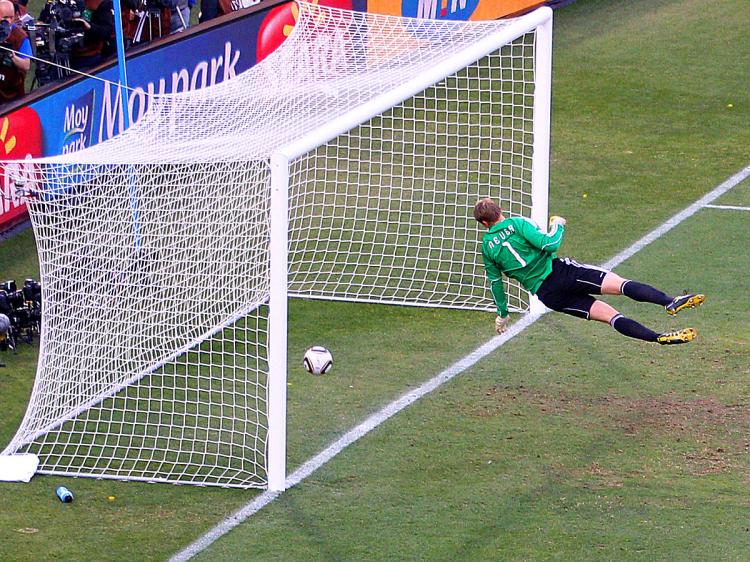
Even worse, England’s Frank Lampard lobbed a ball over German goalkeeper Manuel Neuer that hit the underside of the crossbar and bounced at least two feet over the goal line before being grabbed by Neuer. The officials allowed play to continue as if no goal was scored.
FIFA will not be using the referees who committed the above-mentioned blunders for future matches in the tournament.
The world’s biggest sporting event is at a crossroads as it has failed to use technology to counteract the inevitable human officiating error. Errors like Frank Lampard’s goal not being awarded have to make people question the integrity of soccer at the highest level.
North American sports fans are acutely aware of the presence technology has in the NFL, NHL, and even tennis, for example. With the use of instant replay and the accompanying rules surrounding its use, these sports have changed and players and fans have adapted for the better.
Soccer, meanwhile, does not employ instant replay and even unlike the NHL, which moved to two on-ice referees years ago, has not even added additional officials other than the four (one of which remains off the field for mostly administrative purposes).
For the longest time, FIFA has held on to tradition and backed the human element as a part of the game. Even more recently FIFA president Sepp Blatter said instant replay would be too expensive to implement. Sorry, nothing that important is too expensive for the World Cup.
Do we want more “Hand of God” goals? Is that the tradition we want to be proud of in the world’s most popular sport?
But, to Blatter’s credit, he said on Tuesday that they would definitely revisit the situation. He actually had no other choice.
Blatter also apologized to both England and Mexico. Hope that makes them feel better.
Soccer purists worry about the delay of instant replays, slowing down the flow of the game, when to use it, when not to use it and so on.
The “flow of the game” in soccer is not what it used to be. Soccer games can be very chippy depending on the referee and the teams involved. Players argue with referees, which introduces stoppages that can last upward of two minutes. (Mexico players argued emphatically with referee Roberto Rosetti after Tevez’s goal).
Introduce instant replay for goal line situations. It is black or white. Has the ball wholly crossed the goal line? For situations like Tevez’s goal, instant replay should be used to determine if the offending player was offside if a goal is scored.
Protecting the integrity of the game is what’s most important. The game will change but everybody will adapt. Years down the road after the change has been adopted, fans, coaches, players, and managers will all wonder how the game could be played without it.
Follow Rahul on Twitter at www.twitter.com/RV_ETSports
But now their focus has been directed at the scandalous officiating that has plagued the round of 16 games involving Argentina versus Mexico and England versus Germany. Let’s also not forget some of the farcical red cards that have been handed out to the likes of Brazil’s Kaka or USA’s third goal against Slovenia being annulled for a mysterious foul. FIFA and the World Cup have deservedly received its fair share of criticism here.
To briefly recap, Argentina’s Carlos Tevez scored the game’s first goal from a clearly offside position against Mexico. The goal should not have counted but it was.
Even worse, England’s Frank Lampard lobbed a ball over German goalkeeper Manuel Neuer that hit the underside of the crossbar and bounced at least two feet over the goal line before being grabbed by Neuer. The officials allowed play to continue as if no goal was scored.
FIFA will not be using the referees who committed the above-mentioned blunders for future matches in the tournament.
The world’s biggest sporting event is at a crossroads as it has failed to use technology to counteract the inevitable human officiating error. Errors like Frank Lampard’s goal not being awarded have to make people question the integrity of soccer at the highest level.
North American sports fans are acutely aware of the presence technology has in the NFL, NHL, and even tennis, for example. With the use of instant replay and the accompanying rules surrounding its use, these sports have changed and players and fans have adapted for the better.
Soccer, meanwhile, does not employ instant replay and even unlike the NHL, which moved to two on-ice referees years ago, has not even added additional officials other than the four (one of which remains off the field for mostly administrative purposes).
For the longest time, FIFA has held on to tradition and backed the human element as a part of the game. Even more recently FIFA president Sepp Blatter said instant replay would be too expensive to implement. Sorry, nothing that important is too expensive for the World Cup.
Do we want more “Hand of God” goals? Is that the tradition we want to be proud of in the world’s most popular sport?
But, to Blatter’s credit, he said on Tuesday that they would definitely revisit the situation. He actually had no other choice.
Blatter also apologized to both England and Mexico. Hope that makes them feel better.
Soccer purists worry about the delay of instant replays, slowing down the flow of the game, when to use it, when not to use it and so on.
The “flow of the game” in soccer is not what it used to be. Soccer games can be very chippy depending on the referee and the teams involved. Players argue with referees, which introduces stoppages that can last upward of two minutes. (Mexico players argued emphatically with referee Roberto Rosetti after Tevez’s goal).
Introduce instant replay for goal line situations. It is black or white. Has the ball wholly crossed the goal line? For situations like Tevez’s goal, instant replay should be used to determine if the offending player was offside if a goal is scored.
Protecting the integrity of the game is what’s most important. The game will change but everybody will adapt. Years down the road after the change has been adopted, fans, coaches, players, and managers will all wonder how the game could be played without it.
Follow Rahul on Twitter at www.twitter.com/RV_ETSports