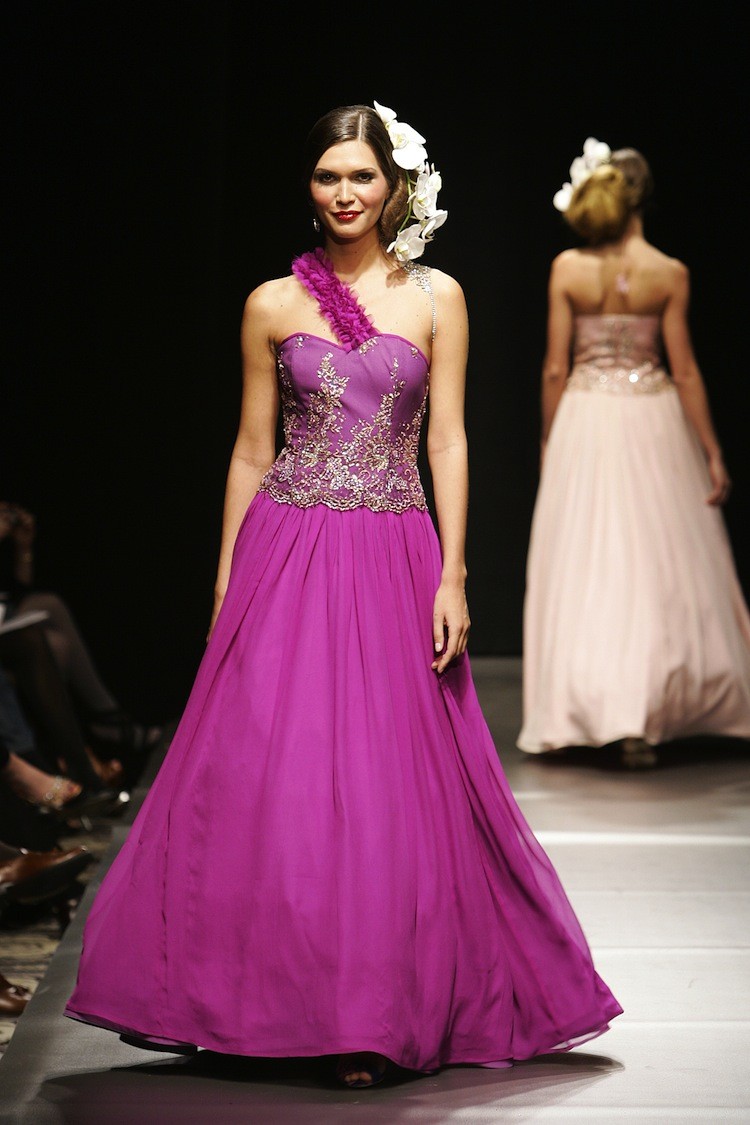
The students presented their findings on Tuesday, two days before Fashion Week kicks off right beside the university. One of the graduate students, Michael Pylyp, looked through the rain-streaked boardroom window and expressed surprise at the quick progress of event setup in Damrosch Park near 62nd Street and Ninth Avenue.
A small city of big white tents sprawls over 87,000 square feet. The economic reverberations spread through the city.
Fashion Week brings about 230,000 attendees and more than $770 million in economic activity to the city every year, according to a 2010 press release from Mayor Michael Bloomberg’s office. Fordham accounting and marketing students focused their study on businesses within a 10-block radius of the venue.
They found attendees pump about $21 million into the Lincoln Center area. Too bad for the Bryant Park area, which hosted the event until 2010. Fashion Week moved uptown to expand by 17,000 square feet.
The average amount spent by one attendee over the entire eight days is $650. That includes hotel, restaurants, retail, and more. It also includes $1.4 million in taxes.
The study focused mainly on the money spent by “back of house” staff, including security guards, makeup artists, and stylist among others; “working front of house” staff includes design house staff, producers, public relations, sales, and more; as well as members of the press, event organizers, and sponsors.

“This group of people, they’re the celebrities, they’re the V.I.P.s, so they’re just going to be hard to reach a lot of times,” noted Claire McCormak, managing director for the study. Most attendees are invited by the design houses, which do not publicize their guest lists.
Students were surprised to find that the largest portion of money was generated by “ambush events,” as professor Peter Johnson called them. That is, people that gathered for Fashion Week hold side events for which they rent venues, pay caterers, and tally other expenses.
Cost of success
Community Board 7 Chairman Mel Wymore pointed out that there are costs involved in the event as well.
“We hope to keep it sustainable by balancing the costs and the benefits,” said Wymore after the presentation. Wymore listed some costs, “security, increased traffic on the streets, electricity, gas."
She reports a good working relationship with event organizers. They worked together to address electricity and noise pollution issues by getting generators for this years event that are quieter than those used previously.
Runway to boardroom
Fordham University College of Business Dean Donna Rapaccioli wanted to go into fashion, but changed her mind a week before applying to college in the 1980s. “I took a more conventional path. … You can’t get any more conventional than accounting,” she laughed. But, it’s the accountants that keep fashion in business.
The students made recommendations at the end of their review, hoping to help the area generate even more revenue.
Local businesses should offer discounts, broader price ranges, and later hours to customers coming for Fashion Week. Local business associations should develop a guide to dining, hotels, and entertainment. And, finally, local businesses could expand meeting space to capitalize on the “ambush events.”