Execs Confer on America’s Declining Presence in the Global Media

December 12, 2010 Updated: October 1, 2015

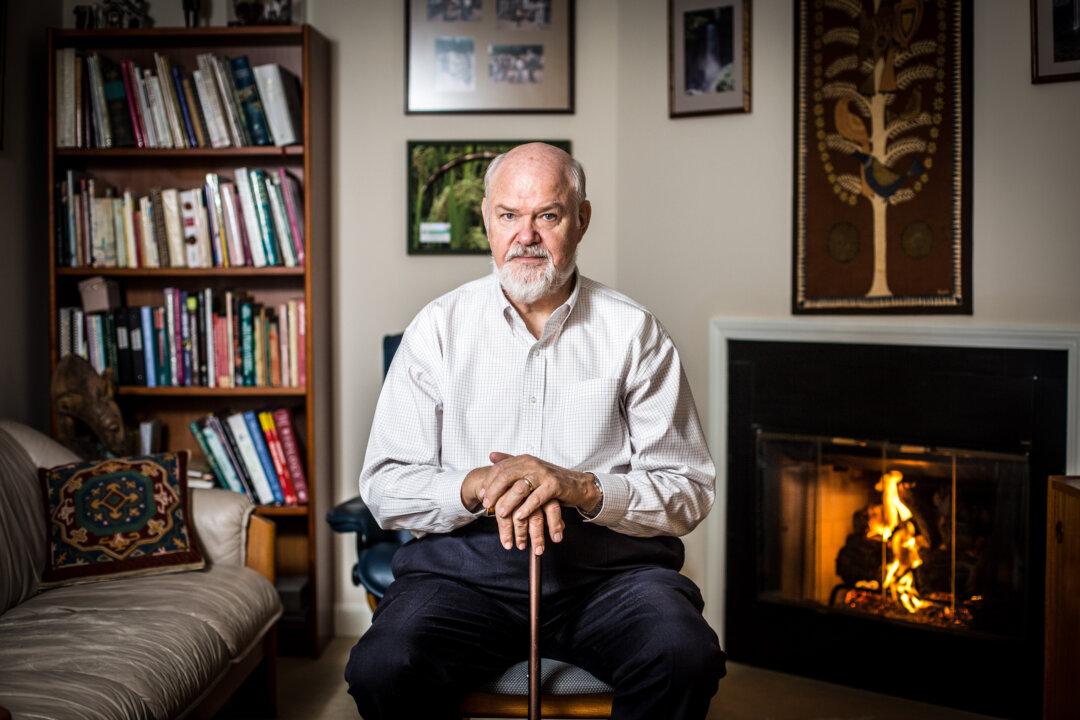
Lee Bollinger, President of Columbia University, New America Foundation on Dec. 8. (Andrea Hayley/The Epoch Times)
WASHINGTON—A gathering of media executives last week highlighted the dilemma of declining American international news coverage at a time when the country’s global ties, and need for global insights, have never been more crucial.

According to the American Journalism Review (AJR), the number of foreign correspondents employed by U.S. newspapers has decreased from 307 in 2003, to 234 in 2010.

The number of correspondents is actually “shockingly” less than 100, said Susan Glasser, editor-in-chief of Foreign Policy Magazine, one of the panelists at Wednesday’s New America Foundation discussion on international broadcasting and public media.

The great success of the Internet, at once a boon for public access to information, has also deeply disrupted mainstream media’s business models, leaving news companies unable to support the same level of foreign coverage as before.

According to Loren Jenkins, editor of the foreign desk at National Public Radio (NPR), it costs about half a million dollars to keep a single correspondent employed. Twenty news companies have cut their foreign bureaus entirely since 1998, according to AJR. Today, the number of newspapers covering international news has dwindled to just a handful, while the rest rely on wire services to fill the gaps.

Lee Bollinger, president of Columbia University and a First Amendment scholar, said the decline has been radical and happened quickly.

“I think it is hard for us to grasp what the consequences of this will be,” said Bollinger.

Bollinger also points out that globalization defines our era, meaning that we have never been so interconnected and interdependent on the actions and choices of other countries. A deep understanding is needed to assist in decision making, he said during a keynote conversation with Glasser.

Looking to the future, Bollinger believes the way to solve the dilemma is to support a publicly funded world news service, something like the BBC—that would operate autonomously from the U.S. government.

“I believe this is something that can bring American journalism, which I happen to think is a great achievement of the country, both to the world, and back to the U.S.,” said Bollinger.

US Publicly Funded Institutions

The United States has a number of publicly funded institutions, but none that have the kind of scope and reach Bollinger has in mind.

Voice of America (VOA), and Radio Free Asia (RFA) are both radio stations broadcasting internationally with very specific mandates under the Broadcasting Board of Governors (BBG). The two stations’ explicit affiliation with the BBG leaves them susceptible to the perception of being government-controlled.

NPR, broadcasting within the United States, is funded in part by the government, but with the majority coming from a combination of foundations, public institutions, individuals, and businesses.

NPR is actually an anomaly among news organizations, as they have been able to increase their number of foreign bureaus from 6 to 19 in the last decade due to increases in listeners (largely after attracting attention for their coverage during the 911 terrorist attacks) and a corresponding increase in donations.

New Ways of Operating

Represented at the event were Nashville State Television, CNN, Independent Television Service (ITVS), VOA, and the Pulitzer Center on Crisis Reporting, PBS, Al Jazeera, and Global Voices. They all discussed ways to enhance understanding among different country’s people and about how their respective companies are adapting to change.

Some of the media companies are sharing resources, such as foreign correspondents, or, in the case of Al Jazeera, making news available to other media, (as long as credit is given to the source).

Tamara Gould, VP of ITVS International, an organization that grew out of a mandate by Congress, to fund, manage, present, and promote documentaries throughout the world, said she had partnered with hundreds of broadcasters already, and is eagerly pursuing more opportunities.

“I think that how we are doing it—trying to take a traditional model and superimpose it on our globalized world—obviously something is missing, and I think that our traditional formats need to be reinvented,” she said.

Partnerships, collaboration, and working together to maintain media integrity and quality, were points emphasized by nearly all panelists in the three and a half hour long event.

While citizen journalism was acknowledged and welcomed alongside traditional media, all participants felt that mainstream media was still very important and that its business models would definitely evolve to meet the needs of the future.