Defending the Integrity of Thomas Jefferson

September 5, 2011 Updated: September 29, 2015

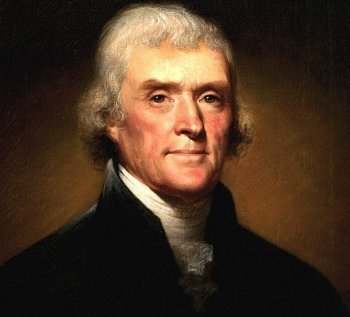
Portrait of Thomas Jefferson by Rembrandt Peale in 1800.  (Courtesy of Wikimedia Commons)
Portrait of Thomas Jefferson by Rembrandt Peale in 1800. (Courtesy of Wikimedia Commons)
WASHINGTON—The alleged liaison between Thomas Jefferson and Sally Hemings entered a new phase upon the release of an updated scholarly report at the National Press Club on Sept. 1. The “Jefferson-Hemings Controversy: Report of the Scholars Commission” seeks to overturn the widely held belief that the author of the Declaration of Independence and third president of the United States had an affair with one of his slaves, Sally Hemings, and was the father of one or more of her children.

The liaison has gained acceptance and notoriety in popular culture. In February 2000, “Sally Hemings: An American Scandal” was shown as a mini-series on CBS, starring actor Sam Neill as Thomas Jefferson. The series dramatizes a teenage Sally, who served as maid to Jefferson’s daughters Martha and Mary, entering into a relationship with the 46-year-old widower in Paris when he was serving as ambassador to France. Thus begins a 38-year relationship, resulting in male offspring that resemble Jefferson, according to this dramatization. Nick Nolte and Thandie Newton starred in “Jefferson in Paris,” which portrays a freely chosen romance between the two, bitterly resented by Jefferson’s daughter.

This new report rejects this account as not credible.

Jefferson privately denied the story, but made “a decision not to comment upon accusations made against his character,” said professor Robert F. Turner, currently at the University of Virginia School of Law, who spoke at length at the National Press Club book release. Politics in Jefferson’s time could get very nasty. According to Turner, the story of the Jefferson-Hemings relationship was first printed in a newspaper by someone who expected a payoff from Jefferson for lying about John Adams, which he claimed enabled Jefferson to win the election for president. Not even Jefferson’s political adversaries, Alexander Hamilton and John Adams, took the story seriously, according to Turner.

Historians Disagree

Historians fall on both sides of the controversy. The Thomas Jefferson Memorial Foundation (later “Memorial” was dropped) looked at evidence, including DNA results from a 1998 study, and concluded in a report in 2000 that there was “a high probability that Thomas Jefferson was the father of [Sally Hemings last child] Eston Hemings, and that he was perhaps the father of all six of Sally Hemings’ children listed in Monticello records.”

However, the foundation stated that, “Thomas Jefferson’s paternity of one or more of Sally Hemings’s children cannot be established with absolute certainty.”

Many Jefferson admirers felt that the foundation did not give Jefferson “a fair hearing,” said Turner. The Thomas Jefferson Heritage Society (TJHS) was therefore created and invited Turner to set up the Scholars Commission, consisting of over a dozen senior scholars to re-examine the evidence on the paternity of Hemings’s children and issue a report. Turner became the chairman of this commission. He said he insisted that the selection of the members be independent of the TJHS and that there would be no outside interference.

The 432-page Final Report of the Scholars Commission released at the news conference is an updated and expanded version of the one released in 2001. With one “mild” dissenting vote, the panel scholars strongly disagreed with the foundation.

It was much more likely that the father of Hemings’s youngest son was the president’s brother Randolph or any of Randolph’s five sons, “all of whom were invited by Jefferson to visit Monticello shortly before Eston’s most likely conception date,” said Turner.

Next…Mistaken Beliefs in the Jefferson-Hemings Controversy