Chirac’s Trial Starts … Without Him

September 7, 2011 Updated: October 1, 2015
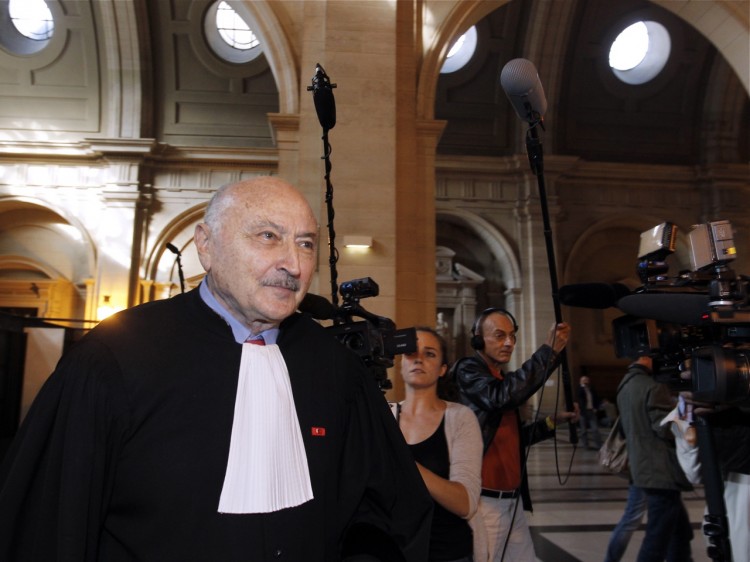
One of the lawyers of France's former president Jacques Chirac, Georges Kiejman speaks to the press at Paris' court, on Sept. 5, 2011. (Francois Guillot/AFP/Getty Images)

PARIS—Former French president Jacques Chirac was absent at the first day of his Paris trial in which he stands accused of fabricating fake job positions as mayor of Paris from 1977 to his election as French president, in 1995.

During 1990-1994, 21 Union for a Popular Movement (UMP) members are alleged to have been paid by the city of Paris, while working solely on preparing for Chirac’s 1995 presidential campaign.

Former Prime Minister Alain Juppé, who is France’s current defense minister, was convicted in 2004 for organizing nine out of the 21 fake jobs.

As Chirac’s closest associate, Juppé received a 14-month suspended sentence and a one-year temporary exclusion from holding civic duty. Juppé is scheduled to testify in court on Sept.15.

Since it appears unlikely that Chirac will ever attend his own trial—due to his declining mental and physical health—his lawyers are expected to speak on his behalf.

French former president Jacques Chirac arrives at his office, on September 1, in Paris, five days ahead of the start of his trial for corruption during his tenure as Paris mayor in the 1990s. (Bertrand Langlois/AFP/Getty Images)
Some suspect that the former president has Alzheimer’s disease, a pathology not quoted in his latest medical report. Neurologists have said that Chirac is subject to anosognosia—a medical term describing a person’s inability to recognize his own physical and mental condition.

Although Chirac maintains that the “fake jobs” were legitimate and useful to the city, UMP and Chirac agreed earlier this year to pay 1.7 million euros (US$2,383,330) and 500,000 euro (US$700,956) respectively, to the city of Paris in compensation.

It was this conciliatory move that prompted the city to abandon its legal complaint, but it in no way signals an end to legal prosecution, since the prosecutor now argues that the financial deal is a tacit recognition of harm done.

Chirac was able to postpone the trial for years, first with his presidential immunity that lasted from 1995-2007, then via multiple procedural tactics, the latest being the “priority constitutional question”(QPC) raised by his lawyers. The QPC is a procedure questioning the conformity of the trial with the French constitution—which was enough to delay the opening of the trial for six additional months.

French judges however made it clear that this legal procedure would, of course, come to an end and the trial would continue—with or without Chirac being present.

On the first day of the trial, Sept. 7, former Chirac collaborators answered the judge questions. Michel Roussin, who headed Chirac’s cabinet, emphasized that his role in the case was “purely technical” and although he admitted signing employment contracts for nine UMP members, they were to him, just an “anecdotal” part of his job.