Chinese leader Xi Jinping has installed a new commander to lead the anti-graft drive in the military, as he seeks to fill key vacancies created by the widening political cleansing ahead of a key Party gathering next year.
The Chinese military has been embroiled in an unprecedented purge that has sparked questions about its combat readiness. Shortly after coming into power in late 2012, Xi unleashed a sweeping anti-corruption campaign, a drive that also serves to remove his political rivals.
On July 3, Zhang Shuguang, a veteran anti-corruption enforcer, was promoted to the rank of full general at a ceremony in Beijing, according to state media Xinhua.
The news report referred to Zhang as secretary of the Central Military Commission’s discipline inspection commission, a top military body tasked with investigating senior officers’ loyalty and commitment to the Party.
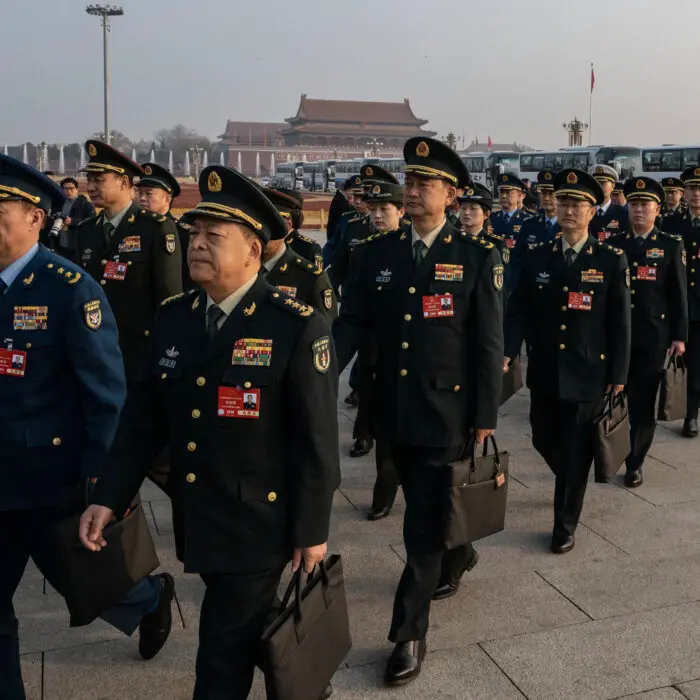
In recent years, the purge has reached new heights, creating vacancies at the leadership of every service branch—the Army, Navy, Air Force, Rocket Force, and Armed Police Force.
At the country’s apex military body, the Central Military Commission, five of six generals have been effectively ousted. The only surviving member is Zhang Shengming, a veteran political commissar with little experience in commanding military operations. He headed the discipline inspection commission for nearly a decade before being replaced by Zhang Shuguang.
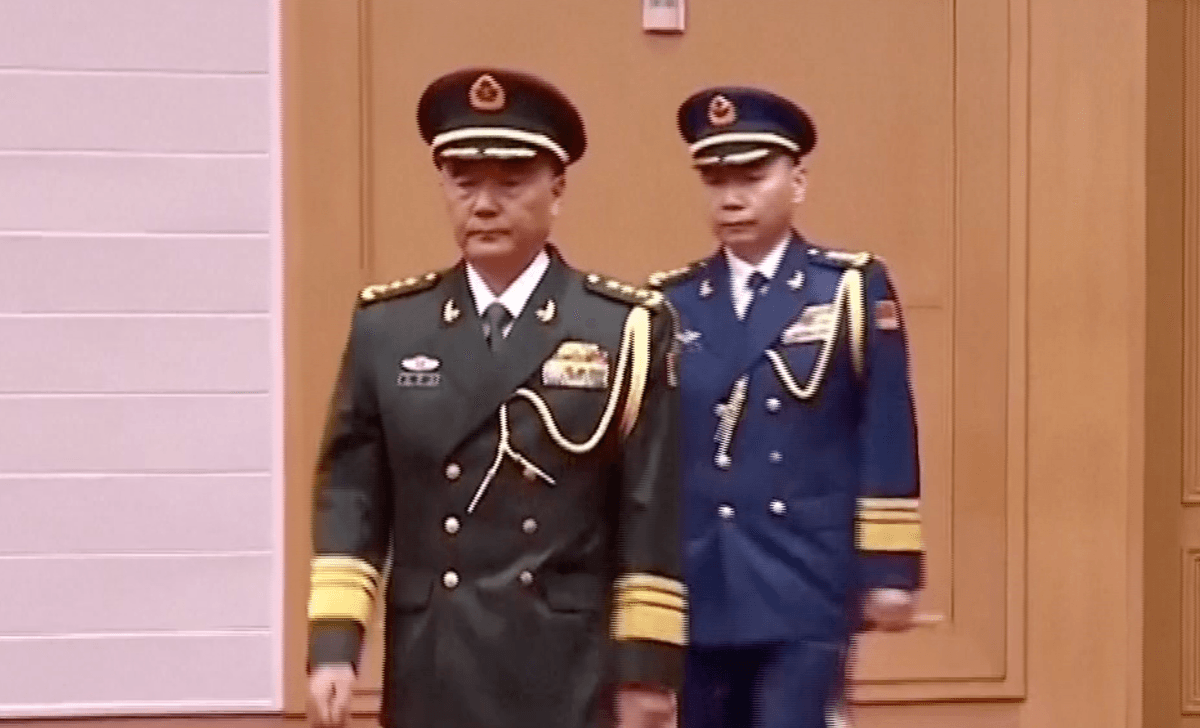
At the July 3 ceremony, Wang Gang was also elevated to the full general rank and named the new commander of the People’s Liberation Army (PLA) Air Force.
At age 61, Wang is believed to be the youngest active-duty full general in the PLA, according to Lianhe Zaobao, a major Singapore-based Chinese-language newspaper.
Speculation about the two commanders’ possible promotion emerged earlier this week after they were spotted seated alongside the top PLA commanders at a ceremony marking the Party’s 105th anniversary.
The momentum of the purges showed little sign of abating. In April, Xi sent all senior military commanders to a 10-week political training course in Beijing. During the session, they studied Xi’s ideology, major criminal cases involving alleged corrupt officials and their confession materials, as well as the Party’s and the military’s disciplinary regulations, according to a June 24 report by the PLA Daily, the military’s official newspaper.
Every five years, the CCP reshuffles its leadership during its Congress, but behind-the-scenes preparations often begin years in advance.
The next gathering, the 21st National Congress, is expected to take place in late 2027.