The Chinese regime’s failure to rein in overcapacity is inflicting mounting damage at home and abroad, trend experts warn, prompting the United States and other nations to impose steeper tariffs and tighter restrictions on goods from China.
U.S. Trade Representative Jamieson Greer told Fox News on July 27 that Washington is now conducting an investigation under Section 301 of the Trade Act of 1974 targeting excess capacity in countries such as China, and that it could lead to additional tariffs.
“They have industrial policies to give subsidies to their companies, so they don’t have to make a profit, and they can sell and dump manufactured goods in the U.S.,” Greer said.
He said the U.S. government is nearing the end of that investigation.
China’s Ministry of Commerce responded to the U.S. allegations on July 28, claiming that there is not necessarily a connection between industrial subsidies and excess capacity.
It accused the United States of undermining fair competition through tariffs and export controls, and criticized the European Union for erecting investment barriers in key industries, such as the electric vehicle (EV) sector.
A ministry spokesperson said on July 27 that Washington had promised during bilateral trade talks that it would cap replacement tariffs on Chinese goods at 20 percent, calling for the removal of unilateral tariff measures.
China’s remarks come amid escalating trade tensions with the EU, as German Chancellor Friedrich Merz and French President Emmanuel Macron raised alarm over the widening EU–China trade gap during a joint cabinet meeting on July 17.
Merz stressed that he does not seek a trade war with Beijing but wants dialogue over industrial overcapacity, according to a Reuters report.
According to figures released by China’s General Administration of Customs on July 14, June exports reached a record $412.38 billion, posting a single-month trade surplus of $125.6 billion.
Severe Vulnerability
“China rejects the overcapacity label, calls the U.S. probe unilateralism, and reserves the right to retaliate,“ Garcia-Herrero told The Epoch Times.
“Domestic tweaks exist, but no public concession to external pressure.”
Frank Tian Xie, the John M. Olin Palmetto chair professor in business and marketing at the University of South Carolina–Aiken and an expert on China’s business landscape, said the Chinese regime’s rapid pushback exposes a severe, core vulnerability in its economy.
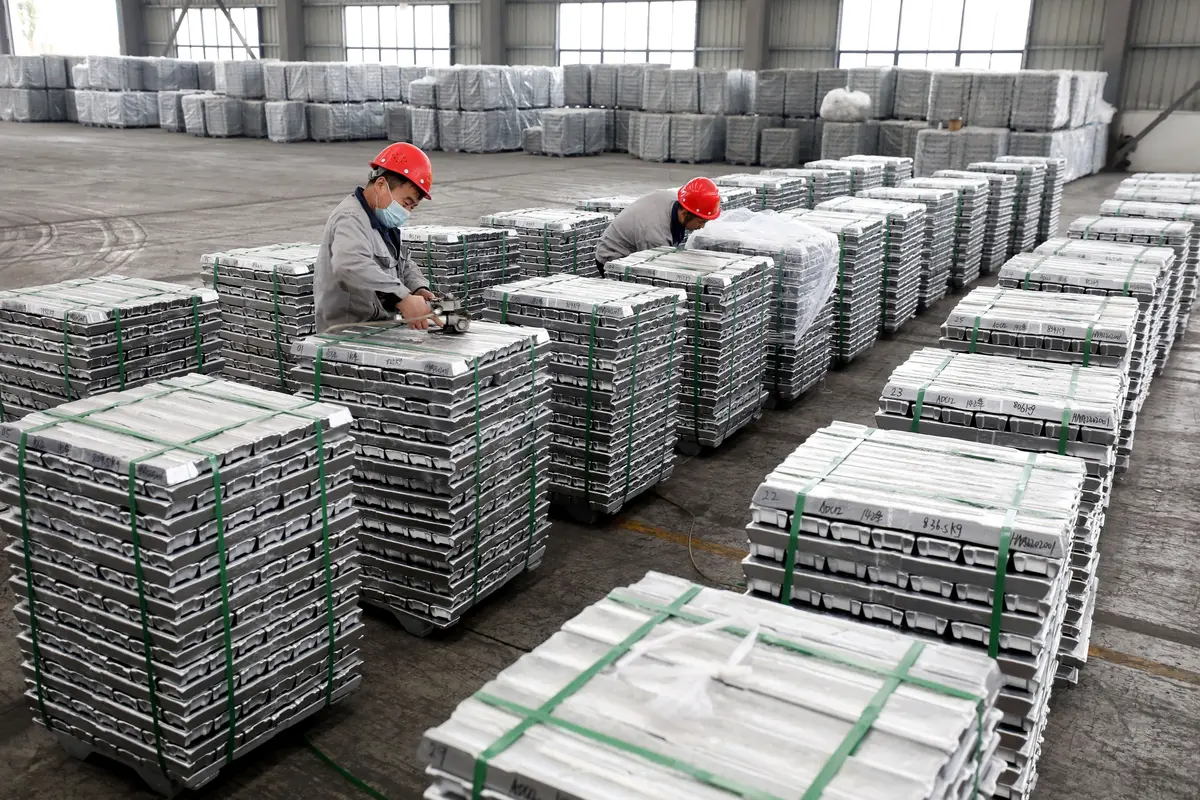
“With Chinese consumer demand sharply weakened, China has little choice but to redirect excess capacity to markets like South America and Africa,” Xie told The Epoch Times.
“But the allegations from the United States threaten to devastate this export channel, making an aggressive counterattack the only option.”
Xie said China has no incentive to resolve the overcapacity crisis, since doing so would plunge the manufacturing sector into a severe downturn.
“Such a scenario would drive China’s economy into an even deeper recession, an outcome the regime clearly intends to avoid,” he said.
China’s manufacturing purchasing managers’ index (PMI) fell to 49.2 in July, down 1.2 points from June, according to data released by the country’s National Bureau of Statistics on July 31.
The reading marked manufacturing’s first drop into contraction territory since February, pointing to a deepening slowdown in the sector.
‘Forceful Takeover’

“This undercuts competitors abroad,” she said.
“[It] forces factory stress and restructuring elsewhere, while delivering cheaper green tech to buyers.”
China’s three major solar companies—Tongwei, LONGi, and TCL Zhonghuan—are projected to report combined losses of more than 10 billion yuan ($1.48 billion) in the first half of 2026, with industry sources attributing the losses to a supply-demand imbalance and contracting demand, Chinese financial outlet Yicai reported on July 25.
Echoing Garcia-Herrero’s assessment, Xie said the inability of nearly any country to compete with China in solar panels illustrates the consequences of the regime’s “forceful takeover” of the global market.
“Overcapacity has fueled cutthroat competition, making it impossible for Chinese manufacturers to turn a profit,” Xie said.
“Massive subsidies from the Chinese Communist Party skew global markets and squeeze out foreign industries.”
An analysis published by the Organisation for Economic Co-operation and Development on June 1 revealed that Chinese firms received up to eight times more state support than their foreign competitors.
The international body said that the subsidies are highly concentrated in industries such as solar photovoltaic panels, steel, and aluminum, which can “distort competition” and “artificially shift market share.”
“With China’s traditional economic drivers—investment, consumption, and exports—stalling, the country is now leaning on new energy vehicles, batteries, solar-powered products, and artificial intelligence to fuel growth,” he said.
“By exporting excess goods instead of shutting down factories, China is essentially exporting its unemployment problem to other countries, which they are unwilling and unable to accept.”
Tariffs and Restrictions
Xie said that although Beijing claims to have secured tariff-cap commitments from Washington, the Trump administration could still respond with additional trade measures if the overcapacity crisis remains unresolved.
“For instance, Washington has already slapped a 100 percent tariff on Chinese EV, effectively shutting them out of the U.S. market. Other Chinese products could be next,” he said.
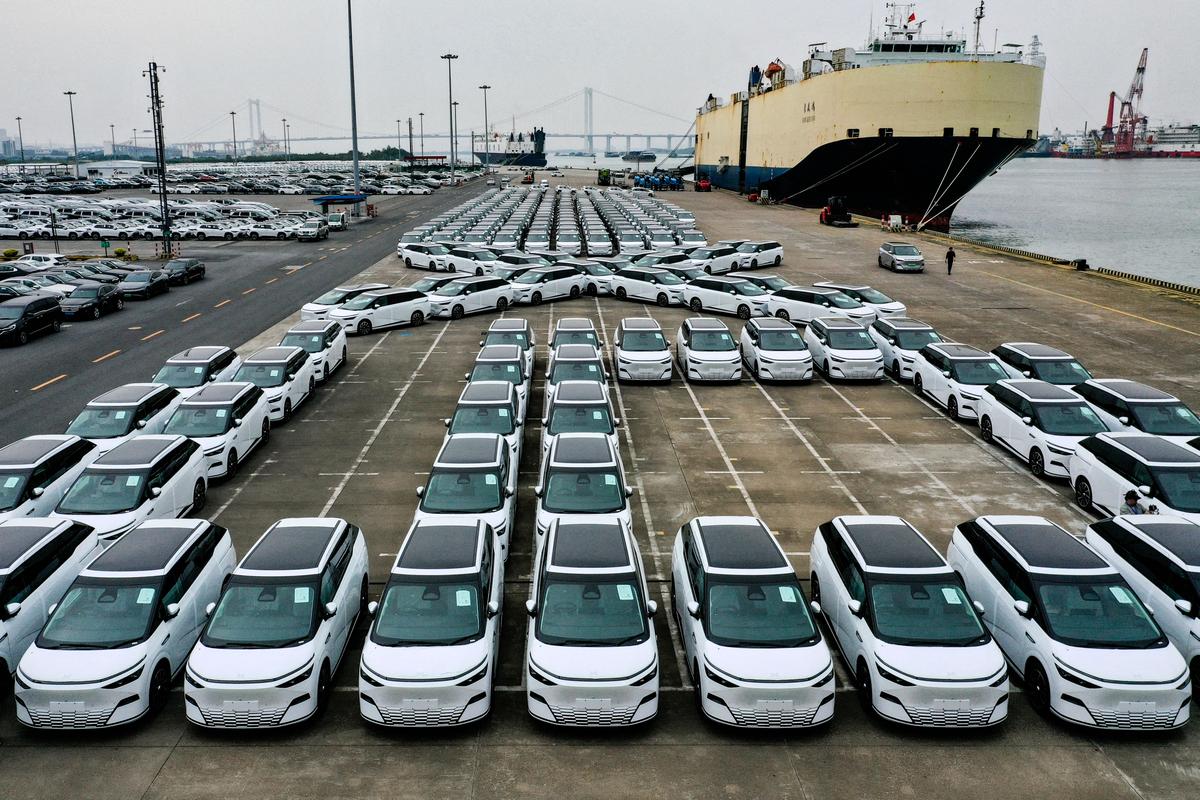
Xie said more countries could adopt similar restrictions.
“Beyond deploying protective tariffs like the United States, other nations might directly restrict imports from China,” he said.
“The EU also uses Foreign Subsidies Regulation and procurement restrictions, plus local-content rules, investment screening, and domestic support,” Garcia-Herrero said.
Xie said many countries may urge the Chinese regime to compete fairly but struggle to contend with Chinese firms that benefit from government backing and control comprehensive supply chains in many industries, leaving their economies vulnerable to aggressive trade expansion.
“Once these nations realize the massive trade deficits and severe depletion of their foreign exchange reserves, a showdown with China becomes inevitable,” he said.