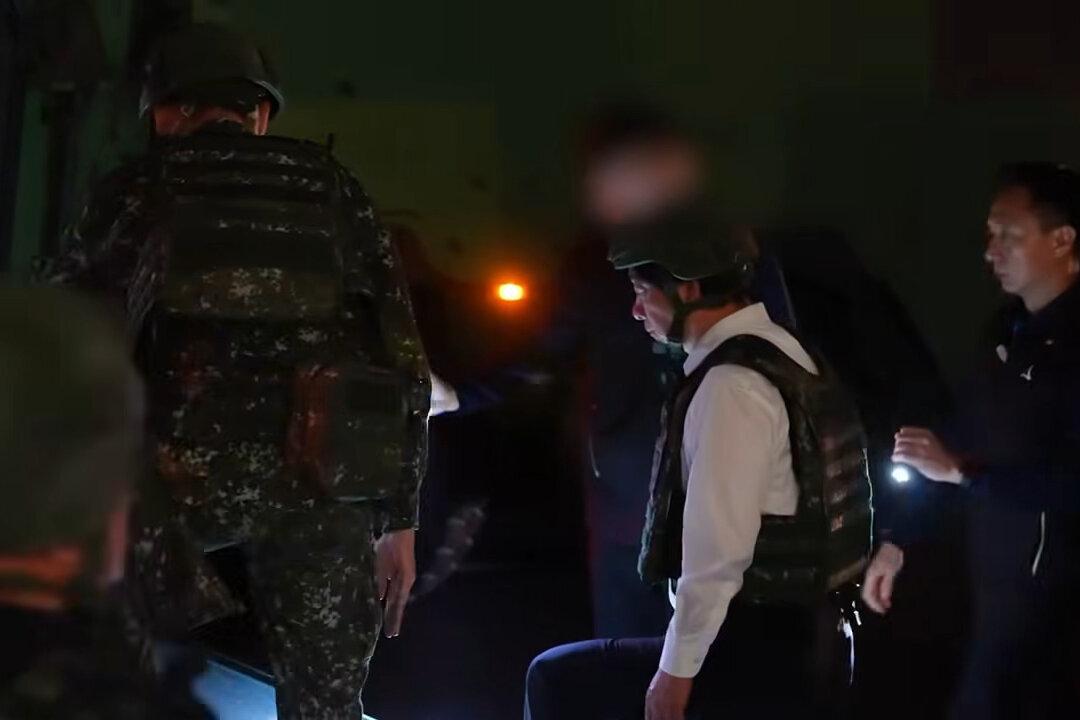
Taiwan’s military began testing decentralized command in its annual Han Kuang exercise on Aug. 5 as naval vessels dispersed from port, aircraft relocated to preserve combat power, and southern forces moved north to reinforce the Taipei area.
The tanks will take part in a defense-in-depth exercise in northern Taiwan. They previously participated in a separate immediate readiness exercise in June, so Han Kuang will not be their first field deployment.
Han Kuang 42 will run continuously through Aug. 14. Higher commands acting as the opposing force will issue changing scenarios rather than follow a fixed script, requiring units to adjust their operations and continue their missions if communications with headquarters are disrupted.
Taiwanese Defense Minister Wellington Koo said commanders at every level must understand their superiors’ intent and be able to act independently if contact with higher command is lost.
Forces Disperse
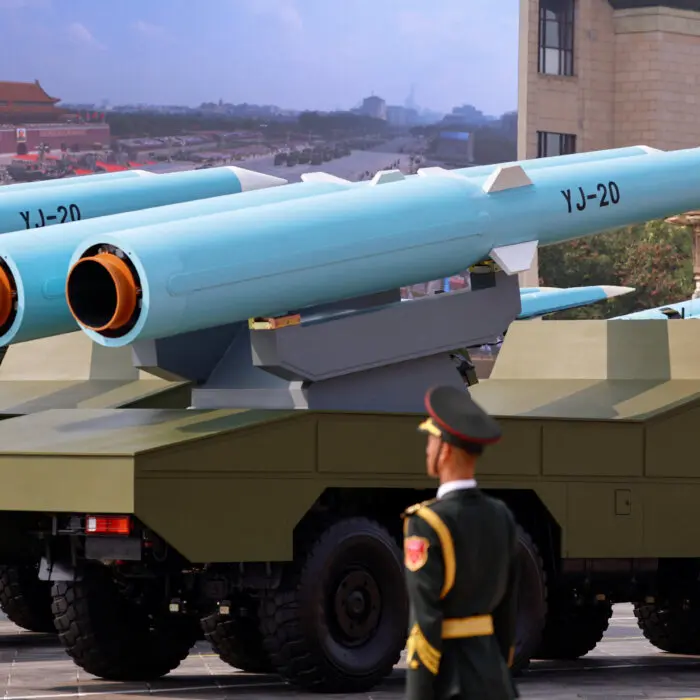
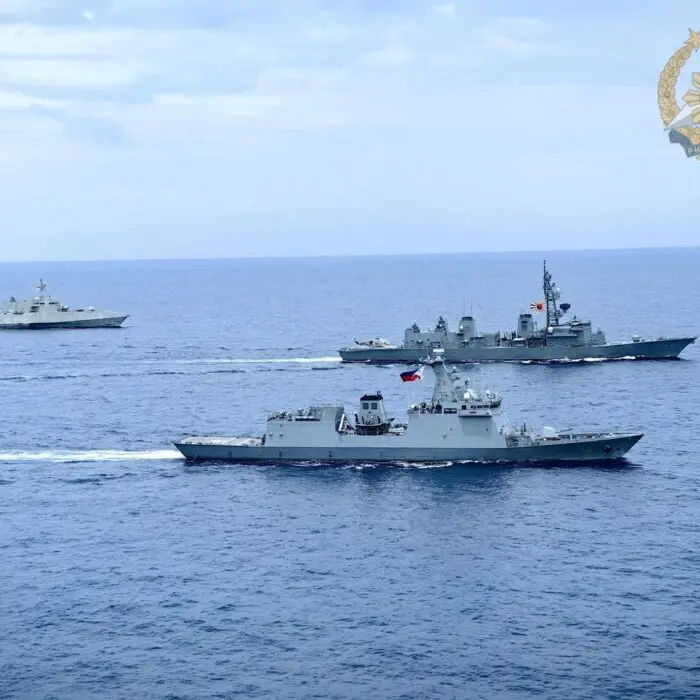
Navy vessels completed replenishment and left port for designated dispersal areas after the exercise began. Mobile radar, missile, and mine-warfare units moved toward tactical positions, while air force aircraft relocated and air-defense units deployed to wartime positions, CNA reported.
Marine units based in southern Taiwan moved north to reinforce the capital region. The main force traveled overland from Kaohsiung, while some personnel flew aboard two CH-47SD Chinook helicopters for an exercise defending Taiwan’s central political and military command area against a simulated airborne or infiltration attack.
The southern-based Army 564th Armored Brigade also participated in the cross-regional movement.

In Penghu, troops established a security perimeter around the Jianshan Power Plant in response to a simulated attempt to infiltrate and damage the facility, the Military News Agency reported.
Armored units moved along designated routes and practiced concealment during a critical-infrastructure protection drill in central Taiwan, according to a separate military report.
Elsewhere, engineers erected anti-vehicle obstacles, while military and local officials in Tainan inspected civilian vehicles and machinery during a wartime requisition drill.
Tanks and Decentralized Command
Taiwan’s M1A2T tanks are scheduled to operate in northern Taiwan as forces test defense in depth. The newly established Coastal Operations Command will also participate for the first time, testing its integration of coastal radar and anti-ship missile capabilities, CNA reported.
Troops will conduct obstacle operations around the newly opened Danjiang Bridge to block simulated enemy forces advancing toward Taipei from Bali or Taipei Port.
The exercise also formalizes the use of backbriefs. An unnamed Taiwanese general told CNA that the military had previously used similar practices, but U.S. counterparts recommended applying the procedures more rigorously as military exchanges expanded.
Koo said Taiwan is shifting from an earlier emphasis on defeating attackers at the shoreline toward “multi-domain denial,” layered inland defense, and prolonged operations.
Reserve Mobilization
More than 20,000 reservists were mobilized for Han Kuang 42, a military official told CNA.
The military is measuring reporting rates, equipment availability, and how quickly the two brigades can become combat-ready. Officials said the longer-term aim is to put all 30 reserve brigades through full-mobilization exercises, although calling up large numbers simultaneously would disrupt civilian life.
The navy and coast guard will also practice protecting sea lanes and escorting critical supplies during a simulated blockade.
Other drills cover dispersed production and supplies, wartime medical support, and coordinated attacks involving artillery, electronic warfare, drones, and Army aviation.
Civil-Defense Exercises
Han Kuang will overlap with related but separate whole-of-society resilience and air-defense exercises.
Kaohsiung and Pingtung will hold two-day whole-of-society resilience exercises on Aug. 6 and 7, followed by exercises in New Taipei and Yilan on Aug. 12 and 13. The drills are designed to strengthen the ability of local governments to conduct disaster response and rescue operations under wartime conditions, while testing whether Taiwan’s civil defense and emergency management systems can protect civilians and bolster the island’s overall defense resilience.
Regional 30-minute air-defense exercises will also run on Aug. 7 and from Aug. 10–13, testing warning systems, traffic controls, emergency response, and public movement into shelters.
On Aug. 10, seven central jurisdictions, and on Aug. 13, seven northern jurisdictions, will slow mobile internet service for about 30 minutes to test government response and backup communications. Calls, text messages, and basic text transmission are expected to remain available, while services requiring greater bandwidth will be affected.
Correction: A previous version of this article misstated the date that the seven central jurisdictions will temporarily slow mobile internet service. The Epoch Times regrets the error.