Taiwan’s Interior Ministry said on July 30 it will petition the Constitutional Court to dissolve the pro-Beijing China Unification Promotion Party (CUPP), alleging it acts on behalf of the Chinese Communist Party (CCP).
Officials said the petition, expected to be filed in early August, is based on allegations that the party has helped the CCP infiltrate Taiwanese society, facilitated cross-border repression, accepted Chinese funding to interfere in elections, and maintained links to organized criminal activity.
The move marks one of Taiwan’s strongest legal actions yet against a political party accused of advancing Beijing’s interests on the self-governed island.
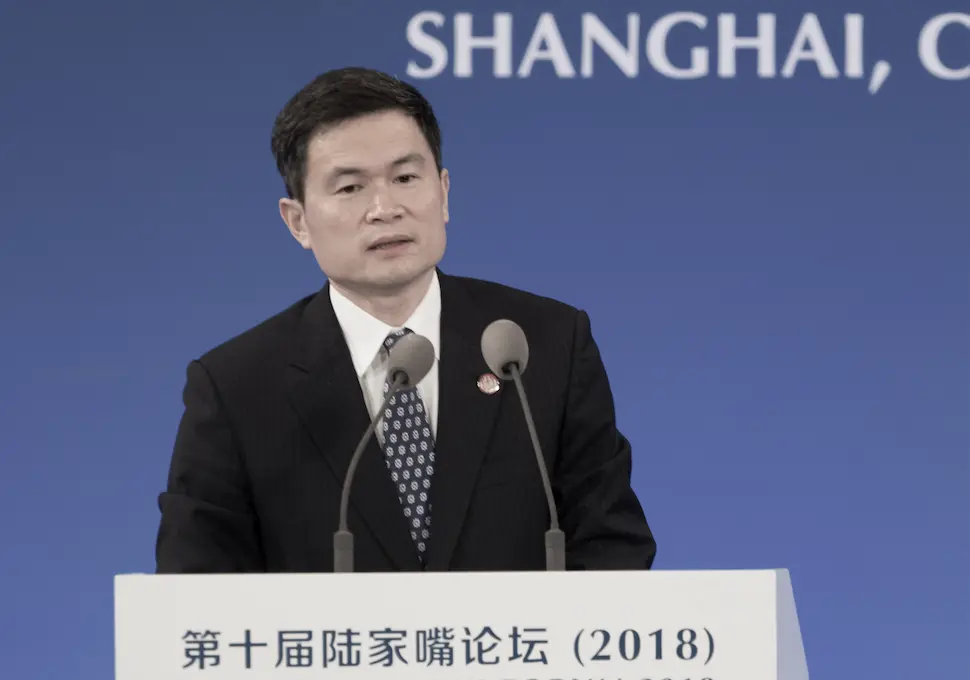
At a news conference, Deputy Interior Minister Maa Shyh-yuan said the CUPP was founded with the goal of “eliminating the Republic of China”—Taiwan’s official name—and said that the party poses a growing national security threat amid increasing pressure from Beijing.
“The CCP’s infiltration of Taiwan extends beyond a single organization,” Maa said. “But the CUPP is a key indicator. If we can address this organization according to the law, it demonstrates Taiwan’s ability to respond to broader efforts by the CCP to undermine our society.”
Officials Detail Allegations
Taiwanese Department of Civil Affairs Director Cheng Ying-hung told reporters the ministry’s petition rests on three main allegations.
According to Cheng, the CUPP has long assisted the CCP in recruiting supporters in Taiwan, conducting influence campaigns, infiltrating grassroots organizations, and introducing Chinese funding into Taiwan’s elections.
The ministry also alleges that the party has played a leading role in helping Beijing carry out “long-arm jurisdiction” and cross-border repression against individuals in Taiwan, while numerous party members and local officials have been implicated in organized crime.
To support those claims, Cheng cited a series of public statements and criminal investigations involving the party.
He said CUPP representatives stated in a 2021 interview that they intended to build a “red force” in Taiwan that would stage an internal uprising if armed conflict broke out across the Taiwan Strait.
Beginning in 2022, the party allegedly followed CCP directives to expand its grassroots network by working with criminal organizations. Officials also cited events in which CUPP members celebrated the founding anniversary of the People’s Republic of China outside Taipei Main Station while chanting slogans calling for unification with China.
Taiwanese authorities further accused the party of attempting to expand its influence through religious organizations.
According to the Interior Ministry, CUPP members have established influence in dozens of temples across Taiwan while seeking to recruit indigenous communities into Beijing’s united front efforts.
Officials cited a 2023 religious procession in Changhua County during which CUPP banners were displayed.
The ministry also alleged that CUPP members operating travel agencies arranged visits to Taiwan for individuals with ties to CCP organizations, including military institutions, to facilitate grassroots influence activities.
In one case, a CUPP official was indicted after allegedly organizing subsidized trips for voters to the Chinese city of Xiamen, an arrangement prosecutors said amounted to vote-buying. Another party cadre was charged with accepting funds from China to influence elections, including through radio broadcasts.
The Interior Ministry also accused the CUPP of participating in multiple incidents of politically motivated violence and intimidation.
Officials cited the assault of Hong Kong activist Joshua Wong at Taiwan Taoyuan International Airport, attacks on pro-independence groups during a Feb. 28 memorial event, the vandalism of a statue of Japanese engineer Yoichi Hatta, violence surrounding a Chinese music event at National Taiwan University, and an attack in which Hong Kong singer Denise Ho was splashed with red paint during a visit to Taiwan.
Authorities further alleged that CUPP members collected information on Falun Gong practitioners at the direction of the CCP and that one member entered Taiwan under the pretense of marriage in order to monitor Taiwanese civic organizations.
Infiltration of Temples
Lin Chen-lu, director-general of Taiwan’s Department of Religious Affairs, said investigators have identified alleged CUPP infiltration of 15 temples across seven cities and counties.
According to Lin, party members have held positions including chairman, director, honorary chairman, and committee chief at the temples. CUPP founder Chang An-lo allegedly serves as honorary chairman or honorary director at two temples, in New Taipei City and Yunlin County.
Lin said authorities will scrutinize the financial records of the affected temples, with annual revenues and expenditures becoming a priority for investigation.
Meanwhile, Taiwanese Criminal Investigation Bureau Director Chiu Shao-chou said police have identified 98 criminal cases involving 141 CUPP members between 2010 and July 22 this year.
Among them, 32 were core party officials, while 10 were repeat offenders with multiple convictions or prosecutions. The alleged offenses include attempted murder, extortion, intimidation, unlawful detention, assault, property damage, fraud, and drug-related crimes.

Dissolution ‘Won’t End Threat’
When asked whether CUPP members could establish a new political party if the organization is dissolved, Cheng cited Taiwan’s Political Parties Act, which prohibits a party dissolved by the Constitutional Court from continuing its activities or creating a successor organization with the same objectives or name.
Taiwanese National Police Agency Director Chang Jung-hsing said law enforcement has monitoring mechanisms in place to prevent former party members from continuing activities related to cross-border repression.
Maa acknowledged that dissolving the CUPP would not eliminate Beijing’s influence operations in Taiwan.
“We are not naive enough to think that dissolving the CUPP will make these problems disappear,” he said.
“If former members or party officials continue cooperating with the CCP to carry out cross-border repression or related activities, the Interior Ministry will continue monitoring and taking enforcement action. We will not allow such conduct to continue.”