Protests Across Multiple Regions
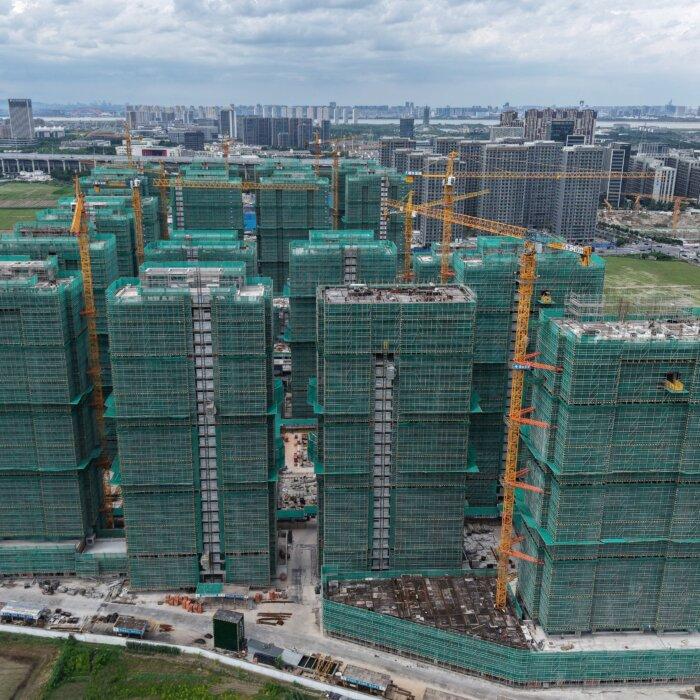
In the central Chinese city of Wuhan, tensions have escalated over a battery manufacturing project. Local residents have opposed the project since February, citing environmental risks.On March 8, thousands of homeowners staged a street protest that was dispersed by police, and several demonstrators were detained. Residents surrounded a deputy mayor’s vehicle during the confrontation, demanding the release of those arrested. Although the official had previously pledged to suspend the project, construction has continued, and the regime has intensified pressure on activists.
Protests reignited on the night of March 28, when hundreds of residents again took to the streets calling for the project’s cancellation. At about 11 p.m., police moved in, using force to disperse the crowd and detaining multiple people, according to witnesses and online videos. A large police presence remained in the area the following day.
Witnesses said police detained numerous participants and that several people were injured, although exact figures remain unclear. Police have since tightened control in the surrounding areas, restricting movement and conducting ID checks of travelers and commuters.
Elsewhere, smaller-scale protests and disputes have also turned confrontational. In China’s Inner Mongolia, villagers gathered on March 25 to demand unpaid land lease fees from a seedling company, only to be dispersed by police.
Resistance and Tightened Security
Analysts have said that the protests reflect deeper social pressures. Sheng Xue, a Canada-based Chinese writer and pro-democracy activist, told The Epoch Times that the scale of the protests in Guangdong suggests growing frustration among residents.“When people feel they have no way to protect their basic living conditions or be heard, that sense of desperation can outweigh fear of punishment,” she said.
In some cases, grievances appear to be evolving beyond specific disputes into broader political anger.
In late March, Chinese rights activist and entrepreneur Shen Qijia posted a video online describing mistreatment by regime authorities, including detention and the seizure of more than 4 million yuan ($550,000) in assets. In the video, Shen denounced the Chinese regime and declared, “I am already in rebellion as an individual.”
Amid signs of increasing unrest, the Chinese regime has stepped up visible security measures. Video footage that circulated online on March 29 showed a heavy police presence along Chang’an Avenue, or Chang'an Jie, one of the capital’s main thoroughfares that passes Tiananmen Square and the Forbidden City.
Two days earlier, the Chinese regime announced sweeping new regulations placing the entire city under controlled airspace for unmanned aerial vehicles, according to Chinese state media outlet Beijing Daily.
Under the rules, all outdoor drone flights require prior approval, and activities such as manufacturing, modifying, transporting, and storing drones without authorization are prohibited.
The regulations, which take effect on May 1, also require all drones to be registered by April 30. The regime said the measures are necessary to address “low-altitude security challenges” in the capital.
Su Tzu-yun, a research fellow at Taiwan’s Institute for National Defense and Security Research, told The Epoch Times that the comprehensive controls reflect concerns that drones could be weaponized or used in attacks on political leaders.
Unlike regulations in many other countries that focus on aviation safety, he said, China’s approach extends across the entire supply chain—from production to end use—and includes real-name registration requirements for buyers.