To complain to central authorities in China about local inaction or abuse, petitioners may now need documents from provincial authorities that have little incentive to let the case move upward.
A new regulation is blocking petitioners from reaching Beijing unless they first obtain provincial paperwork, a requirement that complainants say traps grievances inside the same local systems they are trying to challenge.
The rule affects China’s “letters and visits” system, known as xinfang, a formal grievance channel that many Chinese citizens use as a last resort when courts, local agencies, or lower-level officials do not resolve their complaints.
The National Public Complaints and Proposals Administration issued the measure on June 25 and said it took effect July 1. Article 4 says people who bypass the agency or unit with direct authority over their case and travel to Beijing to visit the national petition office or central ministries “must” carry written or electronic materials issued by a provincial-level agency. Those who cannot provide such materials will not be registered and will be directed back to their home jurisdiction, according to the official text.
For many petitioners, the requirement strikes at the reason they travel to Beijing in the first place: They say local or provincial authorities have refused to act, issued only perfunctory replies, or handled complaints against themselves.
Last Formal Channel
China’s letters-and-visits system allows citizens, companies, and other organizations to submit complaints, suggestions, or reports to government agencies by mail, email, fax, phone, or in-person visits, according to State Council regulations. The rules say government agencies should keep complaint channels open and protect petitioners’ lawful rights, while handling cases under “territorial jurisdiction” and different levels of responsibility.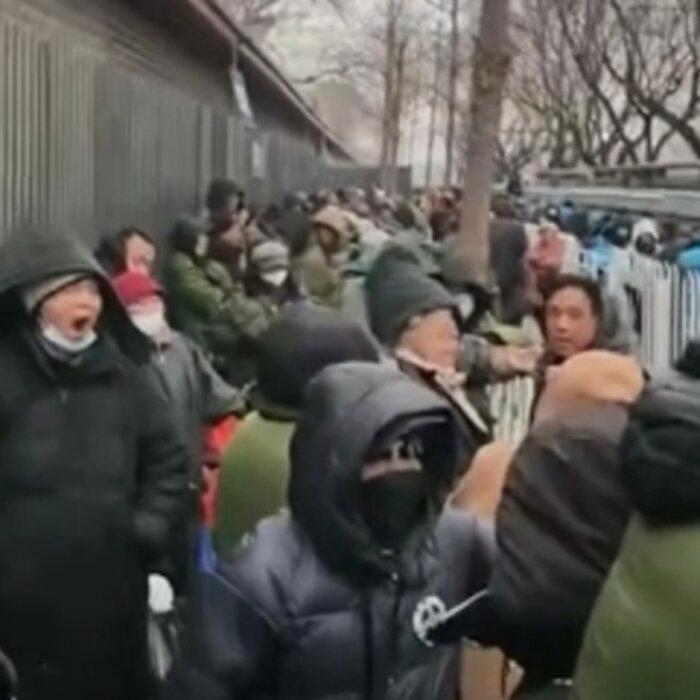
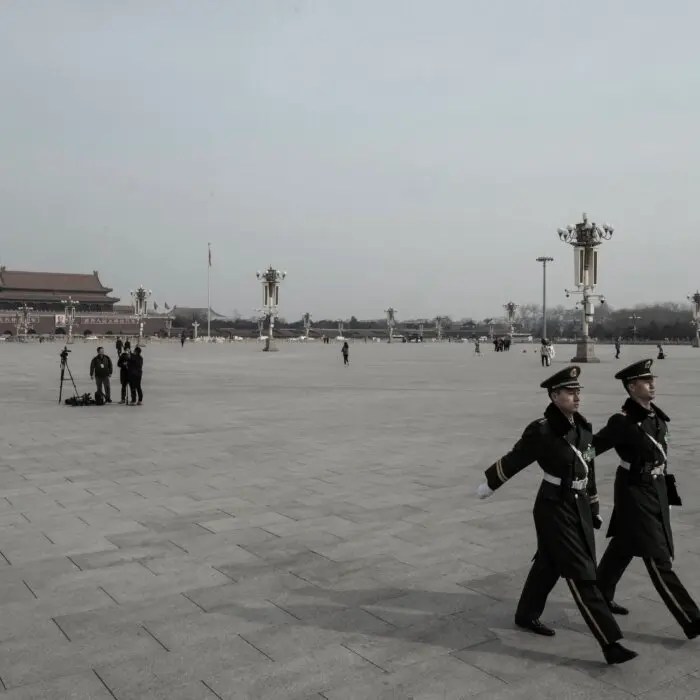
A 2022 visitor-reception rule for the national petition office says the agency receives citizens, companies, and other organizations that come to report situations, make suggestions, or file complaints to the CCP Central Committee, the State Council, and their general offices and leaders. It also says visits involving provincial-level or lower agencies or their personnel should be transferred under the principle of territorial management and level-by-level responsibility.
In practice, petitioning can function as a bureaucratic court of last resort outside the formal legal system. Petitioners often go to Beijing because they say local courts, police, regulators, or petition offices have failed them.
That makes the new rule a procedural trap, petitioners and commentators told The Epoch Times.
‘You Can’t Even Get In’
A petitioner from Hunan told The Epoch Times that after the rule took effect, security staff at the national petition office used loudspeakers to tell visitors to show provincial-level documents.Without the paperwork, the petitioner said, visitors could not pass a second security checkpoint and had no way to submit their complaints.
A longtime petitioner from Heilongjiang, who has been in Beijing, also told The Epoch Times that visitors now need a provincial-level acceptance notice and must move step by step through the system.
“There weren’t many people,” the petitioner said of a July 3 visit, adding that by afternoon there was essentially no line, according to the Chinese-language report.
The new measure says local petition departments should receive visitors, register their complaints, clarify jurisdiction, and issue written or electronic notices. It also says agencies with authority over a complaint should tell petitioners within 15 days whether the matter was received and what procedures will be used.
Business Owner Describes Legal Limbo
A petitioner from Zhejiang, identified by the pseudonym You Qingxin, told The Epoch Times that alleged wrongful enforcement by a market-regulation agency caused his business to collapse, with losses exceeding 100 million yuan, or about $13.9 million.You said he has traveled to Beijing about once every two months for the past five or six years to scan his identification card and lodge petitions. He showed The Epoch Times a notice from an official system saying his issue had been answered by the Changxing County market-regulation bureau and that he could check the national petition website for updates.
He said the online replies did not address his core demands to lift enforcement measures, return company accounting books, and provide the basis for punishment.
“The answers are all beside the point,” he told The Epoch Times.
You said the new rule worsens a dead end he already faced. Courts, he said, require written proof that enforcement measures have been lifted before they will open a case, while petition authorities may refuse to provide the substantive documents he needs.
“If the court requires the document to lift compulsory measures before filing a case, and the petitioning [office] will not give written proof, isn’t this forcing ordinary people to death?” he told The Epoch Times. “Other than going to Beijing, what else can ordinary people do?”
Complaints Sent Back to the Accused
Shaanxi petitioner Wang Xiaoqin told The Epoch Times that the petitioning system’s “territorial management” approach has long left petitioners vulnerable because complaints are often routed back to the same local authorities they accuse of wrongdoing.“You complain about someone, and the complaint materials are transferred to the accused to handle,” Wang said.
She said the new rule amounts to an upgraded version of the same system because it gives local authorities more control over whether petitioners can reach Beijing.
Abuse Allegations Have Long Followed Petitioning
In China, petitioning—known as shangfang—in its modern bureaucratic form dates to the early years of communist rule, but the practice of visiting higher authorities to escalate grievances has far older roots in imperial China, when subjects used to beat a drum at a magistrate’s gate to plead for redress.Under the Chinese communist regime, with no independent courts and no free press, petitioning remains, on paper, a way to go over the heads of crooked local officials.
However, in practice, it almost never works. The most widely cited evidence comes from Yu Jianrong, then a scholar at the Chinese Academy of Social Sciences, whose team surveyed 632 petitioners in Beijing and reported in the magazine Phoenix Weekly in 2004 that only 0.2 percent said petitioning had ever resolved their problem.
Party and government petition offices nationwide logged 12.7 million letters and visits in 2003 alone.
Yu detailed the project the following year in Twenty-First Century, a journal of the Chinese University of Hong Kong, and the figure has since been cited by Human Rights Watch and the U.S. Congressional-Executive Commission on China.
The Chinese regime’s treatment of petitioners has also drawn scrutiny for years.
Human Rights Watch said in a 2009 report on China’s “black jails” that large numbers of Chinese citizens had been held incommunicado for days or months in secret, unlawful detention facilities. The group said such facilities were created and used primarily by local and provincial officials to detain petitioners who went to Beijing or provincial capitals seeking redress for complaints unresolved at lower levels.
The group said the majority of detainees were petitioners seeking redress over alleged abuses ranging from illegal land grabs and corruption to police torture. It also said local officials had financial and career incentives to keep petitioners from being found in Beijing. The Chinese regime has denied the existence of black jails.
The June 25 measure states that higher-level petition departments should recommend improvements, policy changes, or accountability if local agencies fail to accept, handle, or issue documents for petitions, and that failure leads complaints to move upward. It also says repeated Beijing visits during the statutory handling period will not be registered, and petition departments may work with police to provide legal education and persuade petitioners to leave or take further enforcement action.
The measure states that the National Public Complaints and Proposals Administration is responsible for interpreting the rule, which remains in effect.