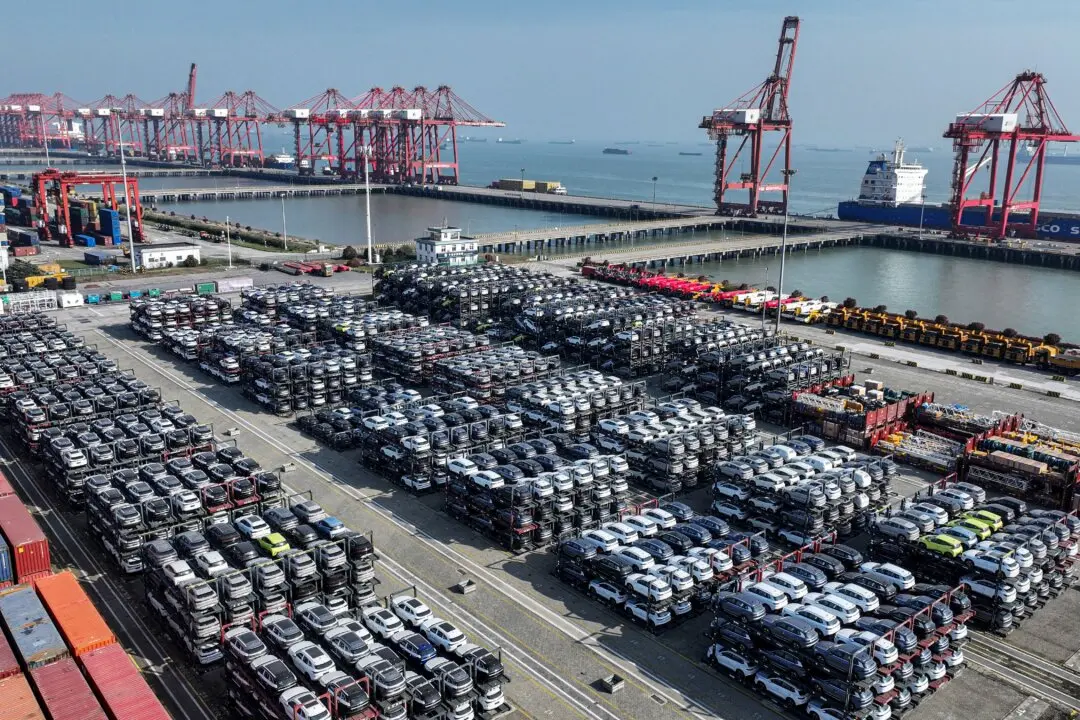
Technology investor Joe Lonsdale said actors in China are reviewing patent applications filed by U.S. artificial intelligence and life science startups to extract technical knowledge for commercial use.
Lonsdale, founder of venture firm 8VC and a co-founder of Palantir Technologies, described the U.S. Patent and Trademark Office as “completely broken” and said some founders might be better off not filing patents, in a July 13 interview with Bloomberg TV.
The concern arises from a basic division in patent law: publication is global, but protection is territorial.
A U.S. patent generally covers making, using, selling, offering to sell, or importing the claimed invention within the United States. In a 2017 ruling, the Supreme Court said the U.S. patent system “provides no protection abroad.”
The U.S. Patent and Trademark Office (USPTO) gives companies the same warning in its China Intellectual Property Rights Toolkit.

“Patents are territorial; only a PRC patent has the potential to protect against infringement in China,” the agency says.
Rights Depend on Where Patents Are Filed
A startup holding only a U.S. patent may have no patent claim against manufacturing and sales conducted entirely in China, even when a Chinese company first learned about the invention through a published American application.The U.S. company may act if an infringing product is imported into the United States. It may also enforce patents obtained in China or other countries.
Those remedies depend on the company securing rights in the relevant jurisdiction or the competing product entering a market where the company holds enforceable claims.
Reviewing a published application is not itself infringement. A patent case turns on whether the later product or process falls within the issued claims and whether the covered conduct occurred in a jurisdiction where the patent applies.
Publication can also occur before the patent is granted. Competitors may read an application while the USPTO is still examining it and before the applicant has secured enforceable rights in the United States or abroad.
China Uses IP as Industrial Policy
The USPTO advises companies operating in China to build a “basket” of protections that can include patents, trade secrets, trademarks, and copyrights.The agency also recommends hiring local counsel and planning for monitoring, investigation, and enforcement rather than merely registering the rights.
Mark Cohen, a former USPTO intellectual property attaché in Beijing and former head of the agency’s China team, told the Senate Judiciary Committee in April that the U.S. and Chinese systems approach intellectual property differently.
“China uses intellectual property as a tool of industrial policy which is incorporated in five-year plans,” Cohen said.
He said China had built the world’s largest patent and trademark offices, the largest intellectual property court system, specialized judges, extensive administrative enforcement, and strong involvement from senior political leaders.
State involvement can work against small innovators and expose foreign companies in sensitive industries to discriminatory treatment, and China’s courts also lack full independence, he said.
Enforcement Can Outlast a Small Company’s Resources
The USPTO’s portfolio approach can give a company more legal tools, but companies must still monitor the market, collect evidence, hire lawyers, and pursue each remedy.A case brought by Houston-based Vego Garden illustrates the process.
The commission issued a one-year exclusion order blocking covered imports and a cease-and-desist order restricting U.S. sales and marketing by Utopban.
The USPTO had not provided a substantive response by publication time to questions about whether it has studied systematic Chinese monitoring of U.S. patent applications, received complaints from affected startups, or recommended changes to publication and examination rules.