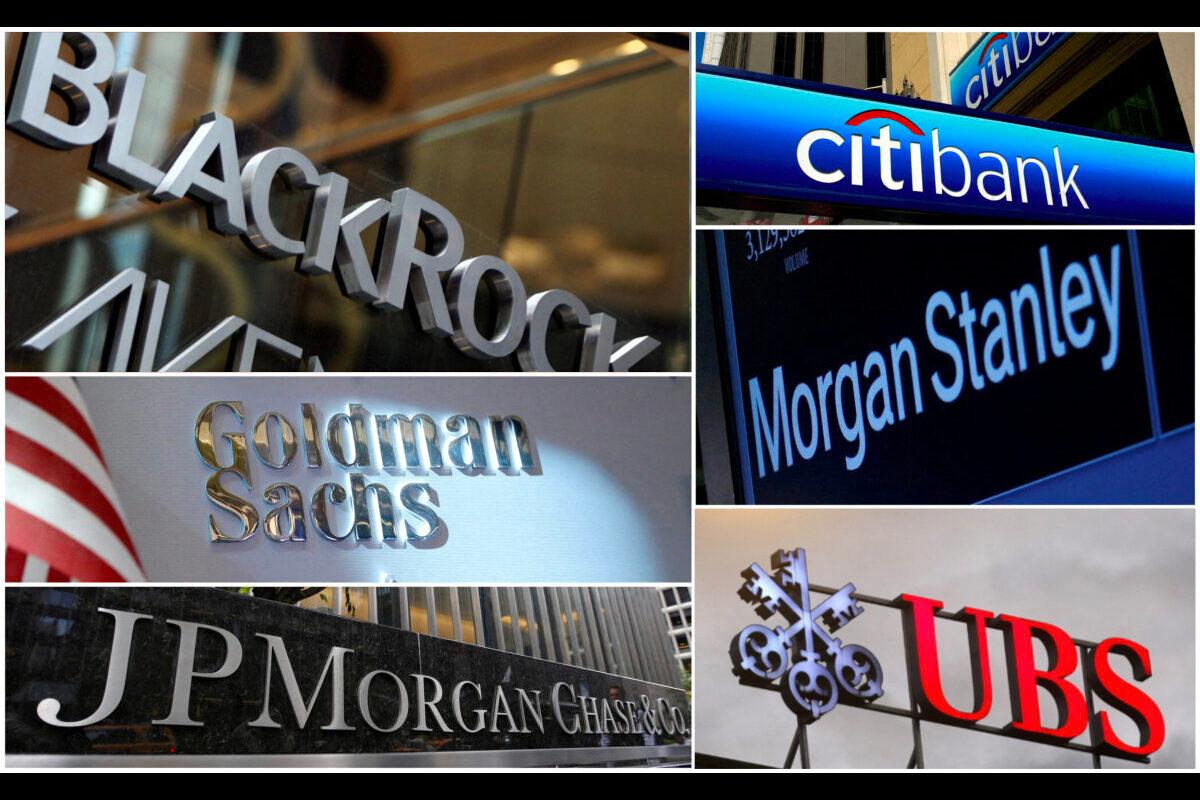
JPMorgan Chase and Goldman Sachs plan to stay in China despite worsening U.S.-China relations, with both banks adjusting their business focus.
One analyst has said that this marks Wall Street’s entry into the stage of “de-risking without decoupling.”
Daniel Pinto, vice chairman of JPMorgan, said Oct. 15 that the largest U.S. bank is still investing in China, while noting that “the size of our business would have been multiples of what it is today” if U.S.-China relations were better.
While continuing its Chinese operations, JP Morgan is carefully managing the exposure, size, liquidity, and quality of its investments, according to Pinto.
JP Morgan maintains several thousand employees in China, and “the business is okay,” Pinto said, adding that Chinese regulators have been “quite helpful” in granting licenses to financial institutions to help China develop its financial services industry.
Meanwhile, Goldman Sachs also said that they are sticking with their businesses in China.
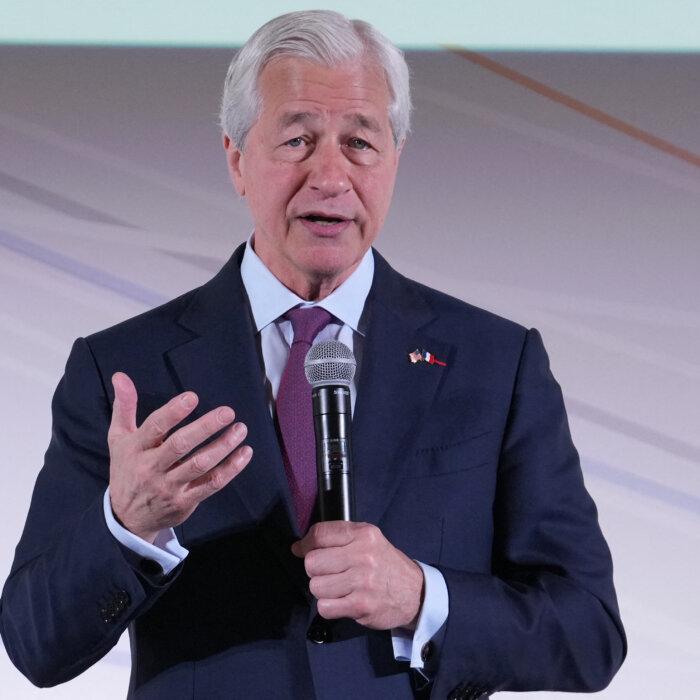

“We’re not leaving China, we’re very consistently engaged in those markets,” Goldman Sachs President John Waldron said at a conference in Washington on the same day.
“We’ve worked together on a number of important capital markets transactions this year, backing capital raising for companies that are based in China,” Waldron said.
He also said that companies are going to change their behavior as the shifting relations between China and the United States alter capital flows and supply chains.
Wall Street’s China Reset
U.S.-based independent economist Davy J. Wong told The Epoch Times that the U.S. investment banks’ statement about still investing in China but with operational behavior changes, “marks Wall Street’s entry into the stage of ‘de-risking without decoupling.’”As for their possible business shifts in China, Wong said that they may change client focus “from serving new foreign entrants and local private firms to supporting multinational corporations’ China operations and offshore needs of Chinese companies.”
The U.S. investment banks may also “reduce on-shore exposure and relocation of risk centers to Hong Kong and Singapore, forming a dual cycle of ‘China-for-China’ and ‘China-from-offshore.’”
They may lean towards product mix “from underwriting and lending to offshore M&A advisory, derivatives, cash management, and custody services,” he said.
These foreign investment banks still make money under Beijing’s heavy financial intervention because of their unique functions to the Chinese communist regime, according to the analysts, including Wong.
First is the policy function, “at times, regulators need foreign banks’ participation to signal openness and stability,” Wong said.
Also, “multinationals and Chinese export-oriented firms depend on these foreign investment banks’ global account networks and U.S. dollar clearing channels,” he said.
The Chinese economy controlled by the regime isn’t a normal market economy, and there are many business entities having massive losses, Feng Chongyi, a China studies professor at the University of Technology Sydney, told The Epoch Times. “However, some companies owned by the offspring of high-ranking Chinese communist officials have their own ways to make money in this economy,” he said.
The interests of these Chinese companies with special backgrounds intersect with those of the foreign investment banks operating in China, Feng said. “So, they are allowed to register in China to conduct certain services that other banks are not allowed to do,” he said.
Balancing ‘Political Red Lines’
Amid rising U.S.-China tensions, JPMorgan Chase announced on Oct. 13 that it will invest up to $10 billion primarily in U.S. companies, ranging from those in the defense, energy, critical minerals, and advanced manufacturing sectors, to “enhance their growth, spur innovation, and accelerate strategic manufacturing.” It’s part of the U.S. bank’s “$1.5 trillion, 10-year plan to facilitate, finance and invest in industries critical to national economic security and resiliency.”Wong said that keeping businesses in China while investing in key U.S. industries shows that “JPMorgan’s core strategy between the U.S. and China is to balance political red lines—maintaining commercial ties without crossing national-security boundaries.”

The very presence of these U.S. investment banks in China “indicates complex high-level political arrangements: internal coordination with Beijing, policy privileges, and active lobbying in Washington,” he said.
Increased Risk Exposure
Although these foreign investment banks don’t want to give up the Chinese market, they are facing some key risks, if the U.S.–China relations continue to worsen or China’s political situation suddenly changes, according to the analysts.The key risks include “capital controls, trapped funds, on-shore asset depreciation, regulatory raids, and political seizure,” Wong said.
“The gravest danger lies in abrupt political shifts—account freezes or forced regulatory takeovers. To guard against this, institutions use layered offshore vehicles, trusts, and ring-fenced books,” he said.
Wong noted that most of these foreign banks operate asset-light with offshore settlement, making total wipeout of their assets and profits unlikely.
Wong said the underlying concern of this call is that “the World Bank funds have been recycled by Beijing as secondary lending for its Belt-and-Road projects, amplifying China’s geopolitical leverage.”
The World Bank is a multilateral development body subject to direct policy steering, “whereas JPMorgan and Goldman are private entities—no blanket bans are expected,” he explained.
Feng shares a similar assessment. “Western governments and nations can’t control these large private companies. Their law doesn’t allow it,” he said.
Any ban on the private companies would only happen under very special circumstances, such as “a state of war,” Feng said. “As long as the U.S. government doesn’t issue a total ban order, they'll stay in the Chinese market and continue doing business.”
As to possible development, Wong said that U.S. regulators are likely to caution domestic banks against financing ventures that could strengthen China’s outward financial footprint.
“Washington may instead impose indirect limits via investment review, sectoral lists, or supervisory ‘window guidance,’” he said.