Beijing was thrown into panic following U.S. airstrikes on Iran’s nuclear facilities, according to Chinese dissident Yuan Hongbing, who cites a well-placed source within the Chinese Communist Party (CCP).
Yuan, a former law professor at Peking University now living in exile in Australia, told The Epoch Times that the rapid shift on the Israel-Iran battlefield has prompted the CCP leaders to immediately revise their Taiwan invasion plans and recalibrate both diplomatic and propaganda messaging.
The United States launched coordinated strikes on three of Iran’s principal nuclear sites—Fordow, Natanz, and Isfahan—on June 22, 2025. The operation, carried out in tandem with earlier Israeli attacks that started on June 13, aimed to cripple Iran’s nuclear capabilities.
Following several days of heightened conflict and retaliatory missile exchanges, the United States brokered a temporary cease-fire between Iran and Israel, easing immediate fears of a broader war and allowing for diplomatic efforts to resume.
Beijing’s Reaction
Citing his source, Yuan said that within hours of Israel’s initial strikes on Iran in mid-June, Chinese authorities began preparing a global diplomatic campaign.
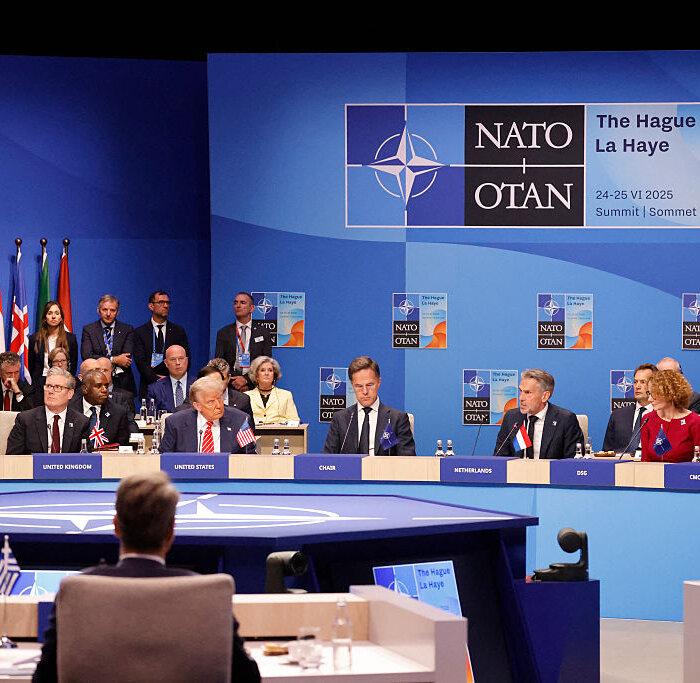
The Ministry of Foreign Affairs instructed embassies and consulates worldwide to vocally condemn Israel’s actions, describing them as “aggression,” while pledging resolute support for Iran’s right to defend itself. China’s state media also received directives to amplify these talking points.
However, just 36 hours later, the narrative abruptly shifted. Official messaging began to emphasize “peace,” calling for restraint from both sides and issuing only limited criticism of Israel’s actions.
Drawing information from his source, Yuan told The Epoch Times the tone changed because the CCP leadership was rattled by the swift military developments, when U.S. and Israeli forces not only inflicted severe damage on Iran’s nuclear infrastructure but also carried out precision “decapitation” strikes that eliminated key figures in Iran’s military command and nuclear research program.
The destruction of Iran’s air defense capabilities allowed Israeli aircraft to operate freely in Iranian airspace—a scenario Beijing had not foreseen. Moreover, stunned by the “decapitation” strikes, the Chinese military has begun establishing “shadow command structures” across its armed forces—backup leadership units designed to ensure continuity of operations in the event of a decapitation strike, according to the source.
U.S.-based veteran political commentator Cai Shenkun said he understands Beijing’s anxiety and notes that the fear extends far beyond the immediate military consequences of losing a few battlefield commanders.
“If China starts a war in the Taiwan Strait, it’s possible the United States could use precision weapons to eliminate top PLA commanders. That’s what Beijing fears most—once a few generals are gone, the rest may refuse to fight, and the military could even turn on the regime itself, marching back to Beijing to besiege Zhongnanhai,” Cai told The Epoch Times.
Zhongnanhai is the central leadership compound for the CCP’s top officials.

A strong supporter of the airstrike operation, Cai believes nuclear weapons in the hands of authoritarian regimes pose “the greatest threat to global security.” He also praised U.S. President Donald Trump for abandoning what he described as Washington’s previous policy of appeasement toward Iran.
Yuan also said that parts of the Chinese military’s command and control infrastructure are located deep underground, and that CCP leaders were therefore deeply alarmed by the U.S. military’s demonstrated ability to destroy fortified Iranian facilities with bunker-busting munitions.
Targeting China’s Foothold in Middle East
Yuan believes that the deeper objective of the joint U.S.-Israel operation is to dismantle the CCP’s strategic foothold in the Middle East.“The Chinese regime has provided Iran with comprehensive political, economic, and military support,” Yuan said, adding that Beijing has long leveraged Iran—and militant proxies such as U.S.-designated terror groups Hezbollah, Hamas, and the Houthis—to expand its influence in the region.
China has invested an estimated $400 billion in Iran as part of its Belt and Road Initiative and imports as much as 1.7 million barrels of discounted oil per day from the country.
Yuan described the partnership between China, Russia, Iran, and North Korea as a “new axis of evil” whose shared objective is to challenge U.S. global leadership and replace it with a China-led international order rooted in communist ideology.
He went on to say that the CCP has long sought to use its alliance with Iran to tie down U.S. forces in the Middle East, thereby creating opportunities to move on Taiwan or expand its influence in the Indo-Pacific.
Su Tzu-yun, director of Taiwan’s Institute for National Defense and Security Research, echoed Yuan’s view. Speaking to The Epoch Times, Su called the recent strikes “a modern blitzkrieg” designed to eliminate Iran’s capacity to develop weapons of mass destruction and roll back China and Russia’s influence in the region.
Beijing’s Potential Response
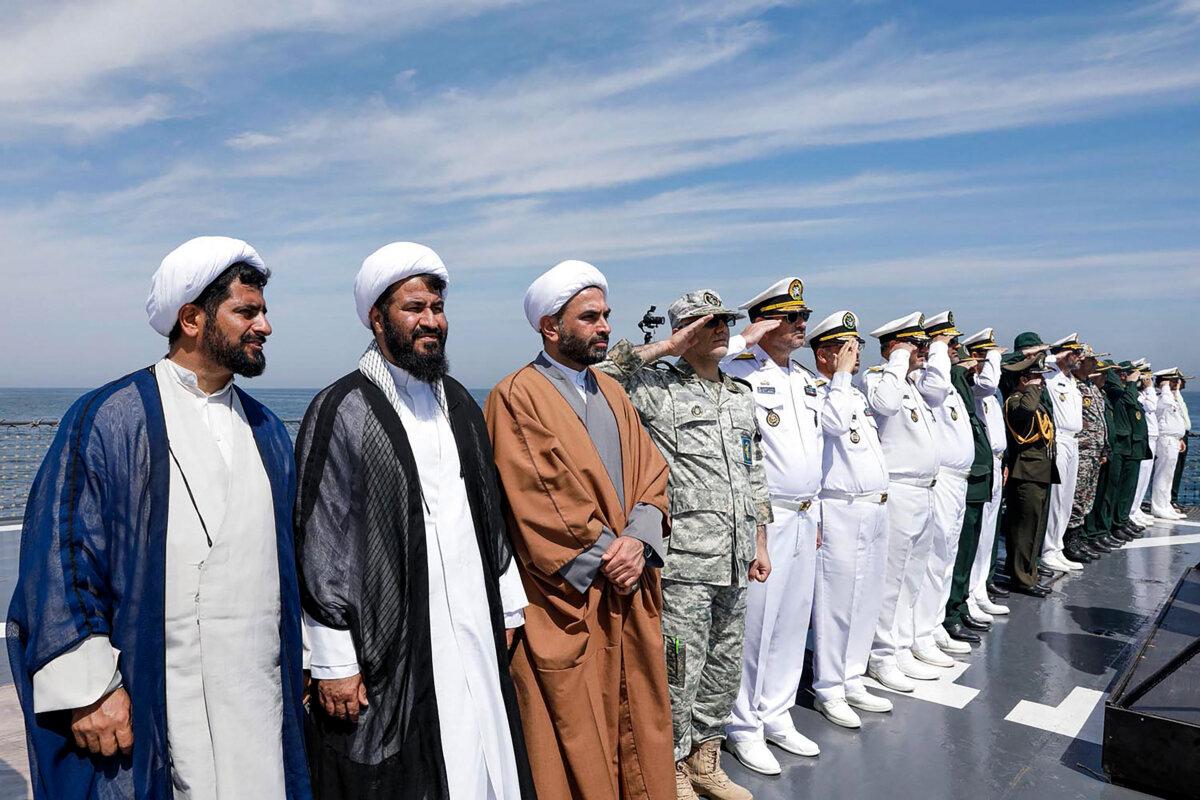
Looking ahead, Yuan believes China will continue to back Iran’s theocratic regime, both openly and covertly. He further suggests that the CCP may push Tehran to pursue two key objectives.The first is to widen the regional conflict by trying to block key maritime chokepoints like the Strait of Hormuz and the Red Sea, forcing the United States to remain heavily engaged in the Middle East.
The second is to enable global terrorist attacks by backing remnants of Iran-aligned terrorist groups targeting American and Israeli interests around the world.
While defense expert Su acknowledged that maritime trade may be disrupted, causing short-term economic pain, he said the strikes have broader strategic value and could lay the groundwork for a more stable and secure Middle East.
“Privately, many Arab states support the U.S.-Israel campaign against Iran,” he said.