Indian National Security Adviser Ajit Doval spoke with Chinese Foreign Minister Wang Yi on June 22 on the sidelines of a BRICS National Security Advisers’ meeting in New Delhi, according to India’s foreign ministry.
The Indian ministry described the talks between Doval and Wang as “constructive and forward-looking.”
The two officials discussed recent developments in their relationship and “noted progress toward gradual normalization,” the ministry said in a statement.
Meanwhile, the U.S. Indo-Pacific Command has officially reverted its name to “U.S. Pacific Command,” which reverses a 2018 name change and “honors the command’s deep historical roots,” according to the U.S. Department of War.
Analysts said U.S. policy changes could follow and warned that India’s non-alignment policy may not be viable amid intensified U.S.–China competition in global security.
Relations between China and India improved in 2024, easing years of tension that had persisted since the 2020 border conflict.

As the rotating chair of the BRICS group, India hosted the BRICS meeting of national security advisers in New Delhi on June 22 and June 23.
BRICS nations include founding four members Brazil, Russia, India, and China, and early addition South Africa, as well as other nations such as Indonesia, Egypt, and Iran that have joined in recent years.
The Indian ministry’s messaging suggests that the two countries will not resort to conflict or confrontation but will instead maintain stability, Shen Ming-shih, research fellow at the Division of National Security Research at Taiwan’s Institute for National Defense and Security Research, told The Epoch Times.
“Neither India nor China is currently in a position to shoulder the potential consequences or costs of an outbreak of war,” he said.
That doesn’t mean that India is moving closer to the Chinese regime now, as there are no shared interests, Shen said.
“In terms of economics and trade, the two countries are actually in a state of competition,” he said.
It is evident that India also hopes to improve its bilateral and multilateral relations through the BRICS meeting—particularly with China, and of course, with Russia also, retired Taiwanese Maj. Gen. Yu Tsung-chi, an adviser to the Formosa Republican Association, told The Epoch Times.
This is in response to some recent strategic adjustments by the United States, Yu said.
“For the United States, Pakistan’s status has risen significantly within South Asia, particularly due to the role it played as an intermediary during the negotiation with Iran. That naturally makes India uneasy,” he said. By contrast, Yu said, “India plays virtually no role in the U.S.’s critical Middle East strategy.”
Reverting to US Pacific Command
On June 16, the War Department announced that the U.S. Indo-Pacific Command would officially revert to its former name, U.S. Pacific Command.“USPACOM’s vast area of responsibility—spanning from the waters off the West Coast of the United States to the western border of India—remains exactly the same,” the department said in a statement. “The command’s fundamental mission and its unwavering commitment to maintaining a free and open theater alongside regional allies and partners are unchanged.”
Analysts said substantive policy adjustments may still follow the name change.
The Indo-Pacific Command is already stretched thin trying to simultaneously counter the Chinese regime, North Korea, and Russia, and adding India and Pakistan to its area of responsibility would likely further complicate the situation, according to Lin Ying-yu, associate professor at the Graduate Institute of International Affairs and Strategic Studies at Tamkang University in Taiwan, and secretary-general of the International Relations Society.
Given that the regions surrounding the Indian Ocean fall under the purview of U.S. Central Command (Middle East) and U.S. Africa Command, the Pacific Command’s mission should be streamlined—specifically by transferring responsibility for the Indian Ocean to Central Command or Southern Command, or by establishing a new unit to handle the area, Lin told Taiwanese media.
The name change suggests that the Indian Ocean is no longer accorded the same level of importance as it was under the “Indo-Pacific” concept, Yu said.
“Tensions between China and the nations of the first island chain have recently been escalating, prompting the United States to focus its strategic attention on the Pacific rather than the Indian Ocean. This leads India to feel that its role in the Indo-Pacific geostrategic landscape is being marginalized,” he said.
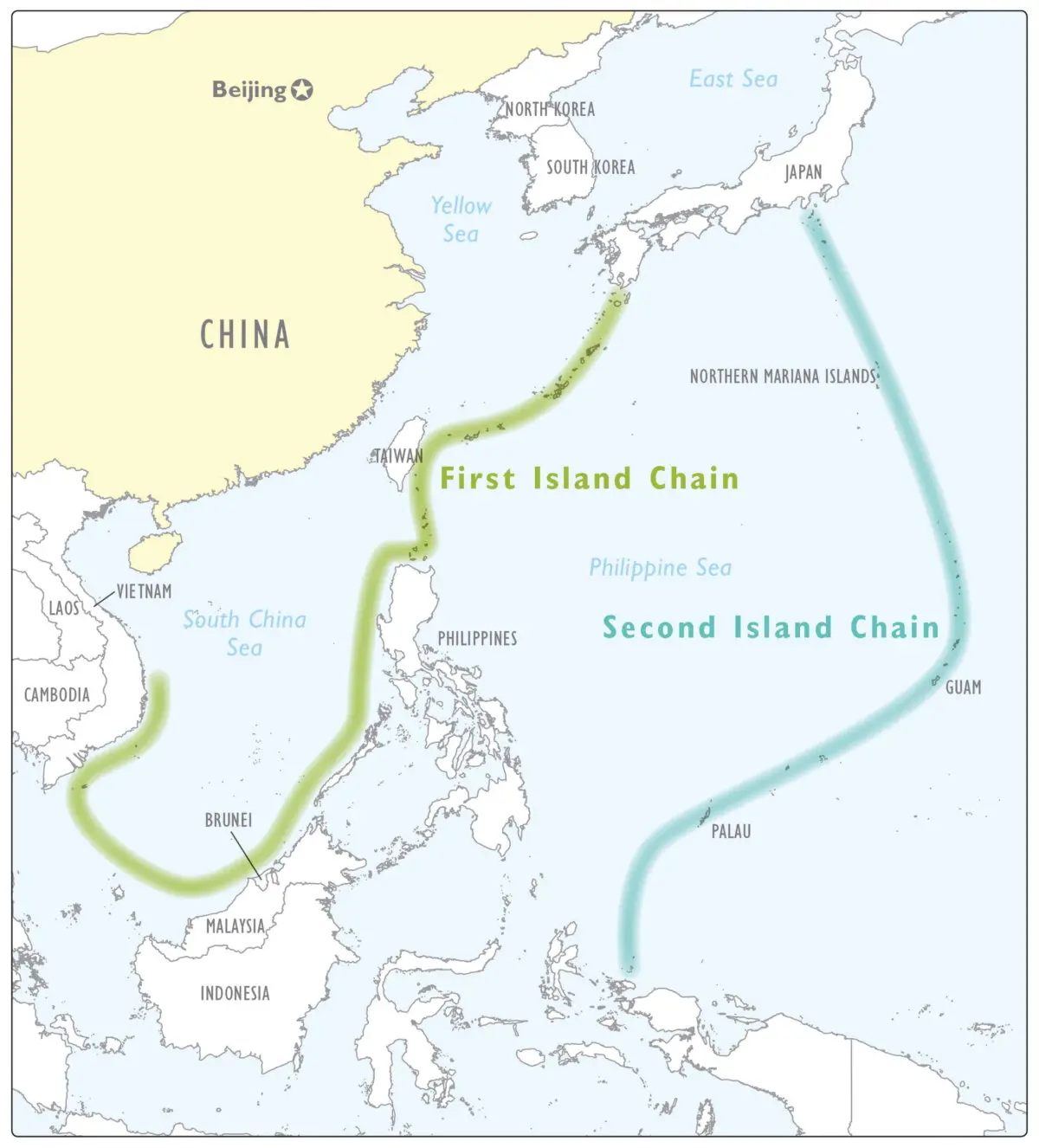
The first island chain is a strategic line in the Asia-Pacific that includes Japan, Taiwan, and the Philippines, designed by the U.S. military to contain the Chinese regime’s maritime expansion.
While the United States is currently preparing to shift its strategic focus from the Middle East back to the Pacific to fully counter the Chinese regime, this does not mean that India’s role will vanish, Yu said.
“Should a military conflict erupt along the first island chain, U.S.–India military cooperation would still play a crucial role in containing China’s Southern Theater Command,” he said, which is similar to South Korea’s irreplaceable role in containing China’s Eastern and Northern theater commands.
“When China’s Eastern Theater Command gets into a military conflict involving Taiwan, the Philippines, or even Japan, it cannot easily secure reinforcements from other theater commands,” Yu said.
If China’s Northern and Southern theater commands would be tied down and unable to freely provide cross-theater support, it could significantly reduce the likelihood of China resolving conflicts through military means, he said.
BRICS Versus G7
The BRICS group currently has 11 member nations, with some African and Middle Eastern countries joining in.The BRICS nations were originally established with the aim of counterbalancing Western powers, particularly the U.S.-led Group of Seven (G7), Yu said.
However, the disparity in economic scale between the two sides is simply too vast, causing the influence of the BRICS bloc to gradually diminish, he said.
“Even Indonesia, which only joined last year, has recently begun strengthening cooperation with Japan and the United States—notably through Japan’s provision of destroyers, a type of vessel Indonesia currently needs most,” Yu said.
The important purpose of Japan’s strengthening military cooperation with Indonesia is to secure the only maritime passage through the Strait of Malacca, the Strait of Lombok, and the Strait of Sunda, if the Chinese regime blocks the first island chain, Yu explains.
The BRICS’ overall economic scale cannot be compared on the same level as the G7, Yu said.
India’s Non-Alignment Policy
India has long regarded non-alignment as a crucial strategy for national policy.India continues to skillfully manage a balancing strategy between China and the United States, Yu said.
“Recent events further highlight India’s longstanding reluctance to align too closely with either the United States or China—particularly regarding military strategy,” he said. “This serves as a prime example of India’s non-alignment strategy in action.”
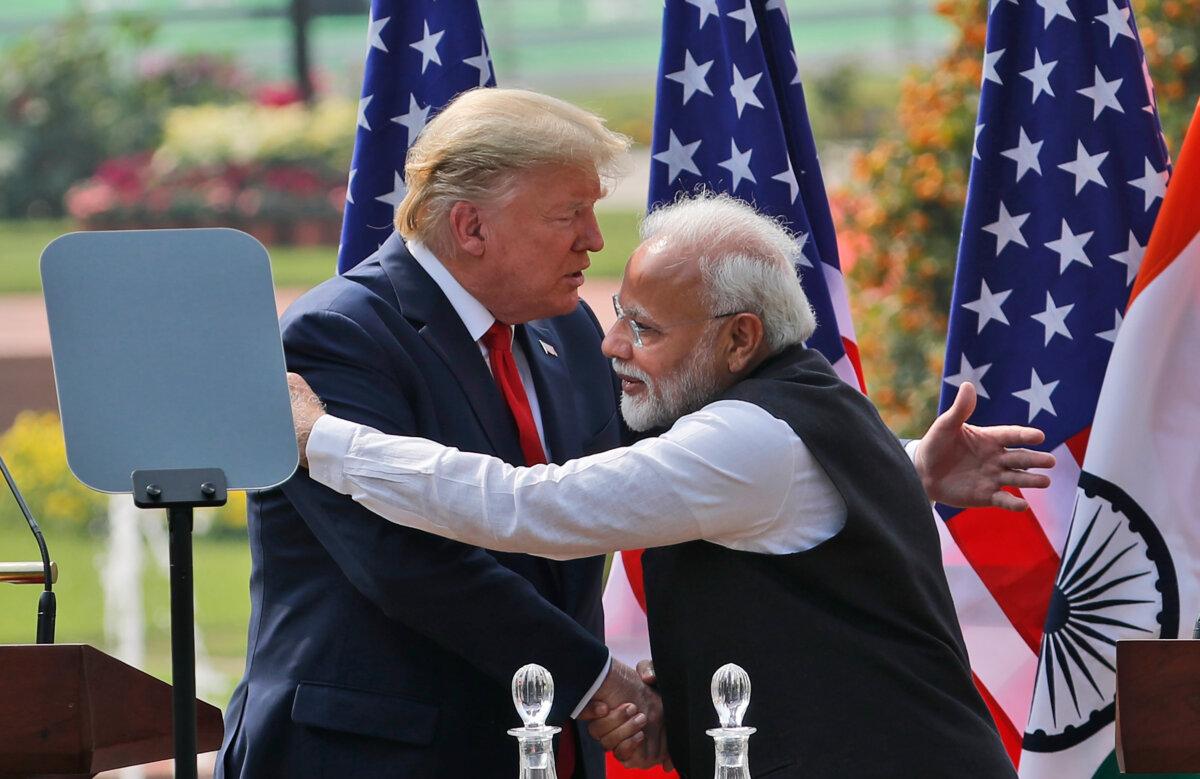
Because it is a non-aligned strategy, India is not willing to be included in military cooperation or security cooperation, so of course it affects the relationship between India and the United States, Shen said.
India’s policy of non-alignment will persist, but the country will face the bitter consequences: “Should it encounter a major crisis or disaster, it might not receive assistance from other nations,” he warned.
The United States has no need for a “floater” that neither opposes the West nor fully aligns with it, Wang He, a U.S.-based China analyst, told The Epoch Times.
“Amidst the bipolar confrontation between the United States and China, New Delhi must realize that the Chinese regime harbors global ambitions. The path of ‘seeking to manage differences with China and achieve a sort of cold peace between two Asian giants’ is a dead end,” he said.