Residents in southern China’s Guangxi region say floodwaters rose with little warning after days of torrential rain, submerging homes, shops, farms, vehicles, and low-lying streets.
In Fangchenggang, a coastal port city near Vietnam, residents said upstream reservoirs released water at the worst possible time—just as high tides pushed inland.
“They released water from two or three reservoirs at the same time, and the seawater pushed back from below,” Xiao Peng, a pseudonym, told the Chinese edition of The Epoch Times. “How could we not be flooded?”
The Epoch Times could not independently verify Xiao’s account of reservoir operations. The interviewees provided only their surnames or pseudonyms out of fear of reprisal.
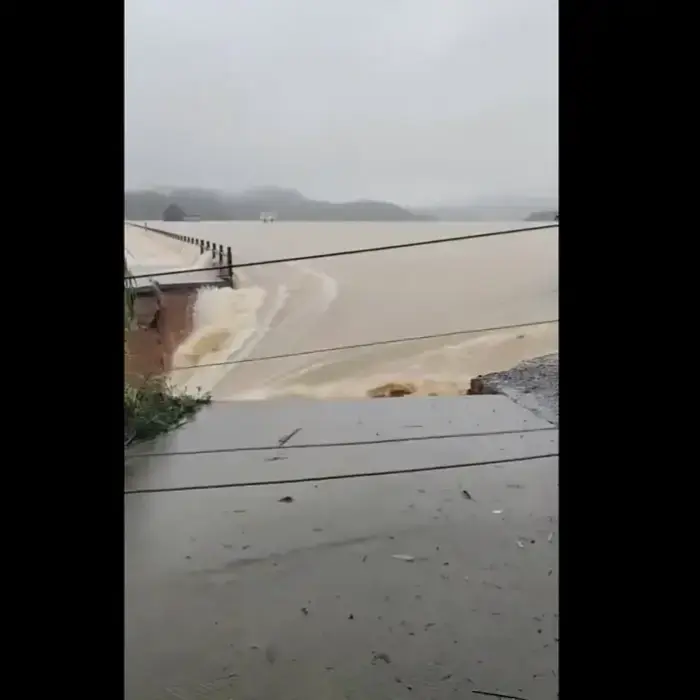
The same storm system also battered Hengzhou, near Guangxi’s capital of Nanning, about 90 miles northeast of Fangchenggang. There, the Liulan Reservoir breach sent floodwaters into downstream villages. Local media and social media posts said a snake-breeding facility was washed out, releasing hundreds of snakes, including cobras, into flooded communities.
Guangxi is a coastal region in southern China bordering Vietnam. Fangchenggang sits on the Gulf of Tonkin, called Beibu Gulf in Chinese, and serves as a port gateway for China’s trade with Southeast Asia.
‘Almost Up to the Second Floor’
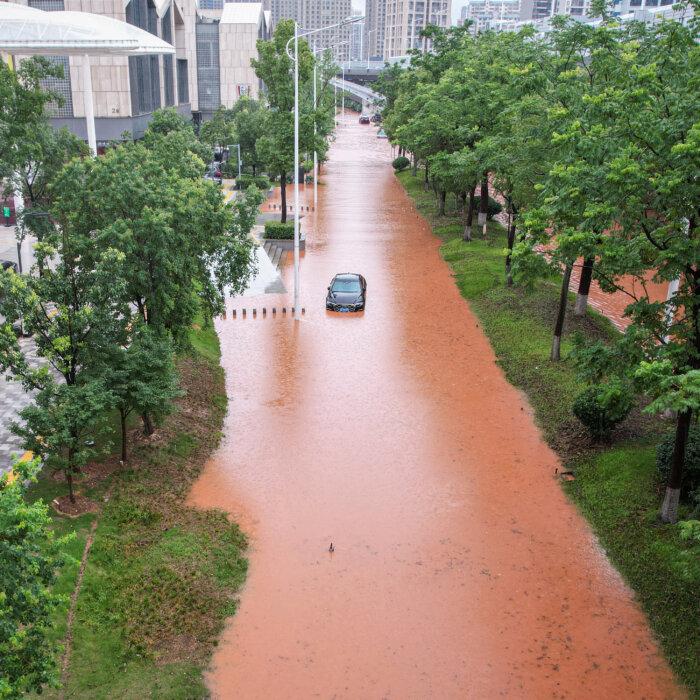
Xiao said the flood in Fangchenggang began rising rapidly on the night of July 4 and reached its highest level on July 5.He said the water rose so quickly that many residents had little time to move cars, merchandise, livestock, or farming equipment.
“I was in the urban area. The floodwater rose extremely fast. It was almost up to the second floor,” he said.
Xiao described collapsed homes, flooded shops, submerged basements and underground garages, and vehicles swept away.
Expert Says Tide Timing Is Crucial
Wang Weiluo, a Germany-based Chinese water-resources expert, told The Epoch Times that the flooding raised questions about reservoir management, warning systems, and information disclosure.Wang said coastal flood control requires officials to coordinate three forces at once: rainfall, upstream water releases, and ocean tides.
“If reservoir water is released when the tide is high, the water downstream cannot drain out smoothly,” Wang said. “That can quickly worsen flooding in towns and villages.”
He said many Chinese cities have expanded into river-adjacent areas that historically served as floodplains, reducing the land available to buffer high water.
“Many cities are built along rivers,” Wang said. “River channels have been heavily engineered, and large areas that used to be floodplain have been developed into urban districts. That makes flooding in cities and towns serious.”
When development pushes deeper into wetlands, riverbanks, or low-lying land, drainage failures can turn heavy rainfall into a wider urban disaster.
Wang said the Chinese Communist Party’s handling of disasters often leaves residents with incomplete information.
Trade Gateway
Fangchenggang is not an isolated rural county. It is one of Guangxi’s key coastal port cities, near China’s border with Vietnam.Chinese official materials describe Fangchenggang as a major China–ASEAN gateway and part of the Gulf of Tonkin port system, which includes Fangchenggang, Qinzhou, and Beihai. China’s National Development and Reform Commission said the Gulf of Tonkin Port had been positioned as an international passageway for China’s southwestern and central-southern regions and as a gateway tied to the 21st Century Maritime Silk Road, part of Beijing’s Belt and Road infrastructure initiative.
An industry post by E-PORTS Co. described Fangcheng Port as a deep-water port at the southwestern end of China’s coastline and a logistics platform linking China with ASEAN. It said Fangcheng Port, Beihai Port, and Qinzhou Port were unified under the Gulf of Tonkin Port in 2009.
Extreme Rainfall
Chinese official and state-linked reports attributed the flooding to extreme rainfall from Typhoon Maysak.Guangxi meteorological authorities said the region raised its major rainstorm emergency response to Level II on July 5. State media agency Xinhua, citing Guangxi meteorological authorities, said Jiangping town in Dongxing, under Fangchenggang, recorded 533.2 millimeters—about 21 inches—of rain from July 4 to July 5. The same location recorded 102.7 millimeters, or about 4 inches, in one hour.
Dam Breach Sends Cobras Into Flooded Villages
In Hengzhou, near Nanning, the Liulan Reservoir developed a serious breach on July 6.China’s Ministry of Emergency Management said multiple reservoirs in Nanning and Guigang had reported emergencies.
Xinhua said the Liulan Reservoir, a medium-sized reservoir, suffered a serious emergency that morning, with a gap appearing in the dam body.
It is reported that Liulan Reservoir officials moved a planned July 5 discharge from 10 p.m. to 8:30 p.m. due to heavier rain, and said water levels reached 111.20 meters early July 6—about 3 feet above design—prompting full gate openings at 6 a.m.
Residents told the Chinese edition of The Epoch Times they were not fully warned. One said homes in Liuxiang village flooded to the first floor with power and water cut, while a Yunbiao villager said water rose too fast to evacuate, leaving people stranded on upper floors with roads blocked.
Then came a secondary fear.
A state media Global Times report, citing Chinese media and local officials, said a preliminary estimate found about 800 to 900 snakes had escaped after the farm was washed away by floodwaters.
The report said local farms mainly raised cobras, king rat snakes, and water snakes.
‘We Are All Finding Our Own Way’
Xiao said many Fangchenggang residents were still trying to clean up without clear information about compensation, relief, or resettlement.“You think the government will settle you somewhere?” he said. “We are all finding our own way. The government has not distributed relief supplies. Disaster victims are being left alone.”
He said residents had heard of deaths in the flooding, but that such information was hard to publicize online.
“News about deaths gets blocked quickly when people put it online,” he said.
The Epoch Times could not independently verify casualty claims.