The death of prominent Chinese economist Gao Shanwen has prompted an outpouring of public mourning in China, with hundreds attending his funeral and many praising him as one of the country’s few economists willing to publicly challenge official narratives on the economy.
The wave of tributes has also drawn an apparent official response. A widely shared memorial essay was removed from Chinese social media, while pro-Beijing commentators criticized efforts to elevate Gao’s legacy. The response reflects the Chinese Communist Party’s (CCP) longstanding sensitivity to public mourning that it fears could evolve into broader expressions of political dissatisfaction, analysts said.
Public Mourning Draws Hundreds
Gao, former chief economist at SDIC Securities, died of cancer on July 7 at the age of 55, according to Chinese state media Securities Times.
His funeral was held on July 11 and organized by groups including the Peking University Alumni Association, reported state-controlled media The Economic Observer. Hundreds of people gathered at Beijing’s Babaoshan Revolutionary Cemetery to pay their respects.
Funeral couplets praised Gao’s dedication to the country and the public, while Peking University Alumni Association Secretary-General Li Wensheng described him as a principled scholar who upheld moral integrity and remained steadfast in defending his convictions.
A graduate of China’s prestigious Peking University, Gao and fellow alumni donated 30 million yuan ($4.43 million) in 2020 to establish a scholarship fund at the university.
Economists, investors, and financial professionals across China published memorial essays honoring Gao, while several Chinese media outlets launched special pages commemorating his life and career.
One tribute in particular gained widespread attention before disappearing from the internet.
In the essay, titled “Great Sorrow Needs No Words,” Chinese economist Lin Caiyi recalled that Gao had come under official scrutiny years before his public clash with regime authorities over China’s economic data.
According to Lin, a Chinese official publicly criticized Gao during a financial conference in 2018, telling him that “the leadership has already been very tolerant of you” and had instructed officials to “strengthen guidance” over his public remarks.
Lin wrote that the grief spreading through China’s financial sector reflected more than the loss of a respected economist.
“So much sorrow is flowing through the financial community,” she wrote. “Rather than mourning Gao Shanwen’s passing, people are mourning the end of an era when it was still possible to express one’s views freely.”
Chinese news portal Sina reposted Lin’s essay as part of its coverage of Gao’s death, but the article has since been removed.
Scrutiny After Questioning GDP Data
Gao had long been regarded as one of China’s leading economists.
He gained national recognition in 2006 after accurately predicting a major bull market through his “asset revaluation” theory. In 2010, he also attracted attention for arguing that China had passed the Lewis turning point—a stage in economic development when surplus rural labor begins to diminish.
His relationship with CCP authorities deteriorated after he made increasingly blunt public comments about China’s economy.
In December 2024, Gao described post-pandemic Chinese society as consisting of “energetic elderly people, dispirited young people, and middle-aged people who have lost hope in life.”
“We cannot know the true pace of China’s economic growth,” Gao said. “My personal estimate is that average GDP growth over the past two or three years has probably been around 2 percent, although the official figures are close to 5 percent.”
Soon afterward, the regime’s censors suspended his social media accounts. In November last year, Gao left his position at SDIC Securities, according to Securities Times. His departure followed months of official scrutiny after his remarks on China’s economic data.

Fear of Discontent
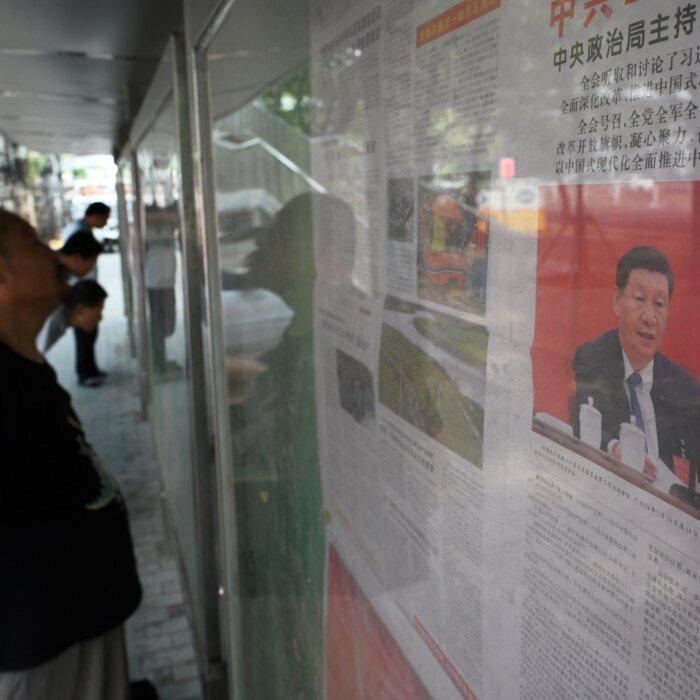
Ming Jinwei, former journalist for state media outlet Xinhua, warned against what he called attempts to “infinitely elevate” Gao’s reputation in order to promote neoliberal ideas or encourage opposition to government authority.
In a post on Chinese social media platform WeChat, Ming accused Gao of making numerous flawed statements under the banner of “speaking the truth” and criticized Gao’s skepticism toward China’s official economic statistics. He argued that Gao’s remarks reflected what he described as admiration for the United States and a willingness to challenge China’s political system.
Ming previously worked in Xinhua’s international news department before becoming a political commentator. His commentary generally aligns with Beijing’s external propaganda messaging and its efforts to counter Western narratives about China.
Feng Chongyi, an associate professor in China studies at the University of Technology Sydney, told The Epoch Times the removal of Lin’s memorial essay and the criticism directed at Gao suggest the regime is uneasy about the public response.
“The CCP maintains tight control over the media and the internet,” he said. “These actions indicate that officials are uncomfortable with the mourning, and perhaps [Chinese leader] Xi Jinping himself is as well.”
Feng said the Party has historically feared that public memorials could become vehicles for broader political discontent.
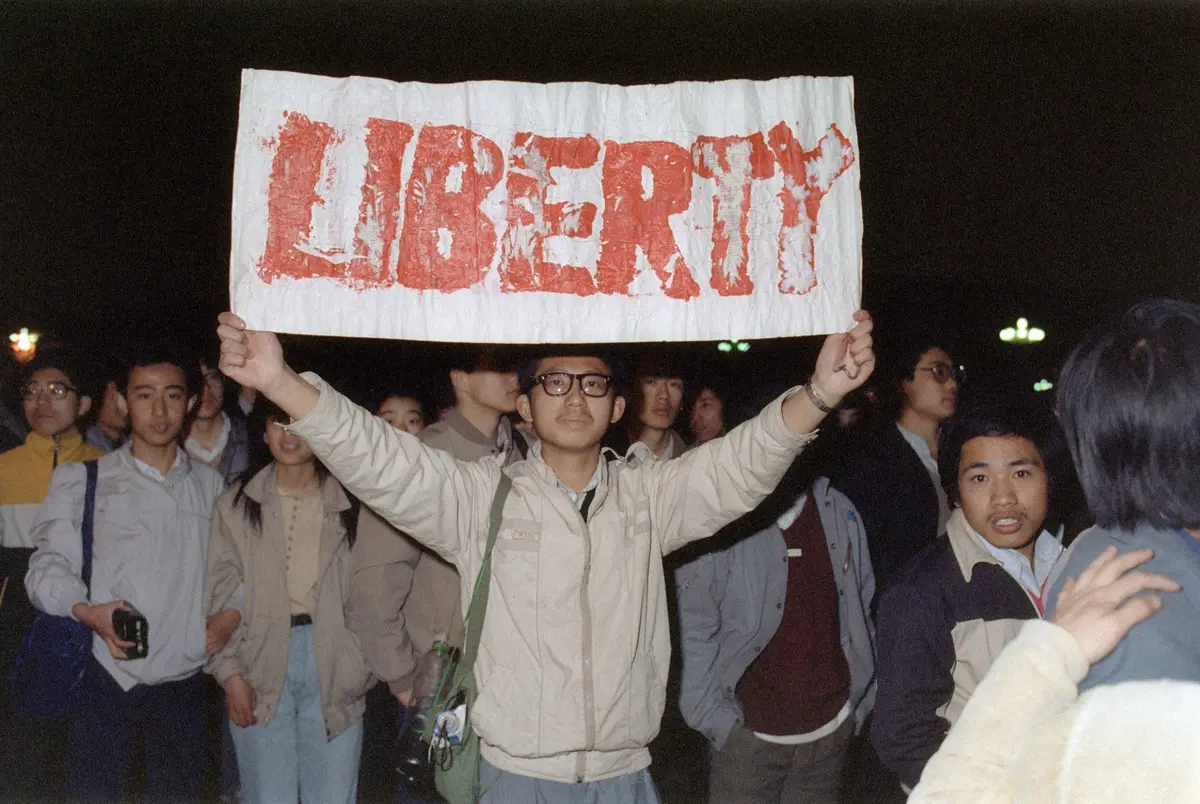
He cited the public mourning following former CCP leader Hu Yaobang’s death in 1989, which helped trigger the Tiananmen Square protests, and the spontaneous commemorations after former Premier Li Keqiang died in 2023, which many interpreted as reflecting broader public dissatisfaction.
“The regime’s censorship following Gao Shanwen’s death shows just how nervous they are,” Feng said. “They see these public expressions of grief as revealing widespread dissatisfaction with the Party-state and with Xi Jinping.”
A China-based lawyer, speaking to The Epoch Times on condition of anonymity out of fear of reprisal, said China’s political atmosphere has become increasingly restrictive.
“People face heavy censorship whenever they discuss Xi or the CCP,” the lawyer said. “It’s not just that posts get deleted. You may be summoned by police, and even conversations in small private groups can be reported. Many people have awakened to reality, but they remain silent. The CCP knows there is deep public dissatisfaction, so even expressions of mourning make them uneasy.”
Challenging the Official Narrative
Feng said Gao’s comments struck a nerve because they challenged one of Beijing’s most closely guarded political narratives.
“Everyone knows the CCP manipulates data, but Gao publicly addressed the extent of the problem,” Feng said. “That was something Xi Jinping could not tolerate.”
He argued that China’s economic slowdown reflects deeper structural problems that have worsened under Xi’s leadership.
“After more than a decade of political centralization, the economy has suffered serious damage,” Feng said. “Rather than adopting pragmatic policies, Xi continues to consolidate power. Under those conditions, the economy can only continue to weaken.”
China’s official data released by the National Bureau of Statistics on July 16 showed second-quarter GDP growth slowing to 4.3 percent, down from 5 percent in the first quarter.
Davy Jun Huang, a U.S.-based economist and former columnist for Chinese state media outlet CNTV, told The Epoch Times the weaker-than-expected figure undermined hopes that China’s economy would rebound during the second half of the year.
“The CCP authorities, who are used to presenting overly optimistic economic data, unusually reported a figure below market expectations,” Huang said. “That effectively shattered the remaining optimism that the economy would bottom out and recover later this year.”