A resident of a county-level city in China says local economic conditions have deteriorated to the point that informal gambling and low-end service work have become dominant sources of income, while businesses struggle to survive amid weak demand, rising costs, and tightening local fiscal pressures.
County-level cities refer to smaller cities in China that are not part of the main population centers, such as Beijing and Shanghai.
“The economy in our county is very bad,” the local resident told The Epoch Times. “The businesses doing best are mahjong [gambling] halls, and those offering sexual services. Everything else is very difficult.”
He spoke to the publication on condition of anonymity out of fear of reprisal.
Gambling Fills Gap in Economy
The Chinese regime has repeatedly emphasized the importance of “county-level economies” in recent years, framing them as a key link between urbanization and rural revitalization. In this year’s work report, the regime called for improved infrastructure, better allocation of public resources, and the development of local specialty industries, according to Xinhua News Agency, a Chinese state media outlet.However, the resident said those policy goals bear little resemblance to conditions on the ground.


“There is a street full of mahjong halls in the county, and almost every village has several,” he said. “Most people are not working, mainly because they cannot find jobs. The only work available is delivery driving, courier services, or low-paid service jobs like beauty services. There aren’t many factories.”
He also alleged that illegal gambling—particularly underground lottery-style betting—is widespread and largely ignored by authorities.
“In our area, underground lottery gambling is very serious. The police basically don’t care,” the resident said. “Even among people we know, many participate, including village officials and township officials.”
Falling Rents and Shuttered Businesses
The resident said the local property market has deteriorated sharply over the past decade. Shopfronts that once attracted strong demand are now sitting vacant for extended periods.“In the past, good storefronts were profitable and never transferred,” he said. “Now, even on the main commercial streets, many shops cannot be rented out.”
He said rents for some properties have fallen dramatically, with units that once leased for 170,000 to 180,000 yuan ($25,000 to $26,5000) per year now renting for as little as 50,000–80,000 yuan ($7,370 to $11,800).
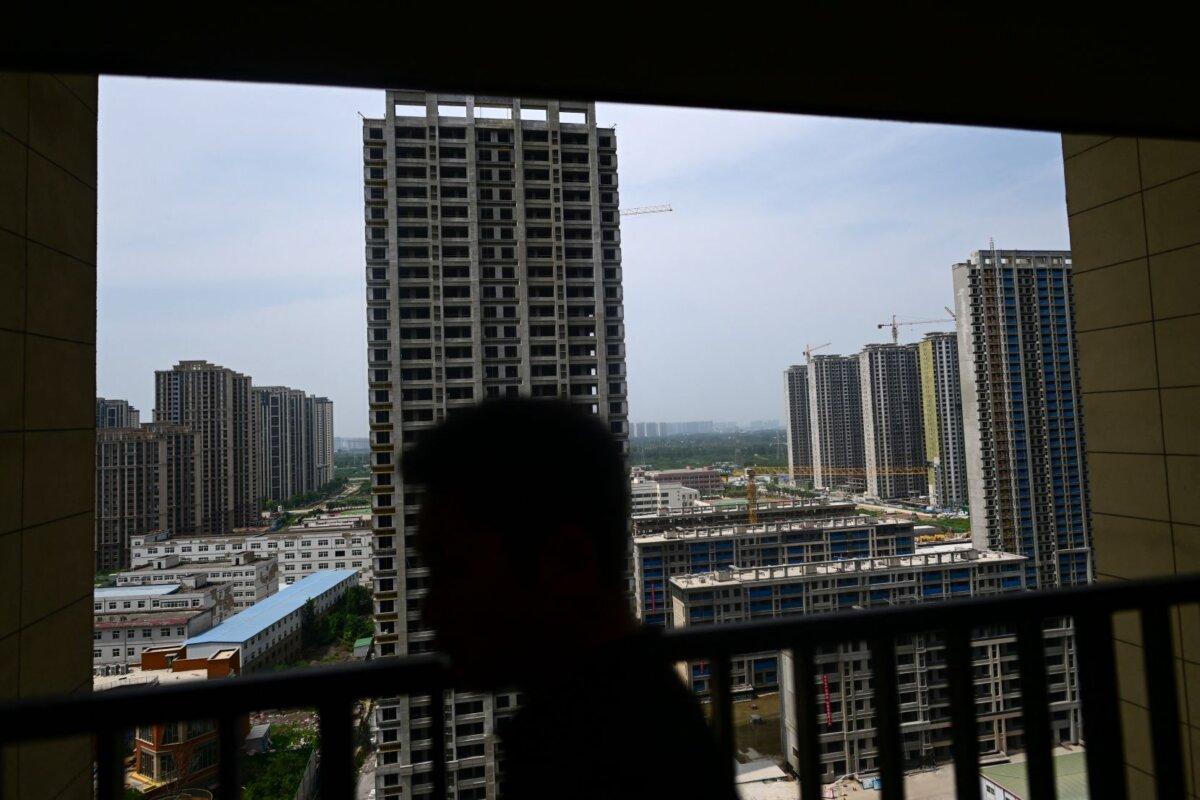
According to the resident, the county is also experiencing a housing surplus, with many residential buildings left vacant.
“A large portion of housing is vacant. There are rental signs everywhere,” he said.
He added that several major foreign-invested firms have left the area in recent years, including Taiwan-funded manufacturers that once provided significant local employment.
The resident also said that local authorities have increased pressure on small private businesses through taxation and enforcement actions.
“In the past, individual businesses were supported and sometimes not taxed. Now many are required to pay 40,000 to 50,000 yuan ($5,900 to $7,370) a year,” he said, noting that annual revenues for many of these businesses are only 100,000 to 200,000 yuan ($14,700 to $29,500).
He further alleged that some private business owners have been detained and required to pay back taxes, including entrepreneurs involved in mining, real estate, and private education.
Local authorities in the county took enforcement action against dozens of former real estate operators, according to the resident.
Corruption and Rising Crime
The resident also described alleged irregularities in the local driving test system, claiming that exam centers were involved in widespread cheating schemes.He said candidates were able to pay large sums of money to obtain passing results, and that the issue may involve thousands of participants.
He also said that corruption could extend into the traffic police and administrative departments.
Beyond economic issues, the resident described what he characterized as growing social instability, including violent incidents in local mahjong halls.
“There are frequent killings in mahjong halls,” he said, citing disputes over money, relationships, and gambling debts.
He also pointed to rising divorce rates and economic insecurity among women as contributing factors to fraud and relationship-related financial disputes, sometimes escalating into violence.
Separately, he said that online influencers on short-form video platforms were often former petty criminals who had shifted to digital scams or deceptive marketing schemes.

Surviving on the Minimum
The resident said the broader population is surviving through a combination of savings, borrowing from relatives, online lending, and informal work. Wages, he said, have stagnated at very low levels while the cost of utilities, fuel, and government fees has continued to rise.He described a growing informal labor market in which unemployed workers gather daily in public spaces seeking short-term odd jobs.
“From morning to noon, many people are waiting for temporary work, unloading goods or working construction,” he said.
The resident added that elderly rural residents are particularly vulnerable, sometimes surviving on pensions of just over 100 yuan ($14.74) per month.
He also pointed to severe financial pressure among middle-aged urban residents, especially those burdened by mortgages, car loans, and unstable employment.
“These people are in the most difficult situation,” he said.
The resident said that economic confidence has largely disappeared among local residents, arguing that both domestic and foreign investors are reluctant to commit capital.
“In the past, there was still hope for recovery. Now there is none,” he said. “Even a return to normal growth seems impossible.”
He criticized what he described as a lack of political and economic reform, warning of long-term financial instability.