Three whistleblowers in China are raising an alarm about the fabrication of statistics and other performance indicators in the scientific community under political pressure from the Chinese Communist Party.
Chinese geologist Yang Hengshu bravely recounted in an undated video that has recently been circulating on Chinese-language social media that he was pressured to falsify scientific data in his work and nearly fired when he refused to comply.
“If you don’t falsify the data, you can’t submit the report,” he said. “I refused to falsify it, and I was almost fired.”
Two other Chinese academics independently told The Epoch Times they believe such data manipulation extends beyond isolated cases of academic misconduct and reflects systemic incentives for fraud tied to state funding, political assessments, and career advancement under the Chinese Communist Party’s (CCP’s) evaluation system. The whistleblowers spoke on condition of anonymity out of fear of reprisal.
Yang said the widespread culture of fabrication had left him questioning the value of his work.
“When everything is falsified, what are these data even for?” he said.
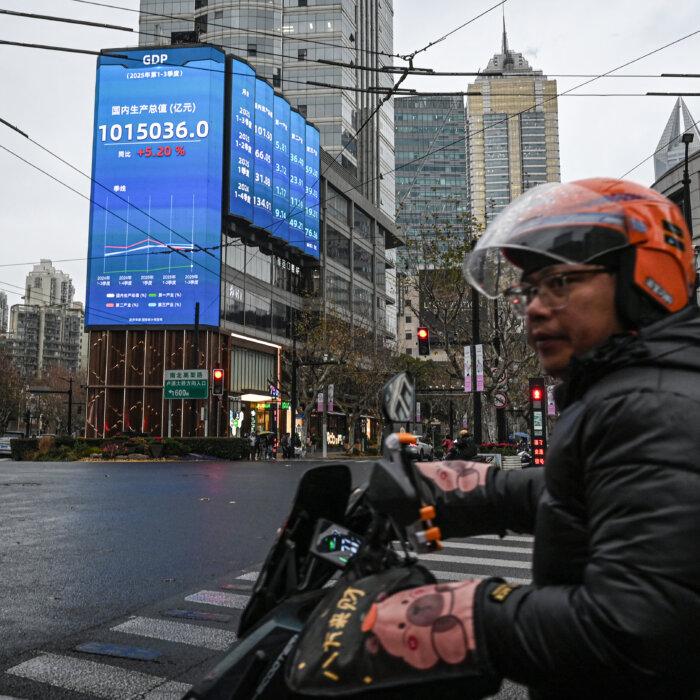
Yang did not provide details of when the alleged incident occurred, the project, or the organization demanding he commit scientific fraud.
Yang previously participated in geological research in western China’s Qinling Mountains and the Tibetan Plateau. Between 1988 and 2003, he published multiple papers on stratigraphy, fault structures, sedimentary basins, and paleontology, and previously worked as a researcher with a geological survey team in Sichuan Province.
Geological Data With Broader Consequences
Yang’s allegations concern the preparation and approval of geological survey reports, which document rock formations, mineral resources, geological structures, and reserve estimates.
Such reports often serve as the basis for mineral exploration, mining development, infrastructure construction, and geological hazard assessments. Altered underlying data or conclusions could lead to misguided decisions on subsequent engineering and resource development.
Yang’s account resonated with a whistleblower professor at a university in the Chinese city of Chongqing.
According to the professor, data fabrication is commonplace across Chinese universities because institutional evaluations determine access to government funding, policy support, and other resources.
“To pass evaluations, almost everything is falsified,” he told The Epoch Times.
The professor said universities in China compile statistics designed to satisfy official performance metrics, including graduate employment rates, research output, faculty qualifications, authorized master’s and doctoral programs, and even library collection figures.
“There is a whole set of evaluation indicators,” he said. “Colleges simply fabricate the numbers to match those indicators.”
Faculty members are instructed to memorize the official figures before evaluation teams visit campuses, the professor said. During inspections, evaluators may randomly observe classes or question instructors, who are expected to repeat the approved statistics.
“I found it both disturbing and deeply ironic,” he said.
Employment Rates and Research Claims
The professor said that employment statistics are among the most commonly manipulated indicators.
“Every year, the university tells every lecturer what the graduate employment rate should be,” he said. “Everyone has to repeat the same numbers.”
He said that universities have little choice because regime authorities control funding and policy approvals.
“You have to produce attractive data before you can obtain resources,” the professor said. “This is determined by the CCP system. It’s not because universities want to falsify data.”
He said those cases reflect only a small part of a much broader problem.
Concerns about academic integrity have drawn renewed attention in China after science blogger Geng Tongxue publicly accused professors and university administrators at several institutions of manipulating research data. Following internal investigations, several universities removed the accused individuals from their positions.
A retired professor from a university in Shaanxi Province told The Epoch Times that the CCP’s political system itself encourages dishonesty.
“You can’t survive here if you refuse to falsify data,” he said. “Political correctness itself provides protection for falsification.”
According to the retired professor, university evaluations are closely linked to research funding and government support, creating incentives for administrators to ensure that faculty members present a consistent narrative to inspectors.
“The evaluations become rehearsed performances,” he said. “Everyone is expected to maintain the same set of numbers.”
Speaking Out Carries a Cost
The retired professor told The Epoch Times that academics who refuse to cooperate or who publicly criticize the system often face long-term consequences in their career.
About 20 years ago, he published an article criticizing academic fraud in Chinese universities. He said that afterward, his applications for promotion and graduate-adviser qualifications were repeatedly blocked.
In one instance, several of his former students were approved as graduate supervisors while his own application was rejected despite meeting the formal requirements.
“My colleagues were furious and confronted the university president,” the retired professor said. “The president admitted it wasn’t because I lacked the qualifications. They simply weren’t going to let me supervise graduate students.”
He said the consequences extended well beyond promotions.
“If you don’t cooperate, your path to promotion is cut off,” he said. “You may never receive another research project. Once you’re placed on their blacklist, you stay there.”
The CCP has long promoted data-driven governance and scientific development. But the accounts from Yang and the two professors suggest that, in the absence of independent oversight, institutional autonomy, and public accountability, data can become a tool for securing political approval and government resources, while those who resist or expose falsification risk professional consequences.