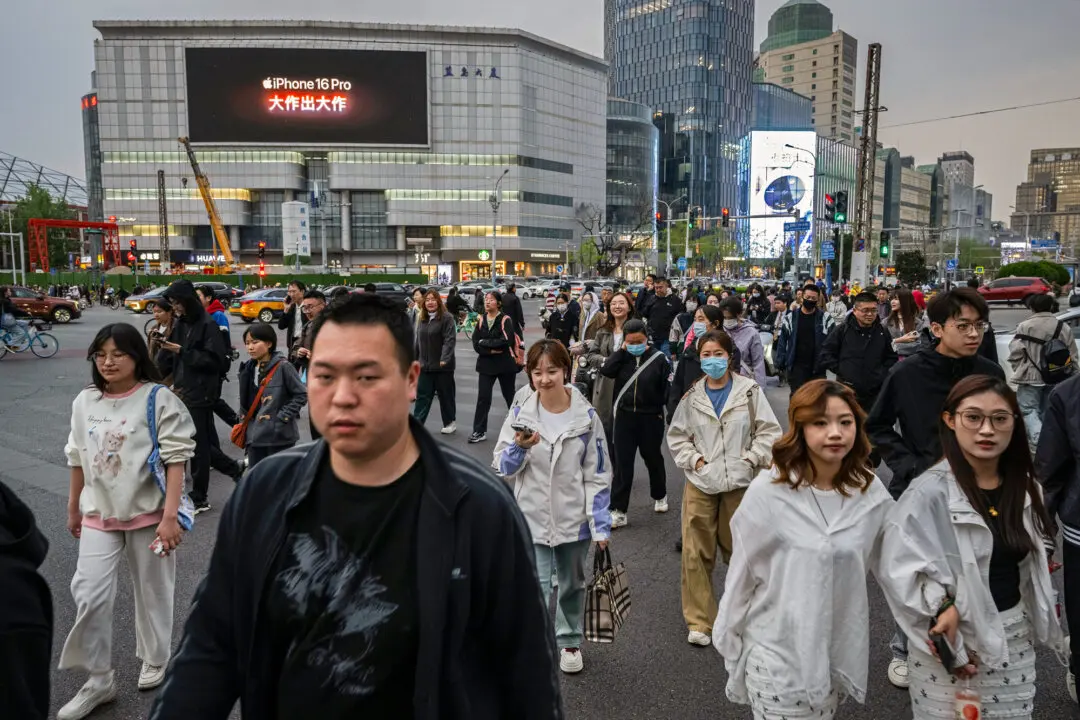
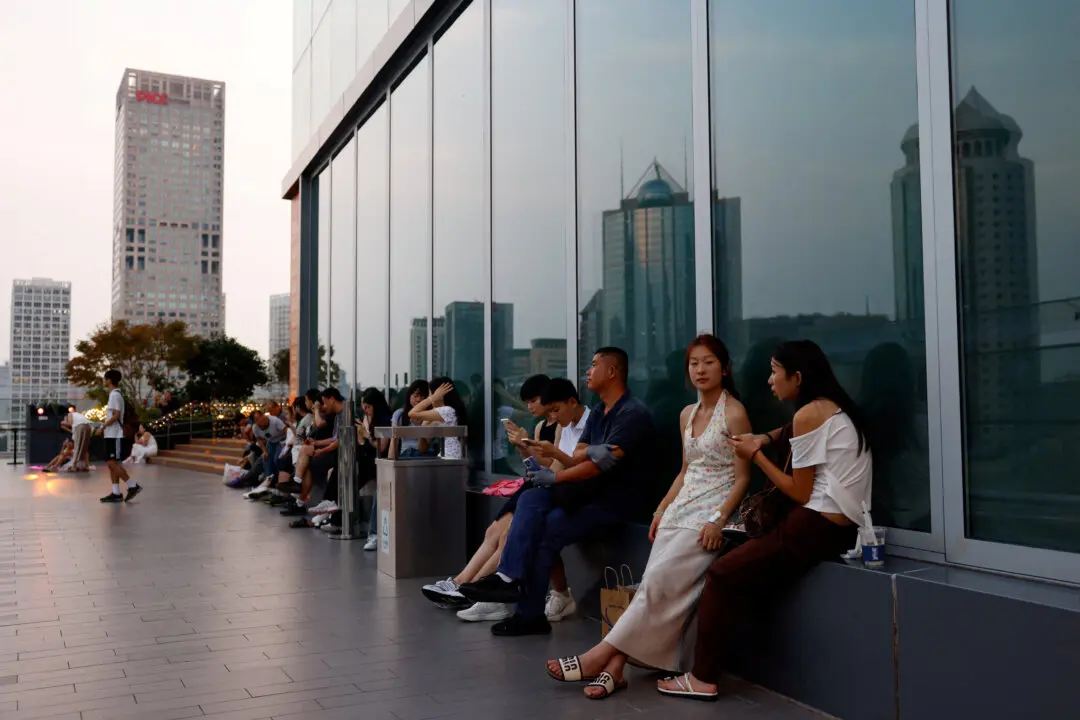
China’s biggest shopping festival, Singles’ Day (Nov. 11), which has had promotions running for more than a month, had slower growth than last year, as consumers seek bargains amid China’s sluggish economy.
Analysts said that it points to Chinese consumers’ weak confidence in future income and underlying weak momentum for China’s economic growth.
The total sales on Chinese e-commerce platforms reached approximately 1.7 trillion yuan (about $238.3 billion) during this year’s Singles’ Day shopping festival, which is a 14 percent increase year on year, according to data from Syntun, a Chinese consumer research firm.
This was slower than the 26.6 percent year-on-year growth on Singles’ Day 2024, despite the fact that this year’s promotional period is at least a week longer than last year’s.
Because of the ongoing real estate crisis, high unemployment, and unstable income prospects, Chinese consumers’ spending confidence has been significantly dampened, making it more difficult for them to open their wallets than ever before.
To stimulate consumption, retailers have adopted more aggressive discounting strategies, launching billions of yuan in consumer subsidies and coupons, and extending the promotional period. This year’s Singles’ Day sales event began in early October, making it the longest-running event in its history.


“Many brick-and-mortar stores were directly using online flash sale platforms, which is a new format and part of the Singles’ Day online sales, but the shipping fee is high,” Beijing consumer Lu Feng, who works in the media, told The Epoch Times on Nov. 13.
She said that this year’s discounts were quite substantial but that she didn’t see “a shopping frenzy surrounding these sales in Beijing.”
Poor Quality Growth
This year’s Singles’ Day “has not collapsed in terms of headline sales—nominal [gross merchandise value] still posted high single- to low double-digit growth—but the quality of that growth is poor,” economist Davy J. Wong told The Epoch Times on Nov. 13.Platforms stretched the promotion window from a few days to almost an entire month, and merchants were forced into much deeper discounting just to engineer a 14 percent increase, he said.
Consumers are clearly behaving in a “buy only on discount, never at full price” mode—they wait for promotions, compare aggressively, and are increasingly cautious, Wong said.
“That points to weak confidence in future income: households prefer to save rather than spend freely,” he said.

If even the country’s largest online shopping festival can only sustain growth through ultra-long campaigns and heavy price cuts, “it is hard to believe that brick-and-mortar retail, restaurants, and services are doing significantly better than e-commerce,” Wong said.
The Chinese Communist Party’s official target for China’s gross domestic product (GDP) growth this year is 5 percent. GDP grew by about 5.3 percent in the first half of the year and slipped to roughly 4.8 percent in the third quarter, barely hitting the target.
A Deflating Prospect
Since the Chinese economy entered a period of deflation in 2023, the actual deflation China is experiencing is more pronounced than official Chinese data suggest. Prices of everyday goods have plummeted, and the proportion of businesses in deficit reached its highest level in 25 years, according to Bloomberg.
In a setting of soft demand and falling prices, firms cut prices aggressively to protect market share, according to Wong.
“The result is ‘volume without value’: plenty of output, but low prices and thin margins,“ Wong said. ”Persistent losses or near-zero profits directly undermine investment and hiring. Over time, you get a cycle of low prices to low profits to low investment to low wage growth, which erodes productivity gains and weakens incentives for technological upgrading.”
Deflation in China persists alongside declining domestic demand, Sun Kuo-hsiang, a professor of international affairs and business at Nanhua University in Taiwan, told The Epoch Times on Nov. 14.
“When prices fall, demand shrinks, and inventories accumulate, businesses lack the incentive to invest, people are hesitant to spend, and fiscal revenue evaporates,” Sun said.
He said that on the surface, there may still be growth, “but internally, there is a slow contraction.”
Economy Amid Political Infighting
While infighting continues in the Chinese Communist Party’s upper echelon, the economic development and people’s livelihoods are not the authorities’ top concerns, analysts said.Judging by actual behavior rather than official rhetoric, Wong said that the current priority ordering at the top seems to be: “Regime and security stability, medium- to long-term strategic positioning, short-term growth.”
He said that “deeper market reforms or large-scale redistribution to households have been pushed down the agenda.”
Although the statistical reports still show 4–5 percent growth, what people experienced on Singles’ Day, in terms of prices, corporate earnings, and household behavior, is an economy that is gradually running out of steam, Wong said.
The current atmosphere in Beijing’s political circles is more like a “power defense war” than a “saving economy war,” Sun said.
CCP leadership is busy dismantling those who are “not absolutely loyal” and those whose “political stance is inconsistent,” while the economy has become a secondary issue, he said.
“As long as the data can be presented favorably, the statistics can be manipulated, and public opinion can be guided, even a double-digit drop in GDP can be described as ‘structural optimization,’“ he said. ”This is the current reality: The economy is no longer the core of governance, but rather a tool for consolidating power.”