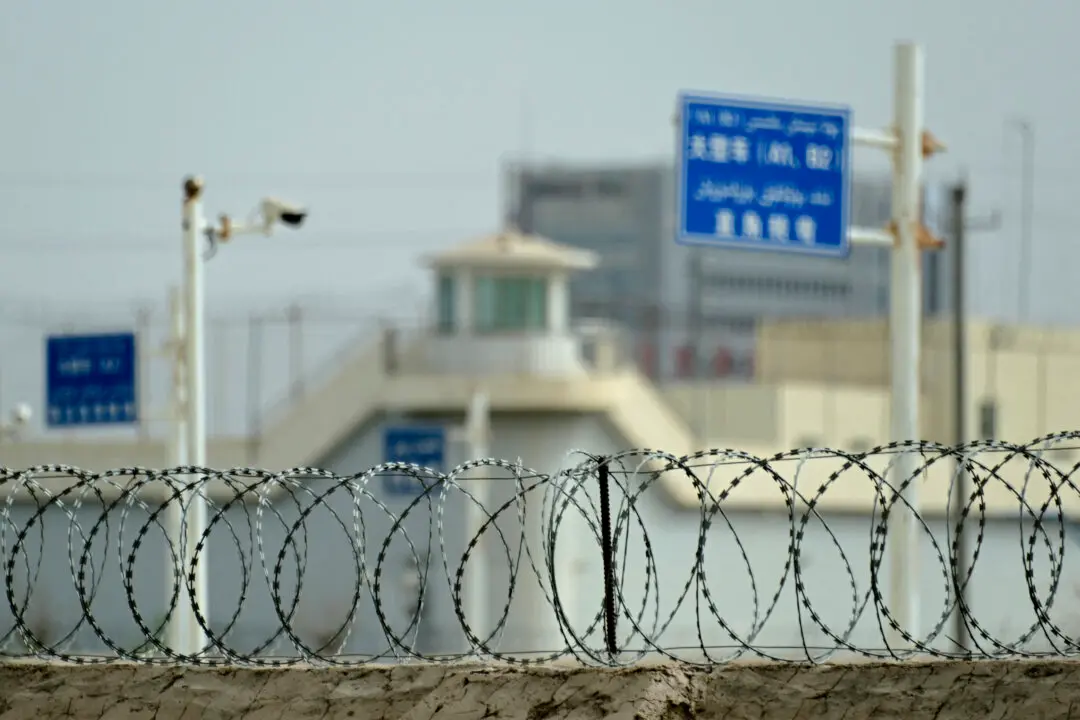
China’s latest economic data reveal an economy propped up by cheap exports, masking paralyzed domestic demand and risking wider trade friction abroad, experts say.
China’s gross domestic product (GDP) grew by 4.3 percent in the second quarter, according to a July 15 release from the country’s National Bureau of Statistics (NBS).
The data showed that industrial output rose 5.3 percent year on year in June, accelerating 0.8 percentage points from May.
Yet, in the first half of 2026, fixed asset investment fell 5.7 percent year on year to 22,637 billion yuan ($3,342.34 billion), or down 2.7 percent when stripping out property investment.


By sector, investment dropped 2.4 percent year on year in infrastructure, 1.2 percent in manufacturing, and a steep 18.0 percent in real estate development.
The urban unemployment rate averaged 5.2 percent in the first half of the year, dipping to 5.0 percent in June, down 0.1 percentage point from May.
Stalled Consumption
Liu Meng-chun, director of the Chung-Hua Institution of Economic Research’s Mainland China division in Taipei, said industrial and high-tech output has propped up China’s second-quarter GDP growth above 4 percent, but the data also exposes a structural bias that favors supply over demand.
“Domestic consumption and private investment remain deeply depressed,” Liu told The Epoch Times.
“Since the real estate market peaked between 2021 and 2022 and entered a deep, prolonged downturn, the domestic growth engine of China’s economy has come under severe strain,” he said.
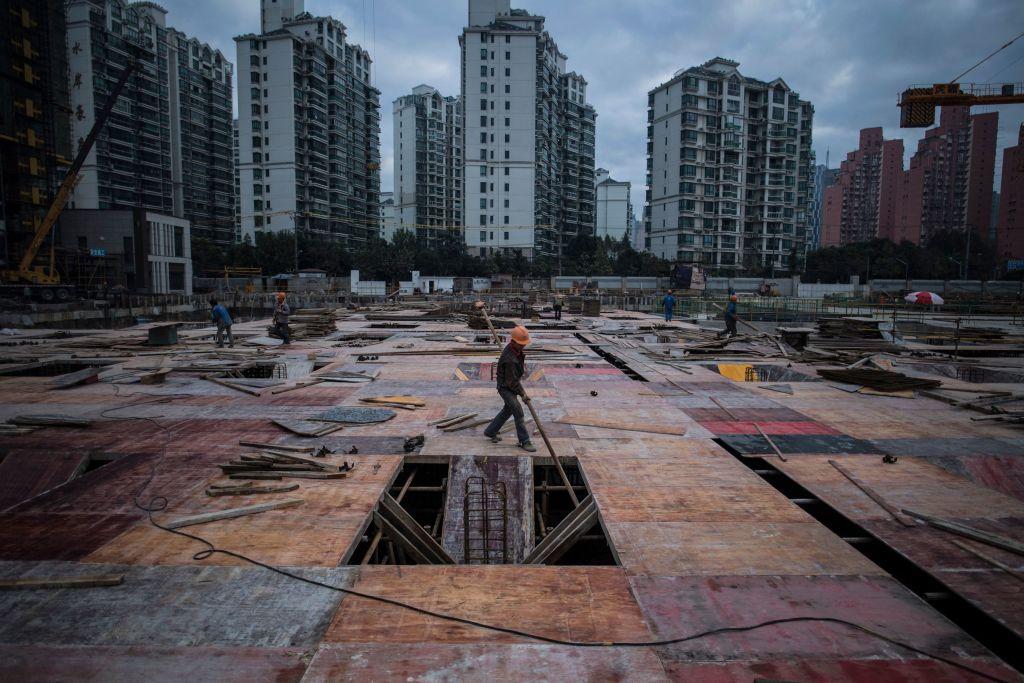
Liu said this property slump has directly eroded the value of housing assets held by urban residents, leaving households poorer on paper and even more reluctant to spend.
“With household wealth shrinking and debt obligations unchanged, citizens are choosing to pay down what they owe first,” Liu said.
“That leaves little room for near-term big-ticket spending.”
Tsai Ming-fang, a professor of industrial economics at Tamkang University in Taiwan, said this pattern reveals a deep-rooted imbalance in China’s domestic demand.
“Driven by the ongoing reorganization of global supply chains, foreign corporate investment in China is contracting rapidly,” Tsai told The Epoch Times.
“This inevitably drives down foreign direct investment (FDI) and significantly worsens the employment landscape, stifling any recovery in domestic consumption,” he said.
FDI fell 8.6 percent year on year to 327.29 billion yuan ($48.03 billion) from January to May in 2026, according to China’s Ministry of Commerce.
Chinese economist David Daokui Li said at a July 11 China Macroeconomy Forum that data show China’s long-suppressed jobless population stands at roughly 24 million, creating an environment that is highly detrimental to social stability, according to Caixin, a Chinese media outlet with financial backing from Beijing.
Global Pushback
“In the first half of 2026, China’s daily output of integrated circuits topped 1.5 billion units,” Liu said.
“With its domestic demand unable to absorb this level of output, exports have become the only outlet.”
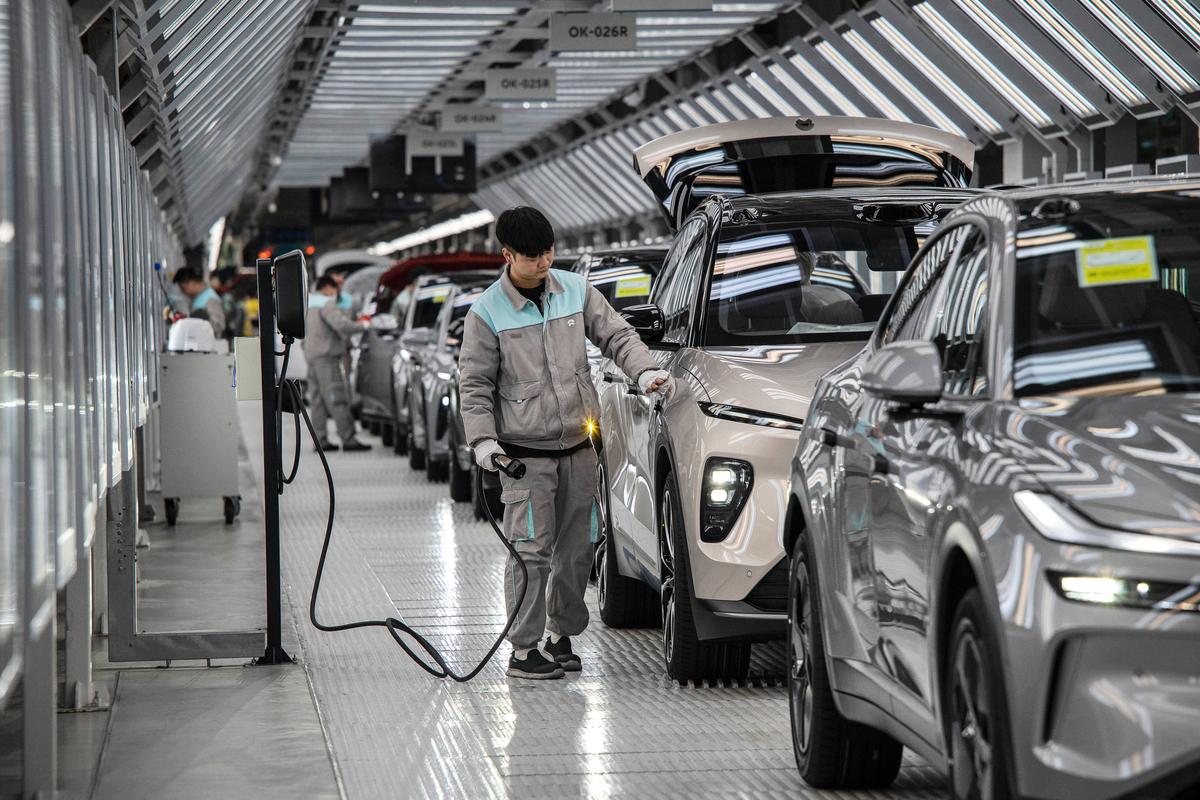
According to figures from China’s General Administration of Customs, the country’s exports surged 27 percent in June, posting a single-month trade surplus of $125.6 billion.
Liu said, however, that this wave of goods flowing into foreign markets is triggering a fierce backlash across global trade.
“Moves such as U.S. Section 232 tariffs and the European Union’s Industrial Acceleration Act are exposing Chinese manufacturers to mounting tariff risks and sharp margin compression,” Liu said.
Tsai concurred, saying Beijing will inevitably retaliate against countries restricting its shipments, setting off a cycle that could sharply escalate global trade tensions.
“As an increasing number of countries block Chinese exports, Beijing turns to dumping even larger volumes into unrestricted markets,” Tsai said.
“But this will push countries that have so far lacked restrictions to impose their own curbs on Chinese goods, since inaction could leave markets with close trade ties to China vulnerable to a flood of redirected Chinese exports.”
Uncertainty
Tsai said doubling down on exports cannot salvage China’s deeply depressed economy, and the same overcapacity has fueled brutal price wars at home, prompting Beijing to seek more rational pricing.
“China has raised this issue during major meetings like the National People’s Congress, but there remains significant uncertainty about how effectively they can maintain pricing stability,” Tsai said.
“Even if prices correct, production scales and labor demands will naturally shrink, driving up unemployment and further exacerbating China’s economic woes,” he said.
“If personal safety risks in China mount, foreign investment appetite will plunge, making any growth in domestic consumption impossible,” he said.
“Beijing is currently propping up its economy by leaning heavily on exports to low- and middle-income nations, but this cannot sustain growth in the long run.”
Liu said it remains unclear whether Beijing will quickly change course to fix these crises.
“China’s local government finances are under heavy pressure, the burden of debt resolution is massive, and the decline in private investment is accelerating,” Liu said.
“Whether China can fulfill promises like raising the minimum wage and implementing paid leave to resolve these systemic economic hurdles remains to be seen.”