The Chinese regime’s disaster relief after rare and severe flooding in Guangxi Province in southern China has been inadequate and inefficient, while self-organized Chinese volunteers have played an important role in helping victims, according to a volunteer who spoke with The Epoch Times.
The ruling Chinese Communist Party (CCP) announced additional relief funds and measures for the Guangxi flood disaster zones after being criticized for a slow reaction and earlier providing significant aid to Venezuela earthquake victims.
However, the situation on the ground shows that state disaster relief hasn’t had much of an effect in the widely devastated region, Zhang Jian, a volunteer rescuer who used a pseudonym out of fear of reprisal, told The Epoch Times on July 15.
Zhang drove an off-road vehicle to Yunbiao Town and Zhenlong Township to participate in grassroots rescue efforts, spending days deep within the disaster zone after the flood.
The extent of the damage in the disaster zone far exceeded what outsiders could imagine, and the scene was shocking, he said.
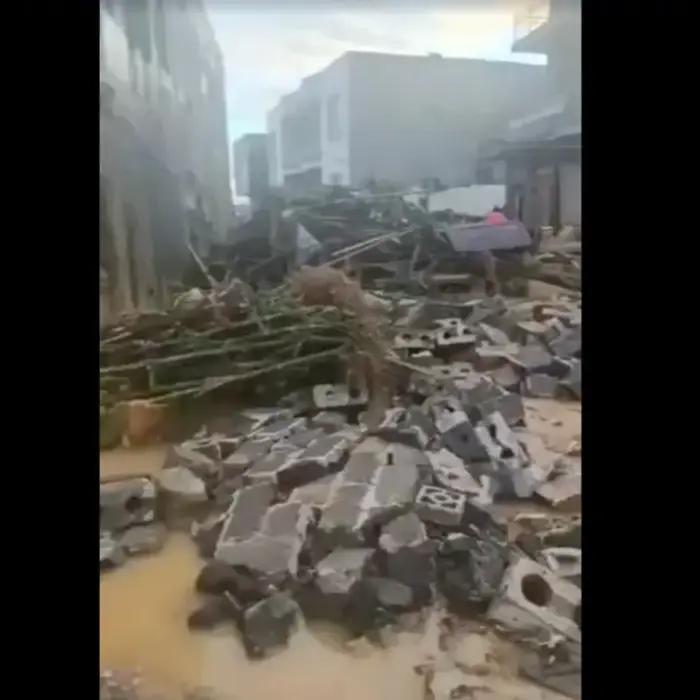
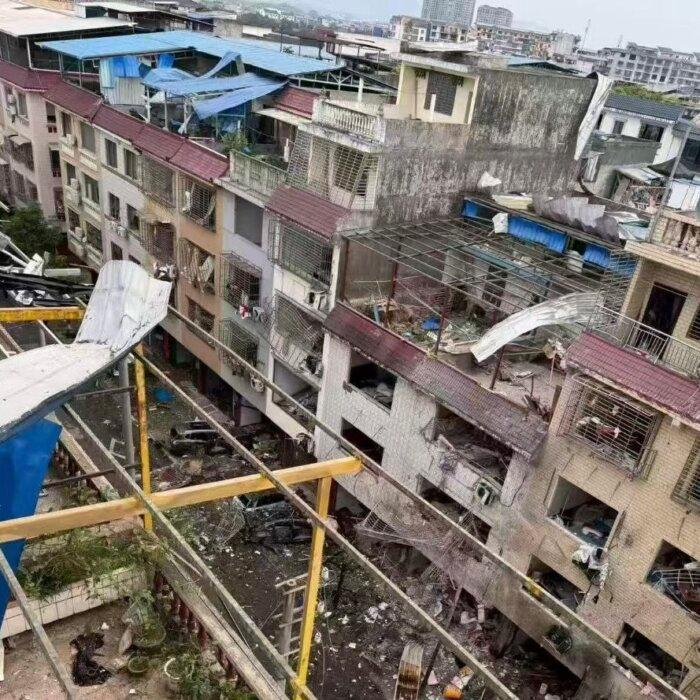
“I visited many villages. It looked like an apocalyptic scene—like the end of the world.”
Carcasses of livestock were visible everywhere along the way, he noted. “It makes your skin crawl to see them—large cattle and pigs lying dead on the road.”
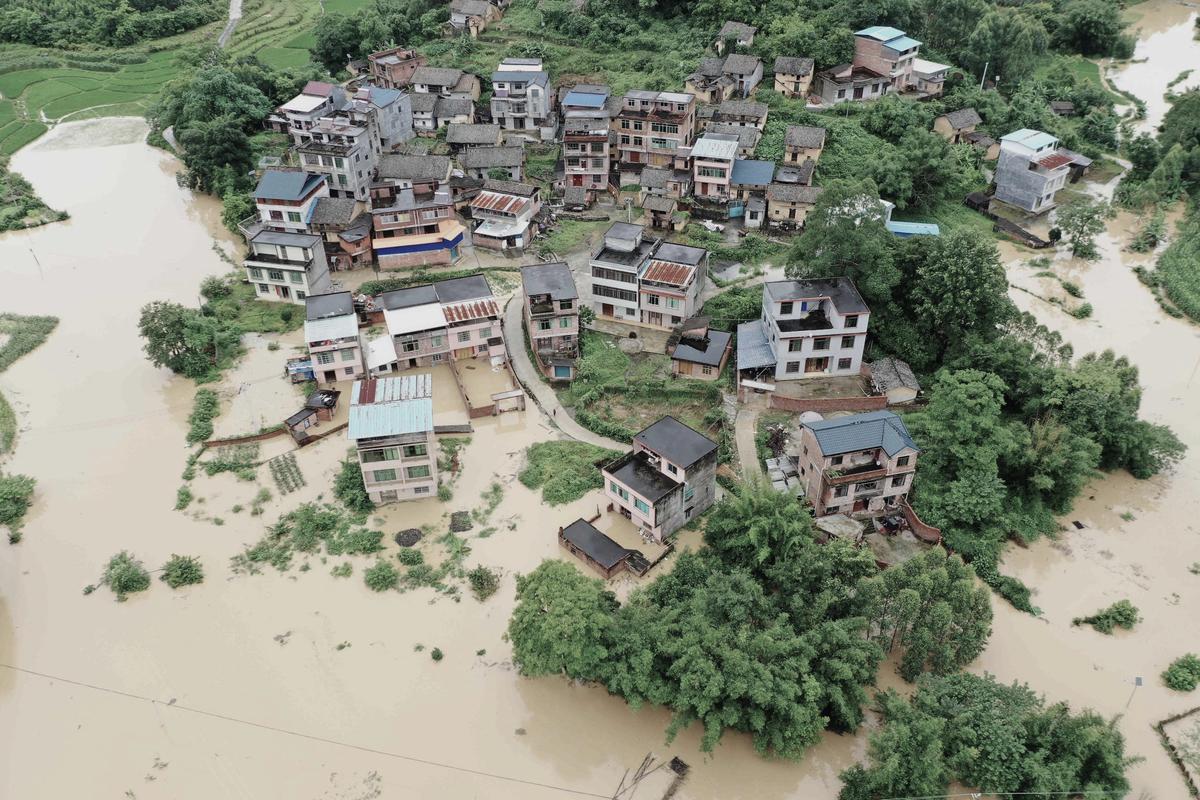
Zhang said that many villages had been submerged by floodwaters reaching depths of three to five meters (10 to 16 feet), while the situation was slightly better in villages located on higher ground.
“Eighty to 90 percent of the villages presented a devastating scene. Out of 10 villages, perhaps only two looked relatively complete.”
Beyond the need for food, Zhang said that the issue of water supply for daily use has been severely underestimated in the disaster relief effort.
He noted that water supply systems in many villages have been destroyed.
“Ninety-five percent of the villages are without water; tap water pipes, water towers, and electrical equipment are all broken.”
He saw that for many villagers, the most important task of the day is queuing up to fetch water from distant locations.
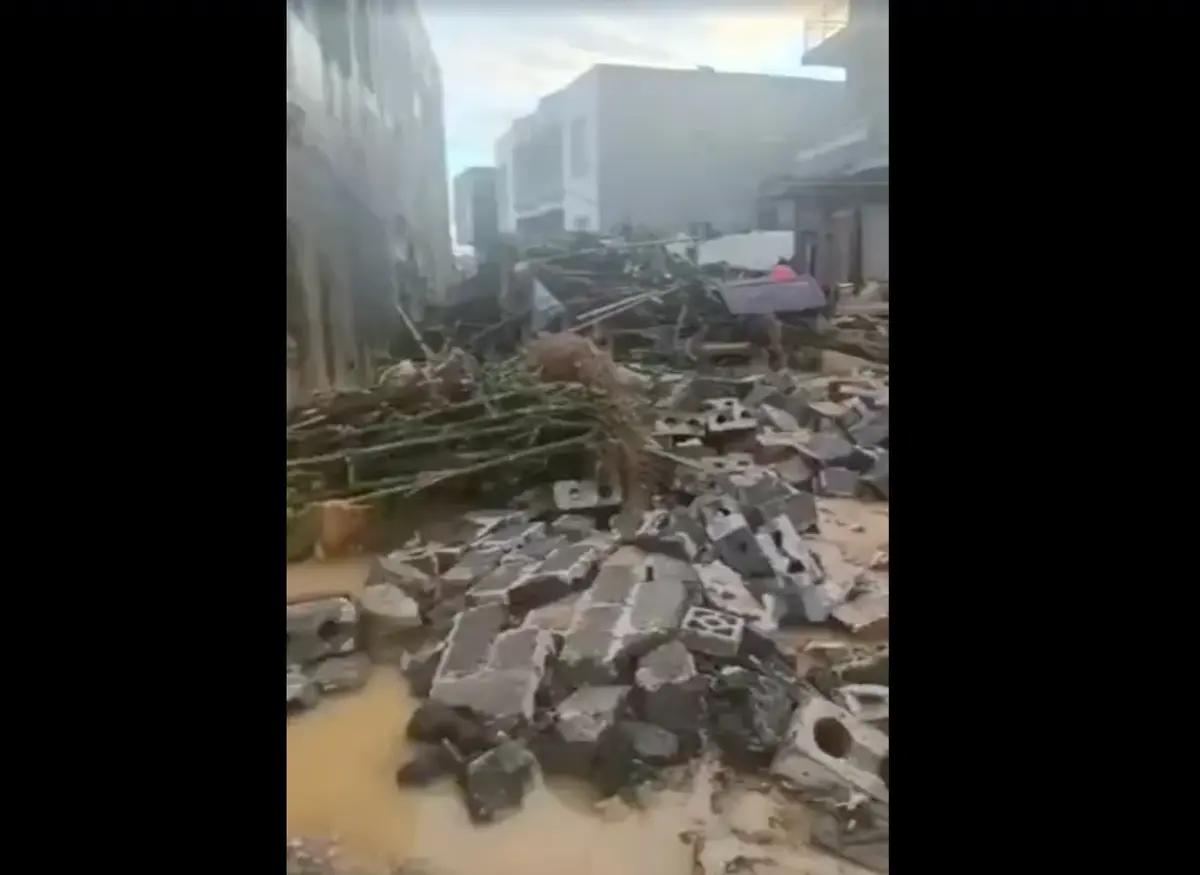
Among the affected areas, Zhenlong Township was struck by flash floods and severe landslides, which Zhang said is the most difficult area for rescue operations.
“Floodwater washed away roads and everything else in their path,” he said. “With roads almost completely destroyed and river channels choked with uprooted trees, the transport of supplies is extremely difficult.”
Road Closures and Civilian Response
Zhang said that local officials’ road repair methods directly affect the efficiency of material transportation.
“Off-road vehicles only need roads two and a half to three meters wide to travel, but many roads are completely closed for four hours every time for repair.”
“It’s not that the supplies can’t be delivered, but the road is blocked for three or four hours and the traffic jams last for more than a mile, making it impossible to get in,” he said.
He suggested giving full play to the advantages of the volunteers’ off-road vehicles, drones, motorcycles and outdoor teams to establish a segmented transportation mechanism to deliver the urgently needed supplies.
The failure to effectively coordinate civilian rescue efforts at the outset—compounded by issues such as the logistics of supplies and road traffic controls—significantly hampered rescue efficiency, Zhang said.
“The CCP official approach to rescue operations was too narrow and failed to fully leverage societal resources, suggesting that long-term cooperation mechanisms with civilian outdoor groups should be established,” he said.
Zhang noted that civilian outdoor enthusiast groups played a pivotal role in the rescue operation.
“In many areas inaccessible to vehicles, they would often carry heavy loads of supplies and trek in over rugged, difficult terrain to deliver the goods.”
“Many people in the government don’t know how to ride off-road, ride motorcycles, or organize outdoor enthusiasts,” Zhang said. “They are stuck in their own ways, so they are not achieving the most efficiency.”
He said, “We need outdoor enthusiasts, motorcycle teams, off-road fleets, and drone teams to work together to deliver supplies to villagers quickly and safely.”
Zhang added that there is still room for improvement in the relief supply distribution system.
“The biggest challenge is that supplies aren’t reaching the victims; the government isn’t releasing them for distribution. Many volunteers’ off-road vehicles are waiting there, yet they have no supplies to deliver.”
He noted that even when disaster victims came to collect supplies, they were turned away by local officials.
Obstacles Faced by Volunteers
Many grassroots volunteers have shouldered high costs out of their own pocket, according to Zhang.
Although authorities had announced that some expenses could be waived or reduced, actual implementation has not gone smoothly, he said.
“They say highway tolls and fuel are free, but often proof of being from an organization is required. It’s very difficult for individual volunteers not affiliated with an organization,” he said.
Sometimes, after hauling the supplies over, they couldn’t find anyone in charge locally to take the supplies and couldn’t get through on the phone, Zhang said.
“Some volunteers ended up waiting in spots where there was a signal—waiting a full day and night, sleeping right out in the fields.”
As a result, Zhang said that many grassroots volunteers leave after delivering just one shipment of supplies, and there are few who persist in long-term transport.