China’s three largest state-owned airlines expect their combined losses to widen sharply in the first half of 2026, after a political dispute with Japan disrupted a high-yield international market and rising fuel prices added to financial strains that predated both shocks.
Air China, China Eastern Airlines, and China Southern Airlines forecast combined losses attributable to shareholders of between 7.37 billion yuan and 8.97 billion yuan—up to about $1.3 billion.
The three carriers lost a combined 4.77 billion yuan ($700 million) during the same period last year.
China Southern projected the largest loss, between 3.47 billion yuan and 3.97 billion yuan ($510 million and $580 million). Air China expects to lose between 2.1 billion yuan and 2.6 billion yuan ($310 million and $380 million), while China Eastern projected a loss of between 1.8 billion yuan and 2.4 billion yuan ($260 million and $350 million).
The estimates, released in separate notices by Air China, China Southern, and China Eastern on July 14, are preliminary and unaudited.
All three carriers cited higher aviation fuel prices after the Middle East conflict intensified in March.
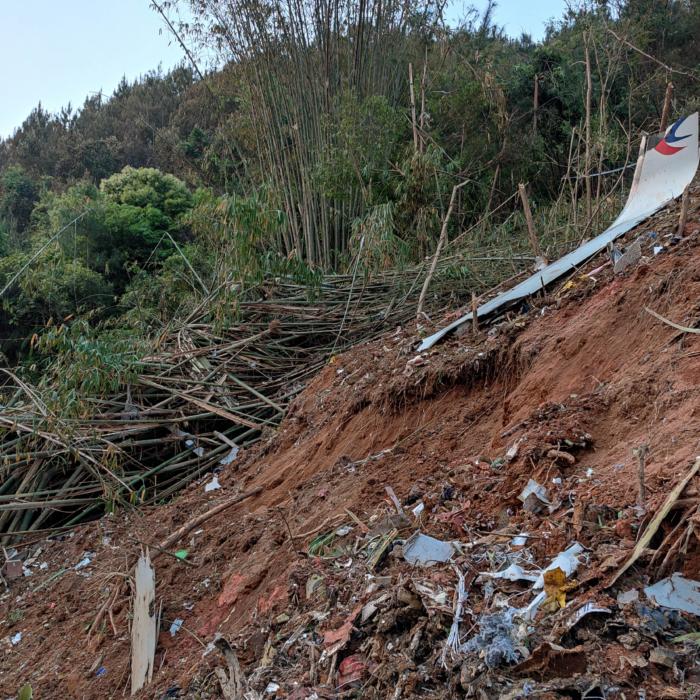
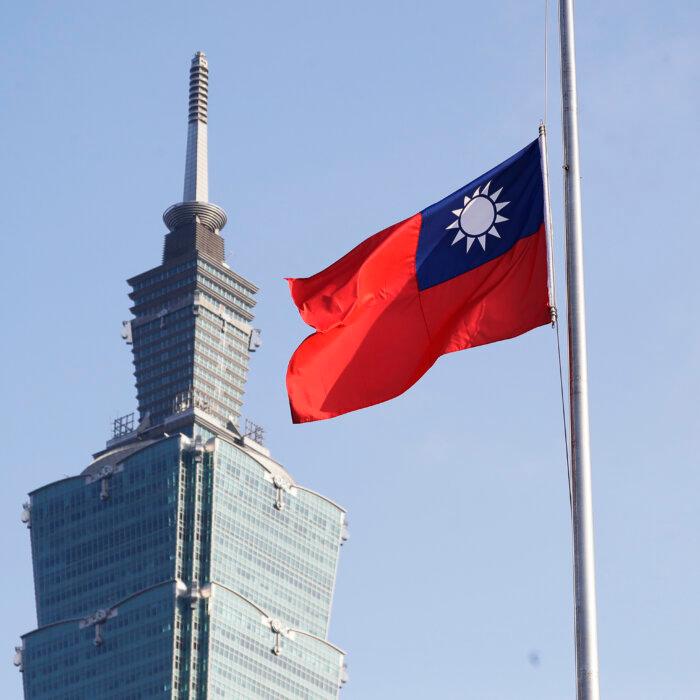
The fuel increase followed another disruption to the carriers’ recovery: a sharp reduction in China–Japan service during a political dispute between Beijing and Tokyo over the Japanese prime minister’s remarks about Taiwan.
Political Dispute Hits Japan Service
The route reductions followed Beijing’s warnings against travel to Japan, removing high-yield service from the state-owned carriers’ networks.
The Chinese communist regime warned citizens in November and March against traveling to Japan amid the dispute, and the three state-owned airlines subsequently introduced broad refund and rebooking arrangements for Japan-related tickets. Service was later reduced or suspended across dozens of routes.
The Japanese think tank China Security Intelligence Bureau said 46 China–Japan routes had been fully suspended after Chinese authorities demanded flight reductions.
The organization described Japan routes as among the Chinese carriers’ most profitable international businesses and said the loss of those services had damaged their prospects of returning to profitability.
Japan routes combined relatively short flight times with strong business and leisure demand. The think tank said moving aircraft to Southeast Asia, South Korea, Russia, and other markets would not readily replace the lost earnings, because those destinations already faced heavier competition and excess capacity.
The three profit warnings emphasized higher fuel costs but did not address the earnings impact of the reductions in Japan service.
Losses Predated Latest Shocks
The three carriers were already struggling to return to sustained profitability.
Their 2025 interim reports recorded a combined first-half loss of 4.77 billion yuan ($704.70 million).
Air China lost 1.81 billion yuan ($267.40 million), China Eastern lost 1.43 billion yuan ($211.26 million), and China Southern lost 1.53 billion yuan ($226.04 million), even as passenger traffic continued to recover.
The reports identified a broader pattern of rising passenger volumes without a corresponding recovery in earnings.
China Eastern’s interim report offered one of the clearest examples. Its passenger load factor rose to 84.81 percent, but passenger yield—the revenue earned for each passenger-kilometer flown—fell 7.22 percent from a year earlier.
Air China said lower passenger yields reduced its revenue by 3.77 billion yuan ($556.97 million). China Southern reported that its passenger yield fell 6.12 percent.
The airlines also cited an imbalance between capacity and demand, weaker passenger spending, competition from China’s high-speed rail network, and uncertainty in international markets.
Lower fares helped fill seats but left the carriers with less room to absorb increases in fuel, financing, maintenance, and labor costs.
Weak Pricing Power
Davy J. Wong, a U.S.-based economic scholar, told the Chinese edition of The Epoch Times in April that the market was reassessing the three airlines’ ability to generate stable profits, rather than reacting only to higher oil prices.
Wong said rapidly rising fuel costs, pressure on the yuan, and limited pricing power left the airlines facing higher expenses without an equivalent increase in revenue.
“The growth in revenue has a ceiling, but costs do not,” Wong said.
He said the airlines could not fully pass higher costs to passengers because ticket prices above what travelers could afford would quickly reduce demand. Excess capacity and fare competition made that problem more severe.
Sun Kuo-hsiang, a professor in the Department of International Affairs and Business at Nanhua University in Taiwan, said higher passenger numbers and ticket prices did not necessarily produce stronger profits because fuel, route changes, and risk-management costs were rising at the same time.
Sun described the airlines’ dilemma as: “If they do not raise prices, they lose money. If they raise them too much, they lose passengers.”
Fuel Adds Another Blow
The fuel shock nevertheless imposed a substantial new cost on the industry.
The International Air Transport Association said in June that war-related disruptions in the Middle East and a 70 percent rise in jet-fuel prices had cut expected global airline profits nearly in half.
The association projected that the global airline industry would earn $23 billion in 2026, down from $45 billion last year, while its net profit margin would fall from 4.2 percent to 2 percent.
Jet fuel is expected to average $152 per barrel this year, up from $90 in 2025, while total industry fuel costs are forecast to rise from $252 billion to $350 billion.
The global airline industry is still expected to remain profitable overall.
Air China, China Eastern, and China Southern, by contrast, entered the fuel shock after years of accumulated losses and the politically driven reduction of high-yield Japan service.