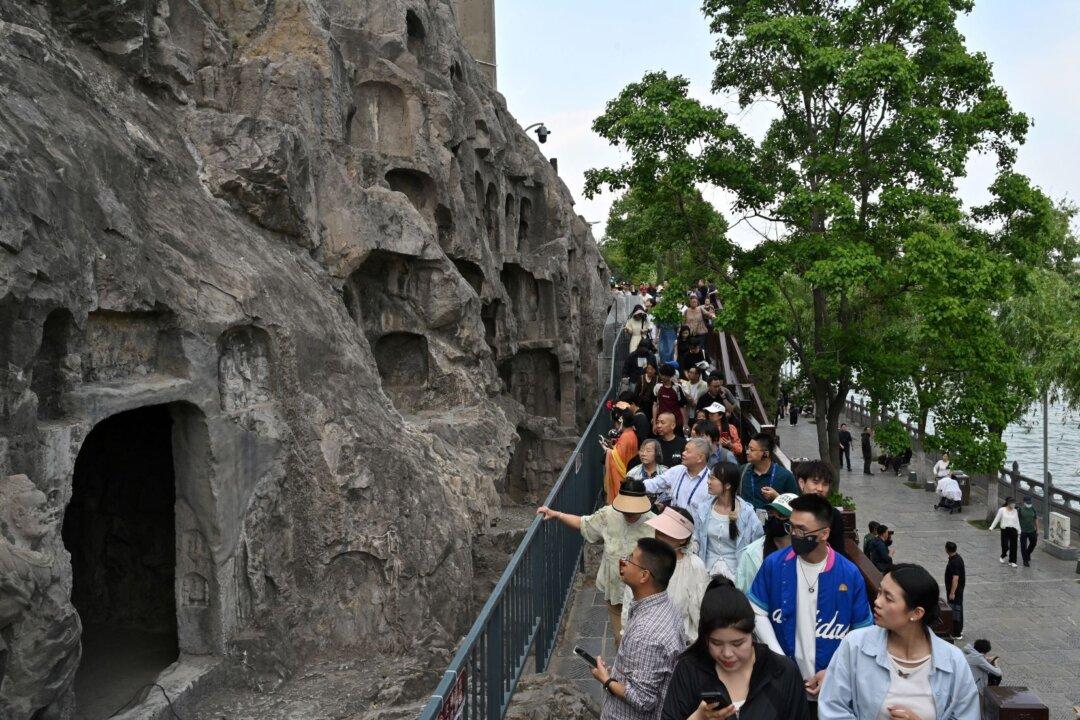
On June 4, the 37th anniversary of the Tiananmen Square massacre, internet users across China reported intensified online censorship, including tighter controls by social media platforms and messaging groups on content related—directly or indirectly—to the date.
Multiple internet users told The Epoch Times that not only explicit references to the 1989 massacre, but also indirect expressions, numbers, images, and even routine daily posts appeared to be caught in automated filters or subject to account restrictions. Some described the moderation as unusually strict; one user said the surveillance felt “almost frenzied.”
‘Sensitive’ Content Flagged
A netizen from Qinghai with the surname Ma said he usually commemorates the date each year by posting an image of a digital candle in private chat groups. This year, however, he refrained from doing so.“Group admins had already warned us not to post sensitive images this year,” he said. “They said it was to keep the groups from being shut down and asked everyone to cooperate.”
Ma said that administrators in multiple groups had told members to avoid triggering content and “keep things stable.”
One user said that when searching for a disinfectant product named “84 Disinfectant” on the Chinese e-commerce platform Taobao, no results appeared. After repeated attempts, the user’s account, which has been in use for about two decades, was suspended and required facial recognition verification to restore access.
In another widely shared screenshot, a user on Chinese messaging platform WeChat said that after liking a friend’s post featuring a candle image, the user’s “Moments” function was disabled without warning, making the user’s posts invisible to others.
“I was shocked at how extreme the censorship had become,” the user wrote in the post.
Screenshots showed users attempting to reference the date indirectly through fitness logs or casual phrases, such as a post noting a 6.4-kilometer run and wishing friends “healthy and happy lives.” Another user noted that even timestamps and mileage displays containing “6.4” could be interpreted as symbolic references.
A Chinese internet observer with the surname Chen said the system appeared to rely heavily on automated keyword associations.
“Terms like 4, 64, 89, or combinations of them are treated as highly sensitive,” he said. “But automated systems often over-filter, leading to false positives in ordinary contexts like product names or health-related searches.”
Platform Boundaries
A former employee of WeChat’s technical division with the surname Ding said that distinctions have historically existed between domestic and overseas versions of WeChat.He said that overseas users once experienced comparatively looser filtering but that this gap has narrowed in recent years.
“In the past, content restrictions differed more clearly between regions,” Ding said. “But after 2023, the system has become more unified. In some cases, even content sent from abroad may be subject to backend controls.”
He said that certain numeric references, including “6.4,” may be treated by automated systems as politically sensitive symbols depending on context and account type.
One WeChat user told The Epoch Times that he posted a satirical meme referencing the “Crazy Thursday” fast-food promotion alongside an image altered by artificial intelligence of the iconic “Tank Man” photograph from the 1989 massacre.
The post, according to the user, was removed within seconds and made visible only to him. Hours later, his account lost access to group chat and Moments functions.
A screenshot of the post shortly before its removal showed the “Tank Man” carrying two KFC bags in each hand, rather than the shopping bags seen in the original photograph.
As of publication, neither Taobao nor WeChat had issued public statements responding to the specific incidents cited in online reports.
More than three decades after the Tiananmen Square protests, in which the communist regime deployed troops to massacre thousands of pro-democracy protesters, discussion of the event remains heavily restricted within China’s online ecosystem.