Chinese authorities announced new measures to push for the use of Chinese yuan globally at the annual Lujiazui Forum financial conference in Shanghai this week.
Analysts told The Epoch Times that yuan cannot replace U.S. dollars internationally and Beijing’s attempt could only create a financial system for mutual settlements within the non-dollar camp to deal with mounting domestic and international pressure that it faces.
Pan Gongsheng, head of the People’s Bank of China (PBOC), China’s central bank, announced a series of financial policy measures at the forum on June 17.
These include refining the mechanism for regulating short-term interest rates; establishing a repurchase facility for overseas central banks; and launching a pilot program for offshore RMB foreign exchange trading in the Shanghai Pilot Free Trade Zone.
The program is aimed at making Shanghai a global hub for yuan-denominated asset allocation and risk management.
To promote the offshore yuan business in Shanghai, the Chinese regime authorized six major state banks, including the Bank of China and China Construction Bank, to conduct offshore yuan transactions in the city’s free trade zone.
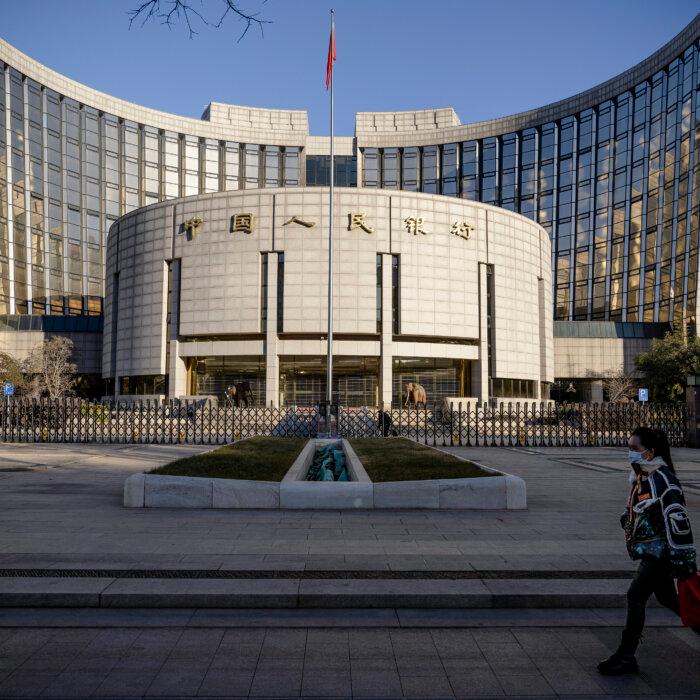

The PBOC also rolled out a tool—the FIMA RMB Repo, for overseas central banks and sovereign wealth funds to obtain yuan liquidity more easily by using Chinese bonds as collateral to borrow.
Pan said the purpose of the measures is to prevent systemic risks and for China to “continue to integrate into the global financial system.”
The repo that allows foreign central banks to borrow RMB from the Chinese regime using Chinese bonds as collateral is aimed at creating an RMB-based version of the U.S. dollar repo market, “essentially emulating the practices of the Federal Reserve,” political economist Davy J. Wong told The Epoch Times.
Hard to Displace U.S. Dollar on Global Scale
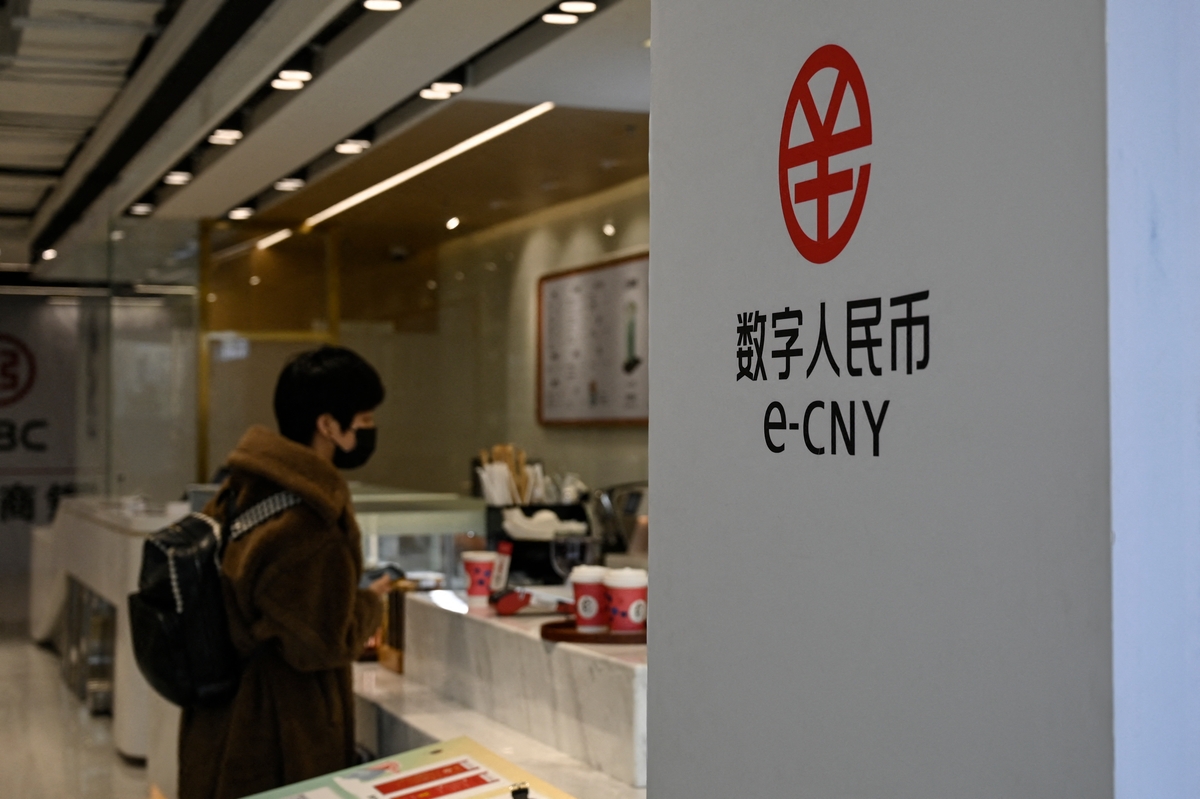
Given the secondary sanctions and the increasing financial blockades by the United States and Europe against countries like Russia, Beijing is eager to establish a liquidity safety net—spanning the Shanghai Free Trade Zone and offshore markets—that is entirely free from the control of the U.S. Federal Reserve and SWIFT, the U.S. dollar-denominated international payment transfer system, Wong said.Meanwhile, the PBOC’s digital yuan operation center signed direct participant agreements with 26 financial institutions in Shanghai to promote the global adoption of the digital currency, also known as e-CNY.
Sun Kuo-hsiang, a professor of international affairs and business at Nanhua University in Taiwan, told The Epoch Times that The PBOC’s new measures, “including a repurchase facility for overseas central banks, offshore RMB foreign exchange trading in the Shanghai Free Trade Zone, and a cross-border settlement platform for the digital RMB, are essentially aimed at establishing an RMB backup channel outside the U.S. dollar system.”
Beijing also hopes to capitalize on the opportunity that some central banks and sovereign wealth funds in Global South (developing nations) are trying to diversify their reserves, thereby elevating the RMB from a mere settlement currency to an official reserve asset that is investable, eligible as collateral, and usable for financing, Sun said.
However, despite the CCP’s measures, yuan is still far from displacing the U.S. dollar globally, he said.
“Underpinning the U.S. dollar liquidity network are the depth of the U.S. Treasury market, the free flow of capital, the global banking system’s dollar-denominated liabilities, private financial markets, and legal trust. The RMB, by contrast, remains constrained by the CCP’s capital account controls, exchange rate management, issues regarding financial transparency, and political risks,” Sun said.
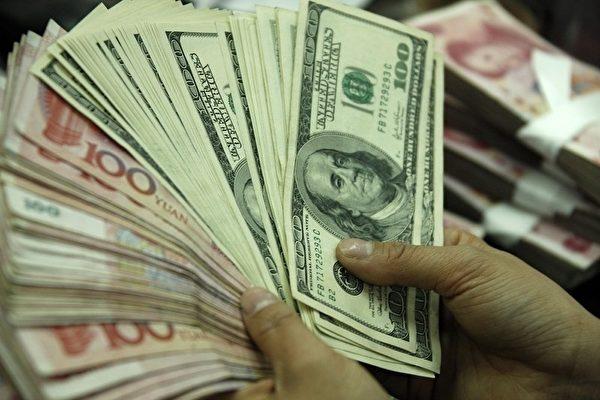
Eswar Prasad, former Chief of the Financial Studies Division in the International Monetary Fund’s Research Department and Tolani Senior Professor of Trade Policy at Cornell University, wrote in a commentary that it is unlikely for yuan “to attain safe haven status in the absence of far-reaching reforms to China’s institutional and political structures. Under the present regime, the prospects of such changes are dim.” That is because “a country seeking this status for its currency must have a sound institutional framework—including an independent judiciary, an open and transparent government with institutionalized checks and balances, and robust public institutions (especially a credible central bank),” Prasad wrote.
Domestic Concerns
The Chinese regime also seeks to solve domestic financial problems through yuan going global, according to the analysts.“Retail data for May weakened once again, and the macroeconomy urgently requires an infusion of new vitality from the financial markets,” Wong said.
China’s domestic financial structure is undergoing a transformation, Sun said.
“While the economy previously relied heavily on bank credit, real estate, and local government investment, loan growth has now slowed, and the importance of bond and equity financing has risen. Meanwhile, financial risks are increasingly prone to transmission across banking, bond, and non-bank sectors, as well as cross-border markets,” he said. “The Chinese authorities appear to be establishing an official, limited-scope, regional RMB safety net.”

Wong pointed out that decoupling and de-dollarization are merely superficial reasons, and Beijing’s underlying concern is that “foreign central banks might sell off their holdings of Chinese government bonds for U.S. dollars during times of urgent liquidity needs, thereby destabilizing the domestic financial market.”