The Chinese communist regime’s attempt to expand its geopolitical influence has met with a setback, as India rejected signing a joint statement for the Shanghai Cooperation Organization.
At the Shanghai Cooperation Organization Defense Ministers’ Meeting held in Qingdao city, China, on June 26, Indian Defense Minister Rajnath Singh refused to sign the Joint Statement, saying it was partial to Pakistan and diminished India’s role in counterterrorism and regional security issues.
Analysts said it indicated that communist China’s expansion in South Asia and Central Asia has met with pushback.
The Shanghai Cooperation Organization (SCO) is a Eurasian political, economic, security, and defense organization led by China and Russia. It was established in 2001 and included member countries China, Russia, and the four Central Asian countries—Kazakhstan, Kyrgyzstan, Tajikistan, and Uzbekistan.
India and Pakistan joined the SCO in 2017, and Iran and Belarus joined in 2023 and 2024, respectively. Turkey is currently one of the dialogue partners of the SCO.
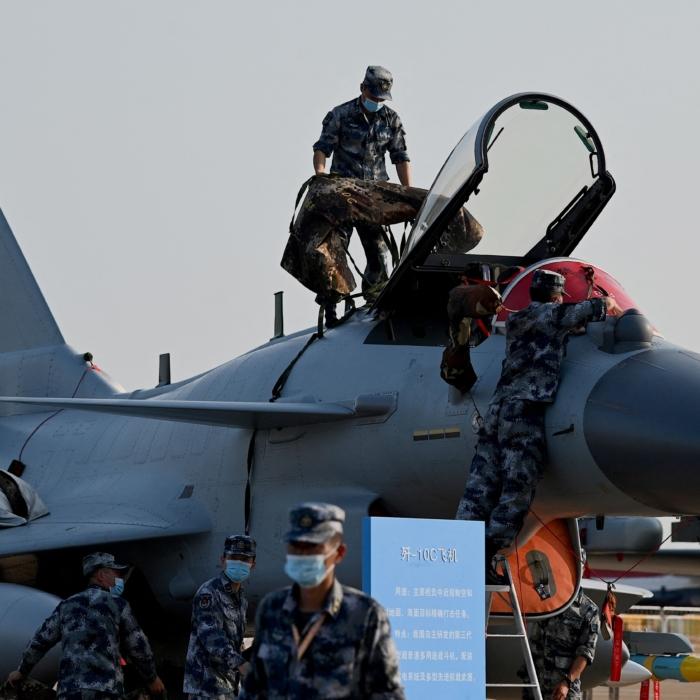
India and Pakistan have had border disputes for decades, and had the most recent armed conflict in May this year. Pakistan used Chinese missiles and J-10C fighter jets in the conflict, which not only exacerbated the tension between India and Pakistan but also highlighted the longstanding alliance between China and Pakistan.

The Chinese Communist Party (CCP) has tried to use the SCO to expand its geopolitical influence, as Chinese Defense Minister Dong Jun called on the member states at the SCO meeting in Qingdao to “promote the ‘Shanghai Spirit’” and “jointly address security challenges, and promote the steady and long-term development of defense and security cooperation.”
However, the SCO this year failed to issue a joint statement as India rejected it, frustrating the CCP’s attempt to expand its influence in the region.
“The SCO defense ministers’ meeting was held in Qingdao, China, and Dong Jun gave a speech. Under such circumstances, there was no joint statement. Of course, this made the CCP look bad,” Shen Ming-shih, director of the Division of National Security Research at Taiwan’s Institute for National Defense and Security Research, told The Epoch Times.
As India’s foreign policy is non-alignment, it “keeps its distance” from the CCP, even though the Chinese regime seeks more cooperation, Ma Chun-Wei, assistant professor at the Institute of International Affairs and Strategic Studies at Tamkang University, told The Epoch Times.
“India did not sign the SCO joint statement, I think it’s because it does not want to take a clear strategic stance between the United States and China,” he said. India “may refuse to sign for any reason,” especially after U.S. President Donald Trump took office, Ma said.
China–India Border Issue
Ma noted that there are also border disputes between China and India, so “India itself is inherently constrained when developing relations with China,” he said.Beijing has proposed building an airport as a dual-use military and civilian defense base in Bangladesh near India’s strategically important Siliguri corridor, known as the “chicken’s neck.”

The Siliguri corridor, India’s only land link to its eight northeastern states, has been seen as strategically vulnerable.
If the Chinese regime’s military, the PLA forces, are allowed to enter Siliguri, it will be very dangerous for India, Ma said.
“If Siliguri is taken away or contained, it will be difficult for India to send forces to the areas where it has border conflicts with China,” he said.
This also makes it impossible for India to have “mutual trust” when dealing with Beijing, which may be another consideration for India’s reluctance to further cooperate or sign the SCO statement with the CCP, Ma said, adding that for more than 20 years, “the CCP has been trying to establish a regional mechanism dominated by itself through the SCO.
“During the expansion of the SCO, it also wanted to win over some countries with more neutral positions, such as India and Turkey,” he said.
When the CCP wanted to continue to expand its influence in Central Asia, it had to invite India and Pakistan at the same time, but problems arose, Shen said.
“Because India and Pakistan are sworn enemies, if they cannot reach a consensus or cooperate on certain issues, then there will be problems like the current ones,” he said.
India’s participation in the SCO poses a “very obvious obstacle” to the expansion of the CCP’s influence in Central Asia, Shen said, “because the national interests of China and India are inconsistent, especially with the fierce border conflicts.”
“If the SCO cannot truly solve the Sino-Indian border issue, then it’s just empty talk,” he said.