Chinese communist leaders canceled New Year’s celebrations in many cities and dispatched a large number of police to the streets, as officials feared that demonstrations in Iran could inspire mass protests against the Chinese regime, analysts told The Epoch Times.
Citing public safety concerns, Chinese authorities officially announced that fireworks, light shows, and other countdown events were banned across major cities including Guangzhou, Xi'an, Suzhou, Zhengzhou, and Hefei. Beijing and Shanghai also curbed planned celebrations, although they did not issue any official announcements.
Resistance
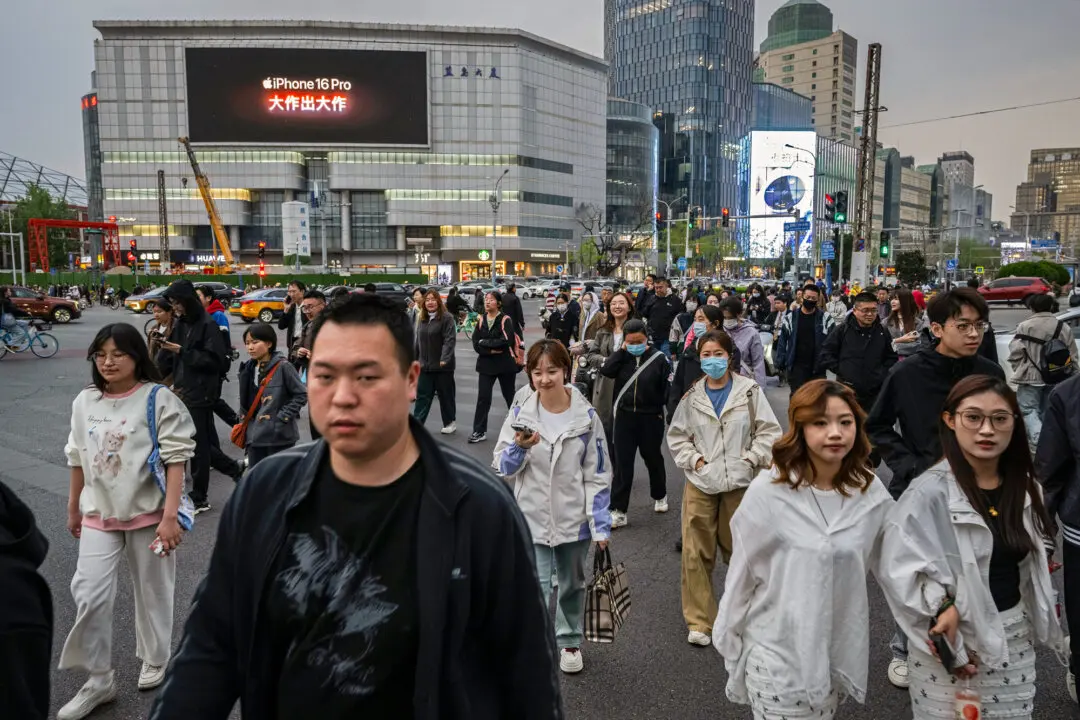
Despite the official restrictions, according to posts on social media, Chinese citizens in many cities still gathered spontaneously to mark the arrival of the new year, confronting large numbers of CCP police.A video posted on social media shows that at the Intime Shopping Center in Hangzhou, Zhejiang Province, police were on high alert, forming a human wall on the street. Despite this, young people were still seen celebrating.
Another video shows that a crowd gathered in Shanghai to count down to the new year together. There were no fireworks or lights, and the revelers fell silent afterward.
In Suzhou, Jiangsu Province, a large number of citizens gathered at the “Gate of the East” to celebrate the arrival of 2026, despite that the area was completely dark, with only flashing police lights.
In Qingdao, Shandong Province, at the Shilaoren scenic area, special police forces were on standby. The city’s mile-long coastline was fenced off, with police searching people at each checkpoint.
Fear of Protests
Sheng Xue, a Canada-based activist, writer, and China affairs commentator, told The Epoch Times that the CCP’s control measures this year were even stricter than in previous years.“Authorities are particularly concerned about events involving large crowds, such as New Year’s Eve celebrations,“ she said. ”They fear that if someone were to lead anti-CCP chants or display political slogans and symbols at mass gatherings, it could threaten the stability of the regime.”
Sheng said that because of the economic downturn and the difficulty young people face in finding jobs, there is widespread frustration, and New Year’s Eve became a crucial moment for this collective discontent to be expressed and directed against the regime.
“Currently, [Chinese leader] Xi Jinping’s regime is treating the people as an enemy force,” she said.
Jiang Pinchao, editor of the “June 4th Poetry Collection” and a writer whose works have been collected by the U.S. Library of Congress, told The Epoch Times that the CCP is using security concerns as a pretext to deprive ordinary people of their right to assembly and to enjoy themselves.
Jiang said that since China’s economic crisis erupted under CCP leader Xi Jinping, there have been various crises at all levels of society.
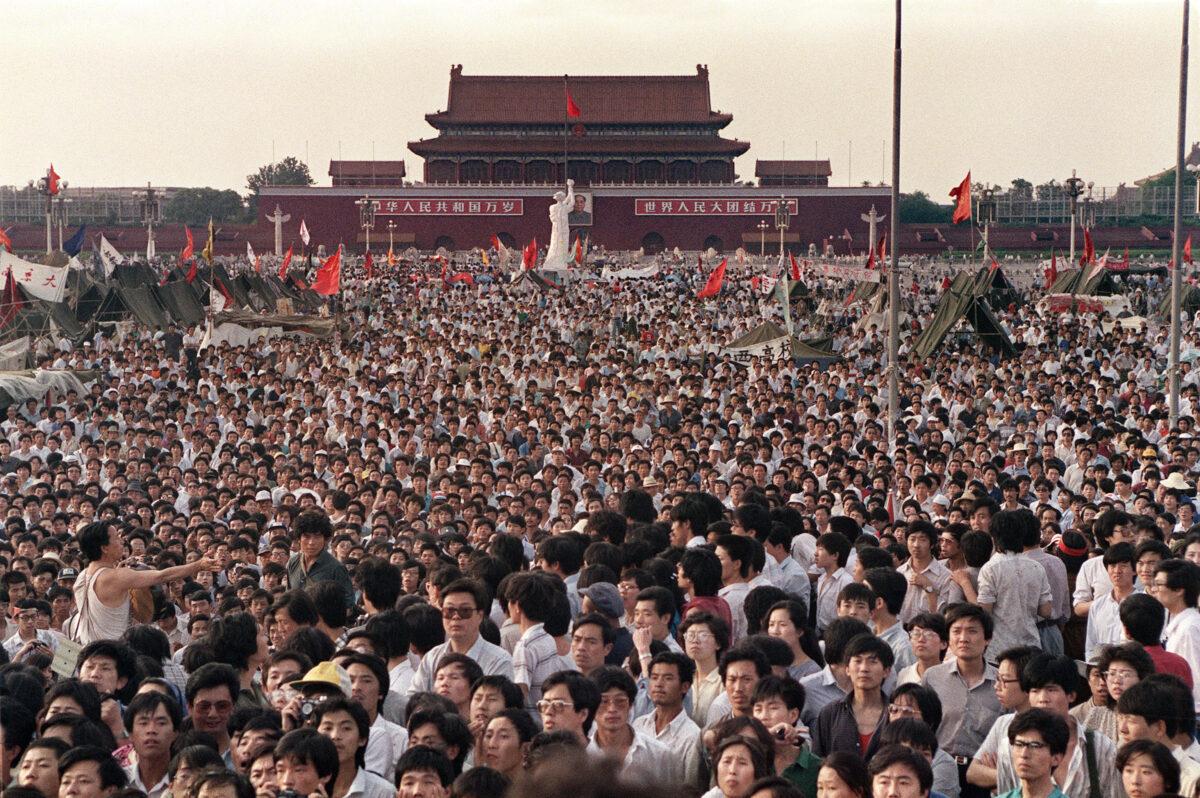
“The authorities are afraid that group gatherings might lead to protests similar to the Tiananmen Square incident in 1989,” he said.
On June 4, 1989, the Chinese regime deployed military troops to kill peaceful protesters camped in Beijing’s Tiananmen Square. The victims were mainly college students who were protesting corruption and demanding democracy. It is estimated that tens of thousands of protesters were injured or killed by CCP forces that night.
The CCP’s New Year’s clampdown came amid the ongoing large protests in Iran against the regime of Iranian leader Ali Khamenei.
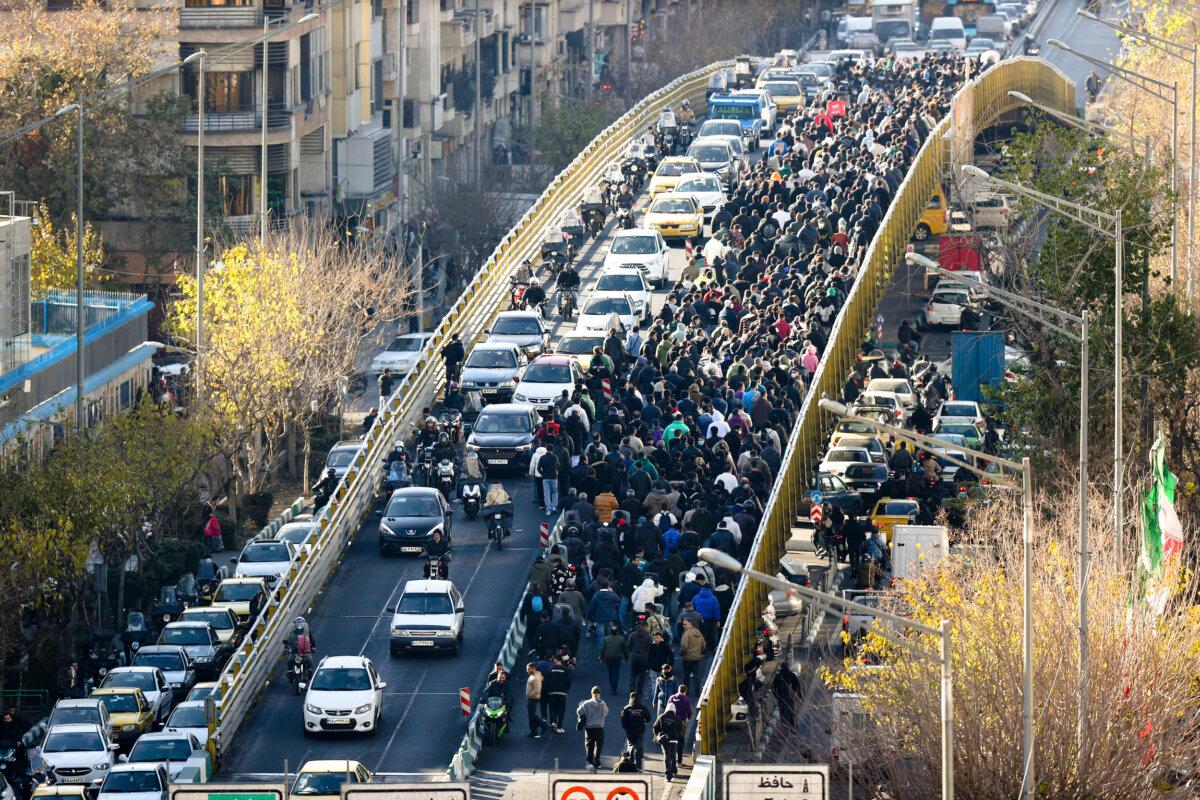
Sheng said the fact that the Iranian people are able to persist in their resistance despite the authorities’ suppression is truly terrifying for the CCP. The regime fears that the Iranian demonstrators will provide a model or inspiration for the Chinese people.
The CCP’s rule over China is in its final stage, Jiang said.
“The entire regime is now in a precarious state, like a powder keg,“ he said. ”Once there’s a breakthrough, it’s like the powder keg is ignited and the regime could collapse.”