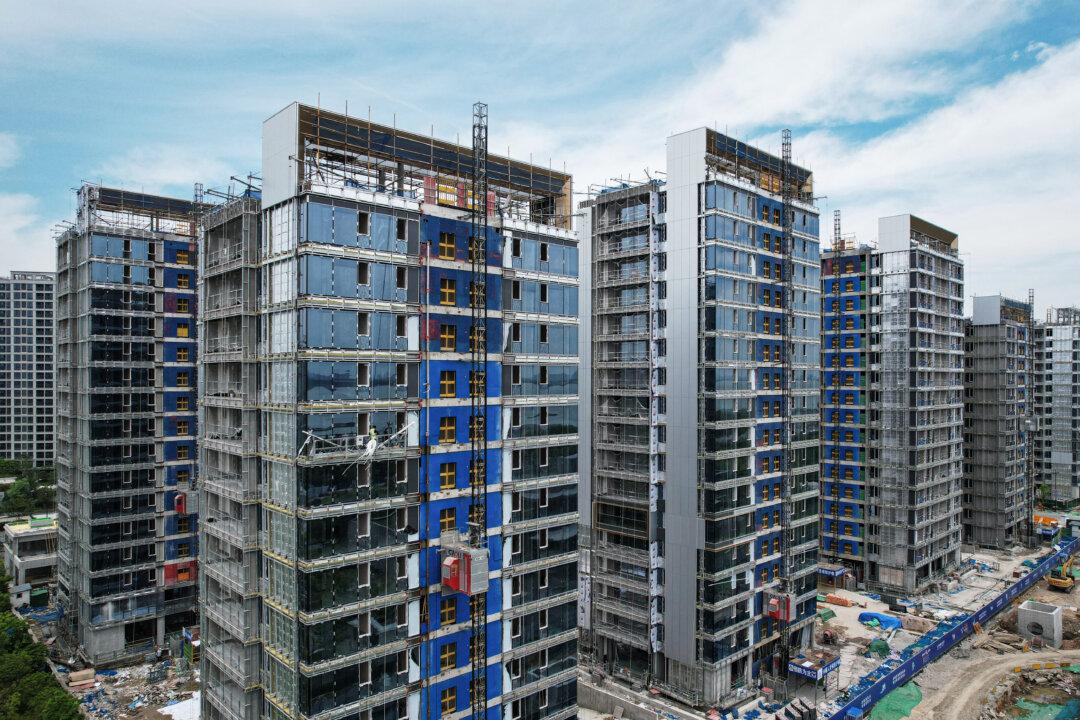
The Chinese Communist Party (CCP) is intensifying efforts to bring the country’s state-sanctioned Catholic Church further under its control, according to believers who say churches are increasingly required to conduct political study sessions, enforce ideological campaigns, and accept tighter regime oversight.
The CCP recognizes only one official Catholic church, overseen by the Chinese Catholic Patriotic Association and the Bishops’ Conference of the Catholic Church in China, both of which operate under the CCP’s supervision rather than the Vatican.
Recent meetings held by official Catholic organizations in the provinces of Guangdong and Jiangsu called on clergy and lay leaders to advance Beijing’s policy of the “Sinicization of religion” and implement what authorities describe as “strict governance of religion”—campaigns that critics say are steadily transforming churches into extensions of the Party’s political system.
Church Organizations Ordered to Expand Political Campaigns
According to a July 8 announcement published by the Guangdong Catholic Church, the provincial Catholic church authorities recently convened a meeting in Guangzhou directing Catholic organizations, parishes, clergy, and key lay members to participate in political study and governance initiatives.The meeting emphasized strengthening “political guidance,” tightening internal management, and establishing long-term governance mechanisms to implement the CCP’s policy of religious Sinicization and promote “strict governance of religion.”
A similar meeting took place in neighboring Jiangsu Province.
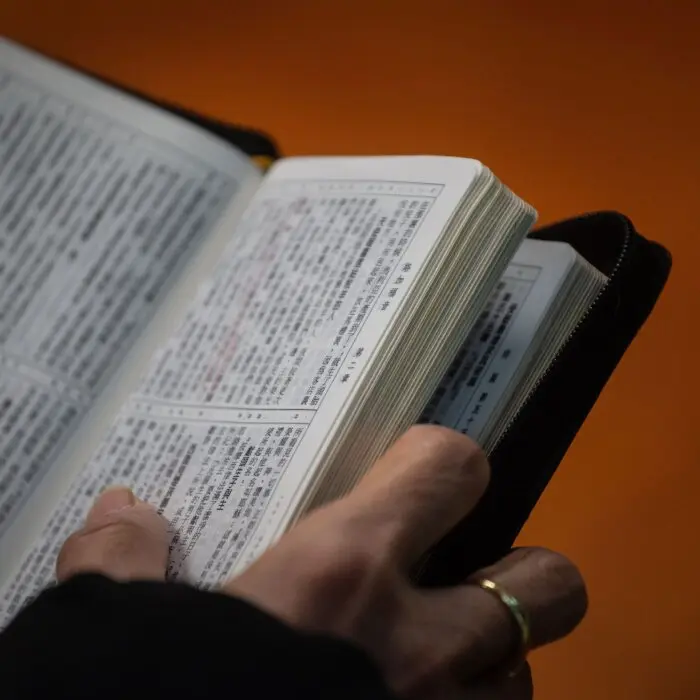

A Chinese Catholic man in Shenzhen told The Epoch Times the regime’s control over churches has tightened dramatically during the past decade.
“They’ve been pushing the Sinicization of religion for years,” he said. “They installed multiple surveillance cameras outside the church entrance, and cameras inside the church as well. They say it’s for church security, but I think that’s just an excuse.”
He said official Chinese Catholic organizations now regularly require believers to study Xi’s speeches and political directives.
“It’s gone too far, but there’s nothing we can do,” the man said.
A Catholic for more than 40 years, he said he has watched Party disciplinary language gradually enter church administration.
“They constantly tell us to study regulations and religious laws. We also have to make political statements supporting certain policies,” he said. “Representatives from the Patriotic Association attend every Mass. I feel they’re there to monitor us.”
Another Catholic in Shenzhen, identified only by his surname Li, told The Epoch Times that political study sessions have become increasingly common in churches.
“Authorities don’t allow us to have contact with foreign churches,” he said. “They’re especially concerned about Catholics from Taiwan and South Korea. We’re forbidden from communicating with them.”
Li also said priests have been required to surrender their passports and face severe restrictions on overseas travel.
“If they apply for a passport, it usually isn’t approved,” he said.
Political Study Replaces Religious Activities
A Catholic woman in Xuzhou, Jiangsu Province, told The Epoch Times her parish recently began studying legal and political documents tied to religion.“They told us we had to implement Xi Jinping’s speeches because it’s a major political task,” she said. “In the past, we went to church mainly for Mass and confession. Now the church has to cooperate with government demands. It feels less and less like a place of faith, but believers don’t dare object.”
Political activities—including national flag-raising ceremonies and singing the national anthem—have become increasingly common at churches, mosques, and Buddhist temples. The regime also ordered architectural changes at some mosques, including the removal of traditional domes.
Believers say government oversight extends well beyond ideological campaigns.
On Nov. 30, 2025, a Catholic church in Xuchang, Henan Province, allowed minors to enter the church to play piano and participate in worship services, according to ChinaAid, a Texas-based nonprofit advocating religious freedom in China.
Two days later, the local Catholic Affairs Committee and Catholic Patriotic Association—both overseen by CCP authorities—ordered the church to suspend services immediately and submit rectification measures. Officials temporarily posted a government closure notice at the church entrance.
A member of an underground church in Shanxi Province told The Epoch Times that political campaigns inside the regime’s official churches are also laying the groundwork for increased pressure on congregations that refuse to register with the state.
“They first tighten control over the official churches, then turn around and demand underground churches follow the same model,” he said. “If you register, you have to accept management by the Patriotic Association. If you don’t register, they say you’re operating illegally.”
Vatican Agreement Remains a Source of Debate
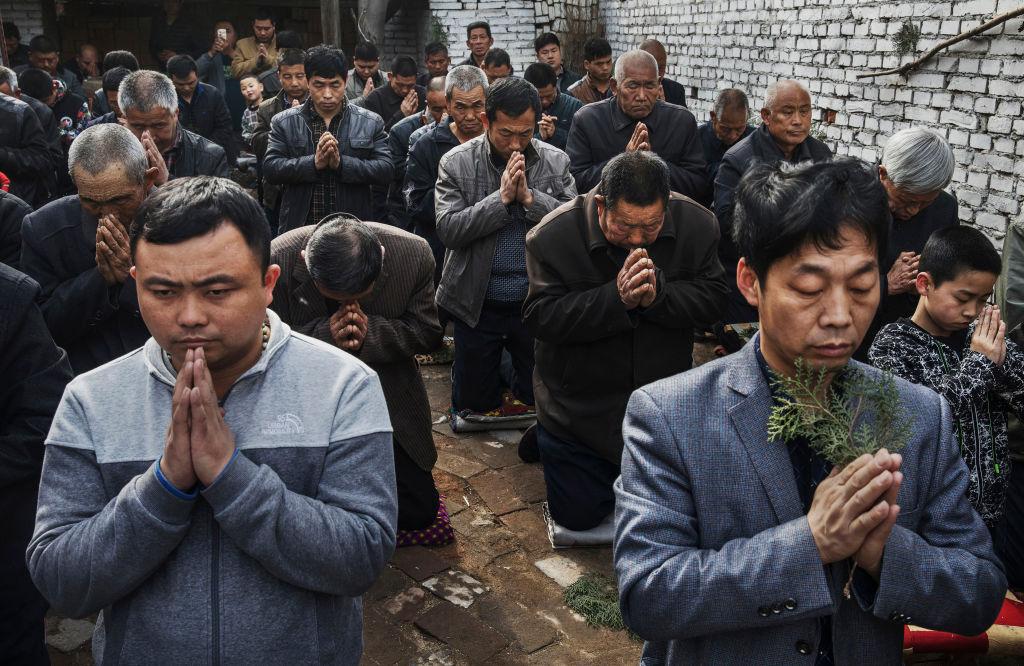
For decades, Beijing has required Catholics to worship only in churches affiliated with the state-controlled Catholic Patriotic Association, while underground churches that remain loyal to the Vatican have faced sustained regime pressure.A Beijing-based critic of China’s religious policies told The Epoch Times that the agreement has enabled the CCP to further marginalize underground churches while presenting the state-controlled church as the country’s only legitimate Catholic institution.