TAIPEI, Taiwan—The Chinese communist regime launched one-day live-fire drills on April 9, as Taiwan’s main opposition leader spent her third day in China on what she has called a “journey of peace.”
The live-fire drills took place in the northern waters of the Yellow Sea, which is located between China and the Korean Peninsula, from 10 a.m. to 4 p.m. local time on April 9, according to multiple Chinese state-run media outlets, citing the China Maritime Safety Administration’s regional branch in Dalian, a city in northeastern China.
In response to the drills, Taiwanese Defense Minister Wellington Koo told reporters that the Taiwanese military was fully monitoring the situation, according to Taiwan’s government-run Military News Agency.
Cheng has met with several high-ranking CCP officials, including Xin Changxing and Chen Jining, Party secretaries of Jiangsu Province and Shanghai, respectively.
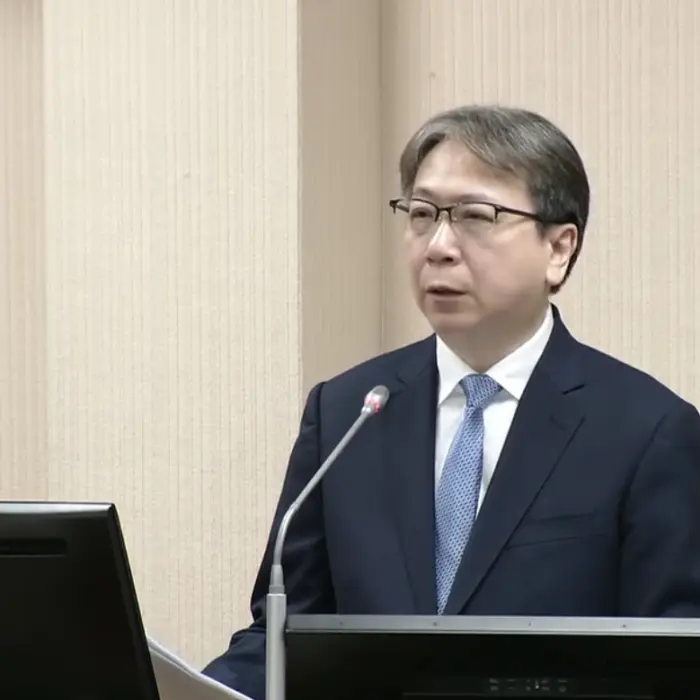

On April 9, Cheng met with China-based Taiwanese businessmen in Shanghai. According to the KMT’s Facebook page, she said the KMT will continue to push for broad bilateral cooperation, whether in opposition or in power.
“The Kuomintang believes that when it returns to power in 2028, a brand-new era will begin,” she said, according to a translation.
The Democratic Progressive Party (DPP) has been in power since 2016, during which time the CCP has refused to deal with its administration, labeling both President Lai Ching-te and his predecessor, Tsai Ing-wen, as “separatists” because of their outspoken support for Taiwan’s sovereignty.
In contrast, the KMT is generally viewed as more Beijing-friendly than the DPP.
Lin Chu-yin, DPP spokesperson and lawmaker, called the Chinese military drills a “slap in the face” for the KMT. She criticized the KMT for harboring “unrealistic fantasies” about dictators, emphasizing that “strength is the foundation of peace,” and urged Lai’s $40 billion special defense budget to be passed without delay, according to a translation.
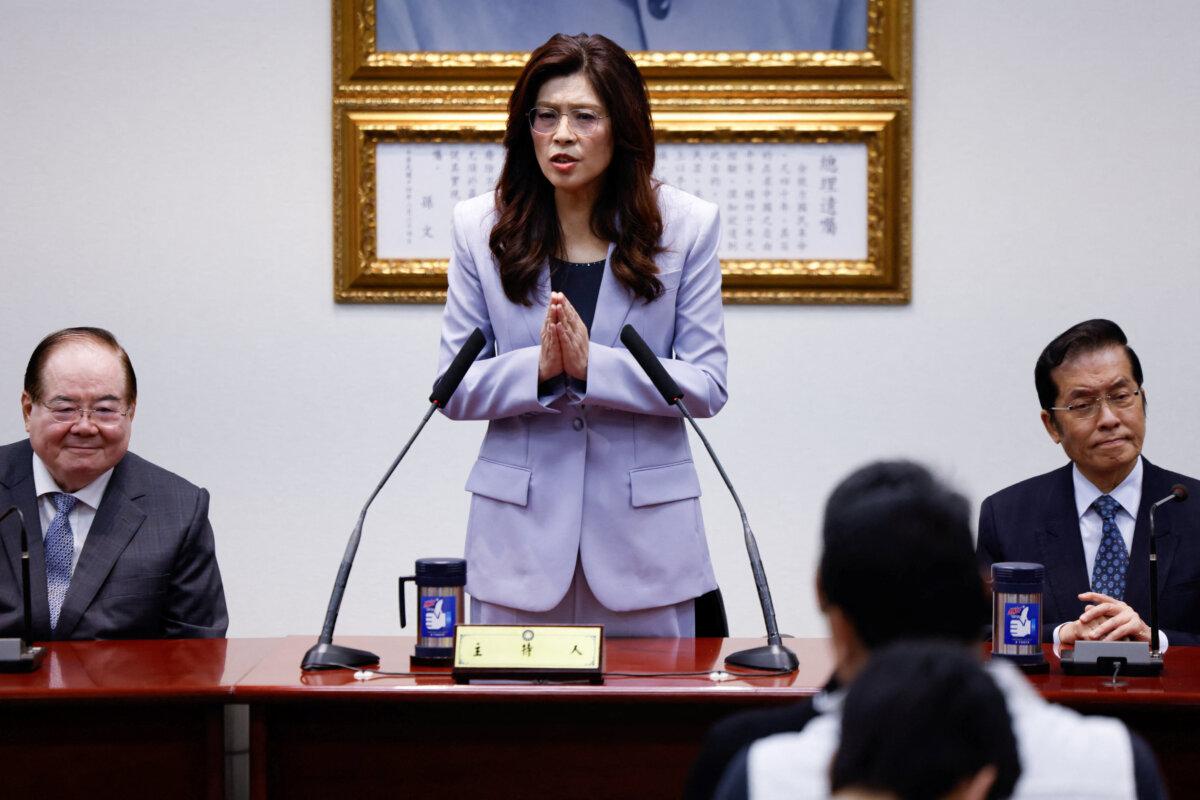
On April 9, DPP lawmakers criticized the KMT for skipping a parliamentary session on how to advance stalled plans to spend an additional $40 billion on defense.
“But your Legislative Yuan has to do its part and pass the special budget, and that’s one message that I want to send to your leadership,” Banks said, using the formal name for Taiwan’s parliament, according to a video from Lai’s office.
“When you pass the special budget in the legislature, that is a signal to China, and to the rest of the world, that Taiwan is serious about peace through strength.”
Banks and four other visiting U.S. lawmakers—Reps. Zach Nunn (R-Iowa), Scott Fitzgerald (R-Wis.), Julie Fedorchak (R-N.D.), and Jefferson Shreve (R-Ind.)—met with Koo on April 8. According to Taiwan’s Military News Agency, Banks and Nunn told Koo that U.S.–Taiwan security cooperation plays an irreplaceable role in maintaining regional stability and that the two sides will continue to enhance military exchanges and strategic dialogue.
Cheng is scheduled to conclude her trip to China on April 12. The possibility of a Cheng–Xi meeting on April 10 was discussed during a regular briefing held by Taiwan’s Mainland Affairs Council (MAC) on April 9.
MAC spokesperson Liang Wen-chieh said that if the Cheng–Xi meeting takes place, the KMT chairwoman should clearly convey at least three points of Taiwan’s mainstream public opinion. The points are that Beijing must acknowledge the existence of the Republic of China, Taiwan’s official name; that Taiwan’s future must be decided in accordance with the will of the Taiwanese people; and that Chinese military aircraft and vessels should immediately cease their harassment around Taiwan.
In a March poll of 1,138 people conducted by MAC, 1.5 percent said they supported Taiwan’s unification with China as soon as possible, while 6.3 percent favored maintaining the current status quo and moving toward unification.
In comparison, 7.4 percent said Taiwan should declare independence as soon as possible.
The largest group, 33.9 percent, wanted Taiwan to maintain its current status quo indefinitely. Another 24.1 percent supported keeping the status quo and deciding on independence or unification based on the situation at a later date, and 20.4 percent preferred maintaining the status quo and moving toward independence later.