The Chinese Communist Party’s unusually high-level commemoration of former leader Jiang Zemin on Aug. 17 was driven in part by leader Xi Jinping’s need to manage competing political interests ahead of the Party’s next leadership transition, according to two China analysts interviewed by the Chinese edition of The Epoch Times.
Feng Chongyi, an associate professor in China studies at the University of Technology Sydney, said Xi spent years weakening forces associated with Jiang and Jiang’s longtime political ally Zeng Qinghong because they once threatened Xi’s hold on power.
The calculation has since changed, Feng said.
Xi now has reason to bring surviving Jiang- and Zeng-linked interests into an accommodation rather than continue fighting them, he said.
“As long as you don’t pull me down, you can continue making money quietly,” Feng said in describing what he believes to be the essence of Xi’s message to those interests. He called the treatment of Jiang “purely a game, and calculation of power.”
Chen Pokong, a U.S.-based China political commentator, likewise linked the Aug. 17 commemoration of Jiang’s 100th birth anniversary to bargaining ahead of the CCP’s 21st National Congress. He said Xi is seeking support—or at least less resistance—from Jiang-linked interests as he positions himself for another term at the top of the party.
The Chinese Communist Party (CCP) has not announced the date of its 21st National Congress. The 20th Congress was held in 2022, and its constitution requires a national congress every five years, putting the next congress on the regular schedule for 2027.
Jiang’s Record Recast for Present-Day Politics
The scale and content of the Aug. 17 event gave the analysts concrete material for that assessment.
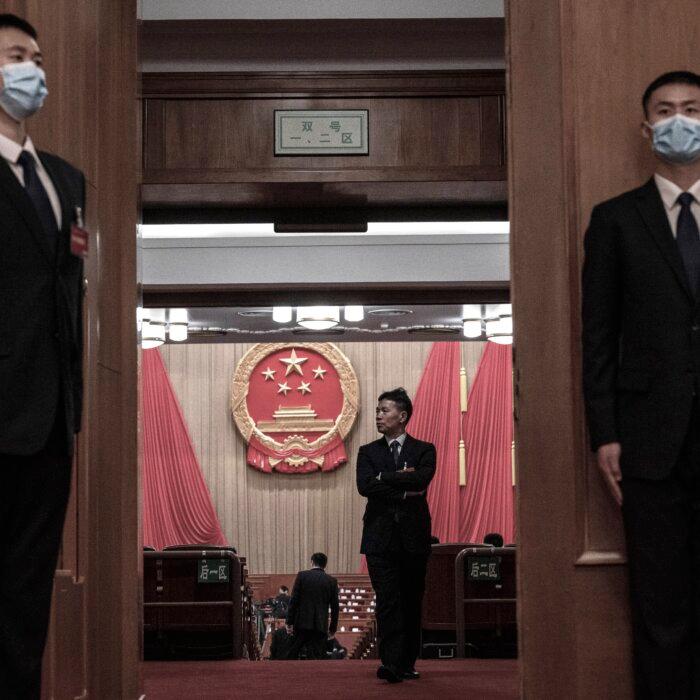
The CCP Central Committee, National People’s Congress Standing Committee, State Council, Chinese People’s Political Consultative Conference, and Central Military Commission jointly convened the centenary gathering at Beijing’s Great Hall of the People.
Xi and the other six members of the Politburo Standing Committee attended, along with Vice President Han Zheng, former Premier Wen Jiabao, former Vice President Zeng Qinghong, former Vice President Wang Qishan, other retired senior officials, Jiang’s family members, military personnel, and other representatives. The official account said about 6,000 people were in attendance.
The regime arranged a live national broadcast across major state television, news websites, and official apps.
Xi’s speech repeatedly used the official account of Jiang’s career to convey instructions for current CCP members.
He called for adherence to the authority and “centralized and unified leadership” of the CCP Central Committee and demanded implementation of the “Two Safeguards”—party terminology that includes safeguarding Xi’s status as the leadership’s “core.”
The official account also mentioned Jiang’s role during the 1989 pro-democracy protests.
Xi said that during what the CCP calls the “serious political turmoil” of spring and summer 1989, Jiang, then Shanghai party secretary, supported and carried out the central leadership’s decisions and maintained political control in Shanghai. Jiang was elevated to CCP general secretary that June, after the regime’s military suppression of protesters in Beijing.

The commemoration did not end with the Great Hall gathering. A three-day symposium on Jiang’s life and political thought began later that day with Politburo Standing Committee member Cai Qi presiding over its opening. The symposium called for further study of Jiang’s political theories and implementation of Xi’s speech.
Chen said the combination of Jiang’s political record and Xi’s repeated demands for loyalty makes the event relevant to Xi’s current position rather than simply an anniversary observance.
Feng similarly said the ceremony should be viewed through Xi’s need to manage political forces inside the CCP before the next congress.
Years of Conflict With Jiang-Linked Forces
Xi’s relations with Jiang-linked political interests were previously confrontational.
The conflict also predates Xi.
Jiang continued to exercise influence after Hu Jintao succeeded him as CCP leader in 2002 through allies who remained in senior party, military, security, and regional posts, according to years of Epoch Times reporting on internal CCP politics.
Those struggles spilled into the 2012 succession period.
That history is what makes the current treatment of Jiang politically notable, Feng said.
Xi’s highly personalized rule damaged the interests of established CCP political families, he said, but Xi now needs to draw some of those interests back toward him.
“He has to incorporate them again,” Feng said.
Chen described a more specific possible bargain.
He said he believes Jiang’s family and allied political interests could support Xi—or refrain from mounting resistance—in return for protection of their economic interests.
Such inner-party bargaining is not publicly documented, and The Epoch Times could not independently verify that specific arrangement.
Zhu Rongji Mourning Offers a Contrast
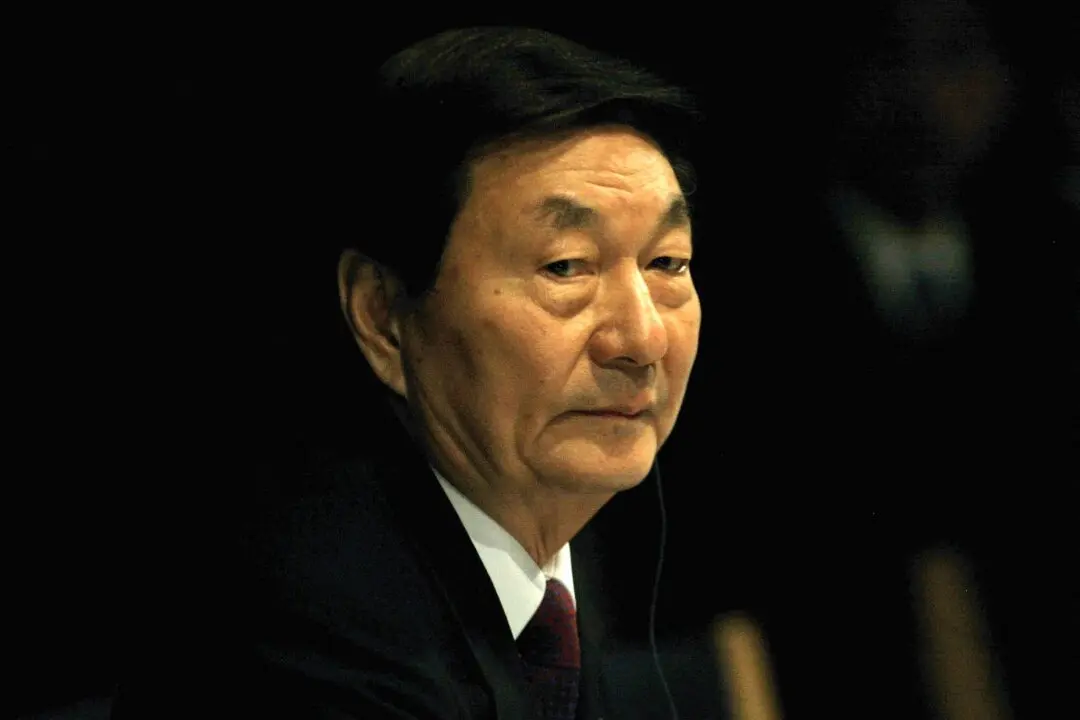
The official mourning for Zhu Rongji one day later offered a contemporary comparison without the same political choreography.
Zhu, who served as premier under Jiang from 1998 to 2003, died on Aug. 12 at age 98. His remains were cremated at Beijing’s Babaoshan Revolutionary Cemetery on Aug. 18.
Xi and the six other current Politburo Standing Committee members went to Babaoshan. A former CCP leader sent a wreath, according to the official account.
Zhu received the formal honors accorded to a former premier, but there was no comparable Great Hall political gathering, no Xi speech instructing the party to study Zhu’s political example, and no parallel ideological symposium.
The official biography concentrated largely on Zhu’s economic and administrative record, including macroeconomic management, financial and state enterprise reforms, government restructuring, Shanghai’s development, and negotiations surrounding China’s entry into the World Trade Organization.
Even there, however, the official account placed Zhu’s premiership under the CCP Central Committee “with Comrade Jiang Zemin at its core.” It later said that after retirement Zhu supported the central leadership headed by former CCP leader Hu Jintao and subsequently the leadership centered on Xi.
The personnel choreography also differed.
Hu, whose leadership had faced repeated conflict with Jiang-linked political interests, was specifically named as having sent the wreath for Zhu. His name was not among the approximately 6,000 people listed in the official account of Jiang’s centenary gathering.
The official reports did not explain Hu’s absence from the Jiang event.
Pressure Before the Next Congress
The events came after another series of removals at the highest levels of the military.
In January, the Chinese Defense Ministry announced investigations into Central Military Commission Vice Chairman Zhang Youxia and Liu Zhenli, chief of the CMC Joint Staff Department, over alleged serious violations of party discipline and law. Both had risen to their current senior positions under Xi.
The CCP Politburo subsequently announced that the Central Committee’s Fifth Plenum would convene in October and take up, among its principal agenda items, a further tightening of party discipline and internal governance.
Chen said Xi is therefore working in two directions ahead of the 21st Party Congress—continuing to strike at perceived political opponents while seeking accommodation with other established CCP interests.
In Chen’s assessment, the conspicuous treatment of Jiang belongs to the second effort.
Feng said bringing some previously hostile interests back into Xi’s camp would not end the internal struggle.
“The fighting and infighting between them will not stop,” he said. “The competition for positions ahead of the 21st Party Congress has already become white-hot.”