China’s ongoing trend of rising high-tech exports amid fading domestic consumption, as borne out in the official data for May, points to structural and economic problems, according to analysts.
Retail sales, a key indicator of consumption, fell 0.6 percent in May for the first time since December 2022, according to data from the Chinese regime’s National Bureau of Statistics. Domestic investment also slumped, with fixed-asset investment falling 4.1 percent in the first five months of 2026, compared to a 1.6 percent decline in January–April.
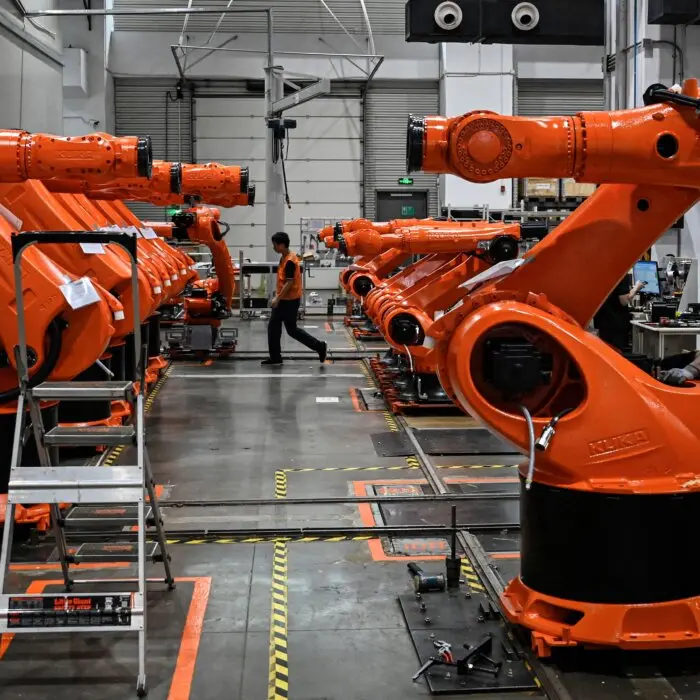
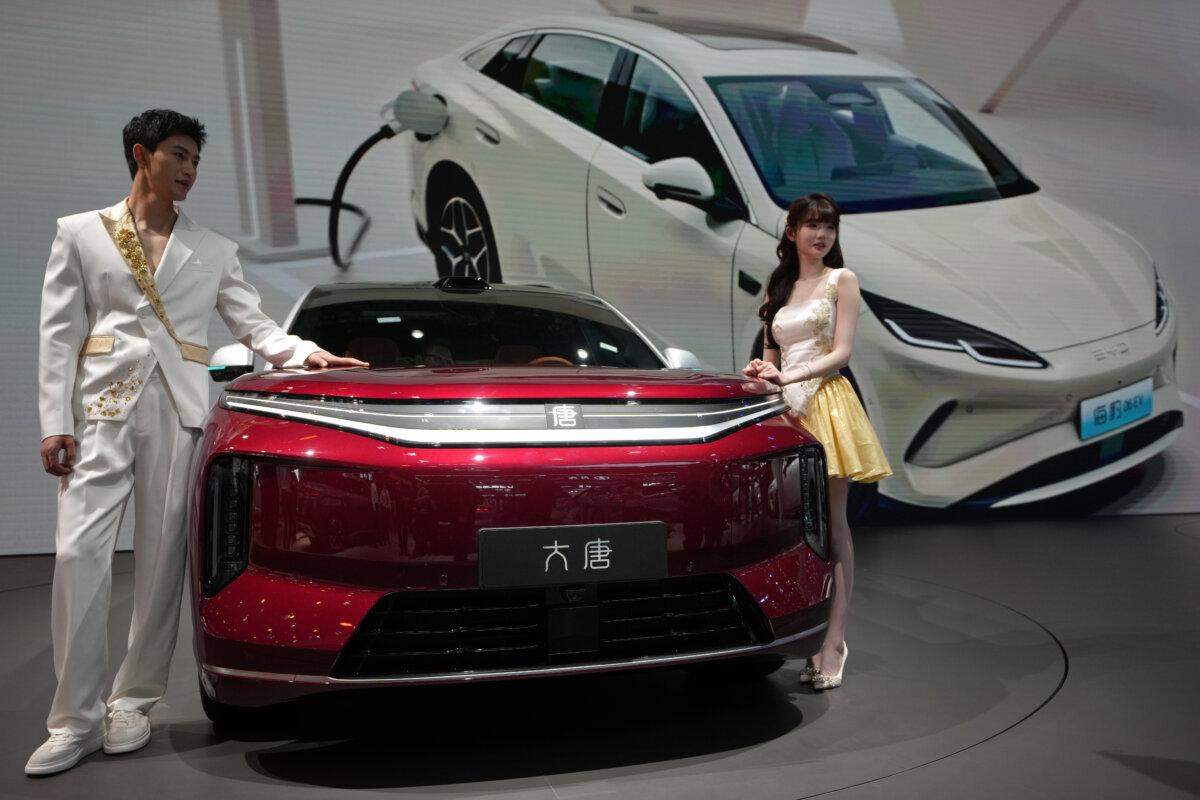
By contrast, industrial output rose 4.5 percent year-on-year, driven by a surge in AI and related products, as high-tech manufacturing output rose 15.1 percent. Specifically, the output of industrial robots surged by 28 percent, lithium battery production grew by 40 percent, and 3D printing equipment output increased by 54 percent.
“To some extent, robust exports in May are not a sign of a healthy Chinese economy; rather, they represent exports forced by the inability of domestic consumption to absorb the country’s massive production capacity,” Sun Kuo-hsiang, a professor of international affairs and business at Nanhua University in Taiwan, told The Epoch Times.
With China’s weak domestic demand and a sluggish real estate sector, the domestic market cannot absorb the massive production capacity generated by local government initiatives and the Chinese regime’s industrial policies, he said. “To maintain operating rates, cash flow, and employment, Chinese enterprises have no choice but to compete through price cuts and expand exports.”
U.S.-based independent political economist Davy J. Wong told The Epoch Times that the imbalance is a result of a series of policy issues, including substantial funds being poured into infrastructure and export subsidies, leaving the household sector without adequate support.
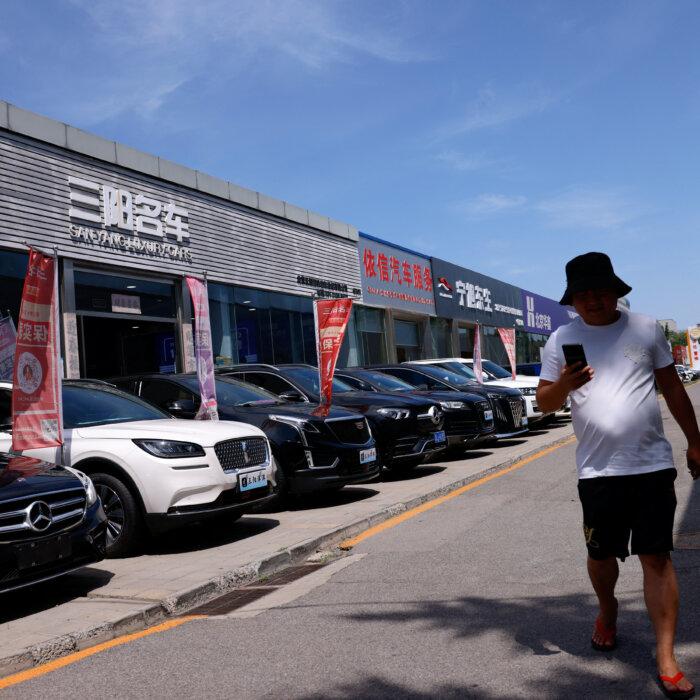
Meanwhile, he said, the Chinese regime is putting vast resources into the “new energy” industries—namely electric vehicles, solar power products, and lithium batteries—while traditional industries, which previously held a competitive edge, haven’t received a comparable level of support.
Besides benefiting from cheap labor, in certain industrial sectors, China has competed with other countries by “leveraging lower environmental and other costs,” Wong said of the export surge in some high-tech sectors.
“This unique competitive advantage does not necessarily stem from technological progress or management efficiency, but is instead closely linked to China’s distinctive political-economic system,” he said.
Structural Problems Persist Despite Incentives
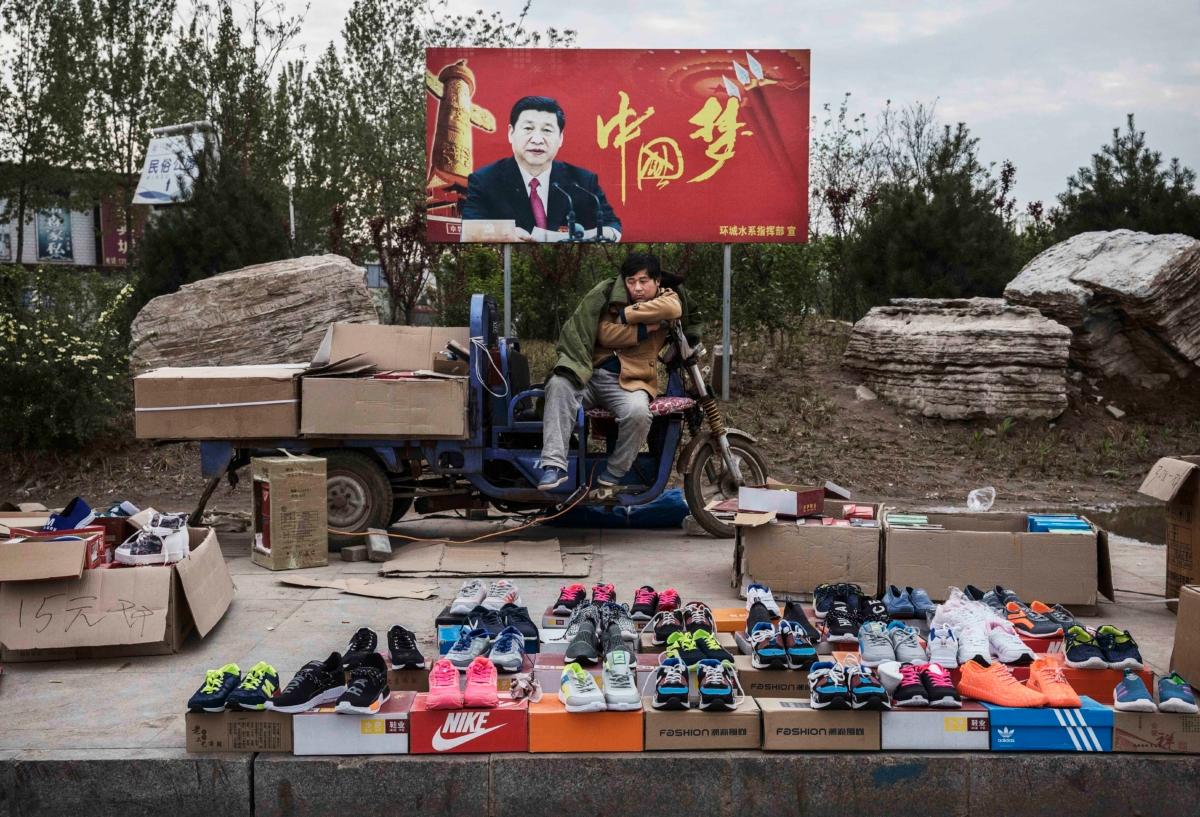
Faced with sluggish consumption in recent years, the Chinese regime has successively rolled out stimulus measures—such as subsidies, consumer goods trade-in programs, and consumer vouchers—yet the public remains reluctant to spend or invest.
“Unless Beijing increases the share of national income going to household earnings, strengthens social safety nets—such as pensions, healthcare, and unemployment benefits—and addresses issues surrounding real estate and local government debt, relying solely on measures like consumption vouchers and trade-in programs will make it difficult for consumption to truly become the primary engine of economic growth,” Sun said.
These subsidies and even cash handouts are relatively small sums and mere temporary measures, Wong said. “The truly heavy burdens weighing on ordinary Chinese citizens stem primarily from inadequate social security and an excessive tax burden. Specifically, the balance sheets of ordinary people have deteriorated drastically.”
The majority of household wealth in China is concentrated in real estate, he said. “As the property market remains sluggish, both middle-class and low-income families feel they are rapidly becoming poorer, with some even slipping back into poverty.”
When total household wealth shrinks, the immediate reaction is inevitably to cut back on consumption, Wong said. “Consequently, this negative economic factor cannot be altered by the minor benefits offered through consumption vouchers.”
China’s property investment extended its decline in the first five months this year, dropping 16.2 percent compared with the same period last year after falling 13.7 percent in January-to-April. Property sales and new construction also fell more sharply.
In addition, unlike in typical Western nations, Chinese families must shoulder the heavy burdens of education, healthcare, and elderly care on their own, Wong said. “Inadequate social security compels families to drastically curtail future consumption spending.”
Strictly speaking, China has never truly developed an economy driven by domestic demand with household consumption at its core, Wong noted. “The real estate development boom and large-scale infrastructure projects across the country are both results of government intervention in the economy.”

The deeper reasons lie in China’s economic and political systems, he said. “First, there is severe inequality in income distribution. A vast amount of China’s wealth is concentrated in the hands of a monopolistic ruling class and interest groups deeply intertwined with power.”
Beijing’s policymakers have long emphasized building an industrial powerhouse, the expansion of the state sector at the expense of the private sector, and a reliance on policy-driven initiatives and industrial planning, seeking to alter market dynamics through administrative power, Wong said.
“However, genuinely expanding domestic demand requires ceding economic benefits to households,” he said. “Yet, under a mindset that prioritizes a strong state over a prosperous populace and favors state expansion over private enterprise, such a policy direction is difficult to truly realize.”
A Vicious Cycle
In recent years, China’s economy has continued to decline, yet vast state resources have been poured into the technology sector and export subsidies.
Sun said it’s not that Beijing fails to recognize the importance of domestic demand, “rather, the existing development model remains better suited to expanding production and exports, while there is an unwillingness to genuinely transfer income and resources to the household and citizens’ livelihood.”
Sun describes China’s current economic situation as a “stalled transition.” He notes that the old growth model driven by real estate and infrastructure has reached its limits and can no longer effectively spur expansion, “yet a new model cannot be established because reforms regarding the political and economic system and income distribution remain incomplete.”
If Beijing continues to rely on industrial subsidies and exports rather than genuinely sharing economic gains with the public, China’s economy risks becoming trapped in a precarious, self-reinforcing cycle of low consumption, overcapacity, external trade friction, and low inflation, Sun warned.
“If this cycle persists, Chinese enterprises might shift their focus to markets in Southeast Asia, Latin America, and the Middle East, or establish factories directly overseas to circumvent tariff barriers,” he said. However, “it is also possible that trade tensions could spread to a wider range of countries,” Sun said.
Consequently, the Chinese economy is facing a vicious cycle, Wong said.
“Insufficient domestic demand leads to production overcapacity; overcapacity drives reliance on exports; export dependence triggers countermeasures from other countries; these countermeasures put pressure on the profits and employment of Chinese enterprises; and the resulting strain on employment and income further weakens domestic demand,” he said.
Luo Ya, Cheng Mulan, and Reuters contributed to this report.