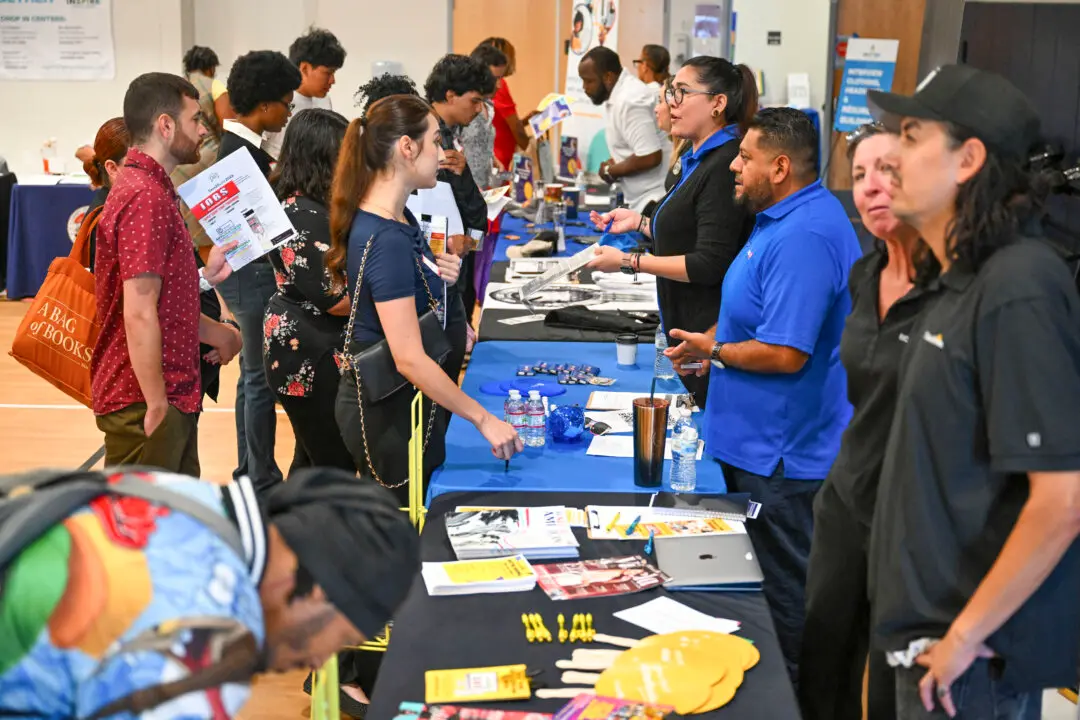
The number of Americans filing applications for unemployment benefits eased from last week’s four-month high as the job market continues to hold steady.
This came in slightly above the market forecast of 225,000.
The four-week average, which strips out week-to-week volatility, ticked up by 4,000 to 223,250.
Momentum in the U.S. labor market has seemingly stalled this month, maintaining the same low-fire, low-hire position of the past two years.
“Despite a strong payroll report in May, this is still a low-hire, low-fire market, and the labor data have yet to point to gathering momentum,” Indeed Hiring Lab economists said in a June 18 research note.

The U.S. economy registered another sizable employment gain in May, adding 172,000 new jobs. Over the past three months, the country has expanded payrolls by 565,000, following the abysmal start to the year.
New data suggest private employers may be pulling back on hiring, according to payroll processor ADP.
In the four weeks ending May 30, the private sector added an average of 25,500 jobs per week, marking the fourth straight week of slowing job growth.
Another sign that it could be getting harder to find work is that continuing jobless claims reached the highest level since early April.
Recurring claims—the number of unemployed people who currently receive jobless benefits—climbed to 1.81 million, from 1.79 million, the Department of Labor reported.
Economists use this measure to gauge the difficulty that people who are out of work might have in locating employment.
Job postings on Indeed have slumped lately despite a strong beginning to 2026, falling by 2.2 percent in May. They are also approaching levels seen before the COVID-19 pandemic.
“Indeed’s Job Posting Index has been hovering around 100 for the past few weeks, and if recent trends continue, it is likely to drop below 100 soon,“ Indeed said. ”Returning to pre-COVID levels of job postings is not inherently concerning, given the strength of the labor market in early 2020, but it is certainly worth watching.”
Balancing the Dual Mandate
At the end of its two-day June Federal Open Market Committee policy meeting, the Fed left the key interest rate unchanged in a current target range of 3.5 percent to 3.75 percent for the fourth straight time.Fed Chairman Kevin Warsh emphasized the importance of the price stability side of the dual mandate, telling reporters at the post-meeting press conference that returning to the central bank’s 2 percent inflation target is crucial.
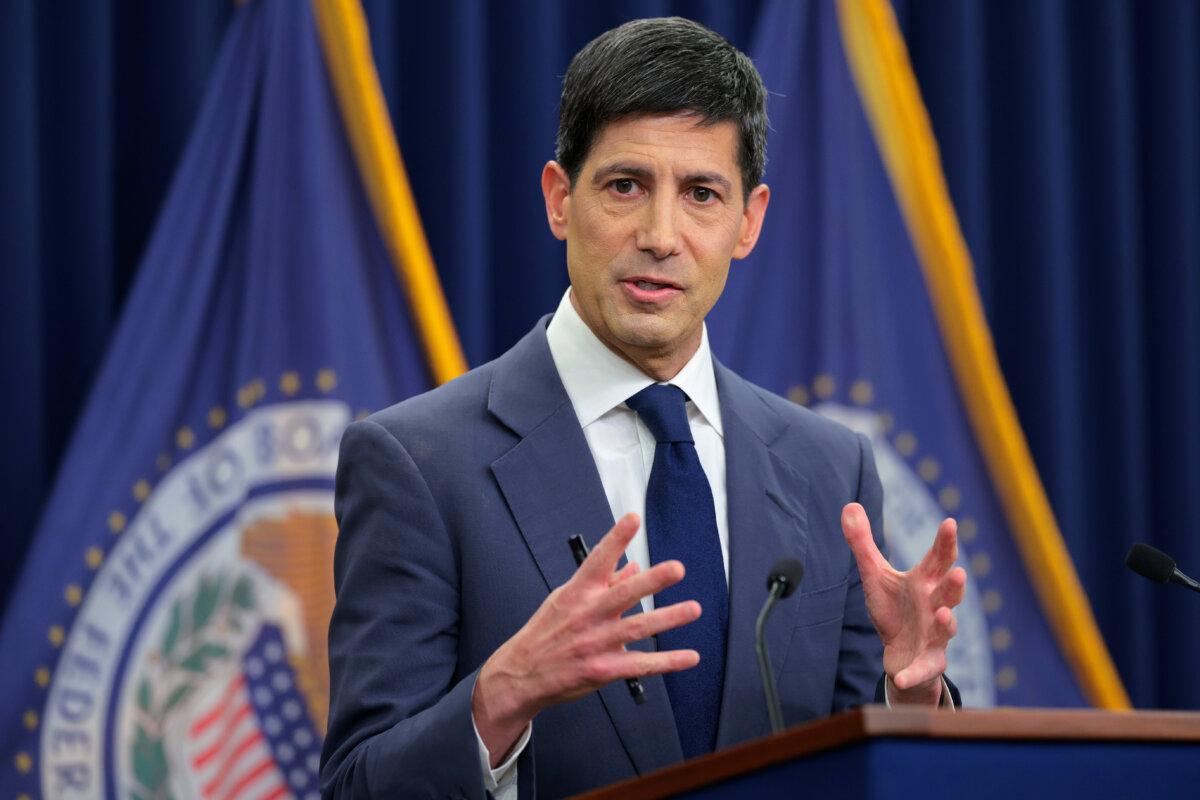
“Inflation has been running well ahead of the Fed’s long-stated inflation goal of 2 percent,” Warsh said in his June 17 opening statement. “That’s been going on for more than five years.”
Warsh said the labor market data have been moving in a good direction, and the Summary of Economic Projections—a quarterly outlook for policy and the economy—shows his colleagues agree.
The median unemployment rate is at 4.3 percent this year, down from the March estimate of 4.4 percent. The jobless rate is also expected to be 4.3 percent in 2027 and 4.2 percent in 2028.
Inflation forecasts were revised higher from the projections three months ago.
The annual personal consumption expenditure inflation rate is expected to be 3.6 percent this year, up from 2.7 percent. It is then anticipated to slow to 2.3 percent next year and 2 percent in 2028.
It was clear inflation was top of mind for the new chairman, economists at RBC Economics said in a June 18 research note.
“By our count, inflation was mentioned by Warsh himself 19 times compared to only 4 mentions of labor during the press conference,” they wrote. “After Warsh’s opening remarks, the state of the US labor market was not mentioned until over halfway through the question period.”
Although RBC economists said they anticipate that the Fed will leave interest rates unchanged for the rest of the year, investors have fully priced in a rate hike as early as October.