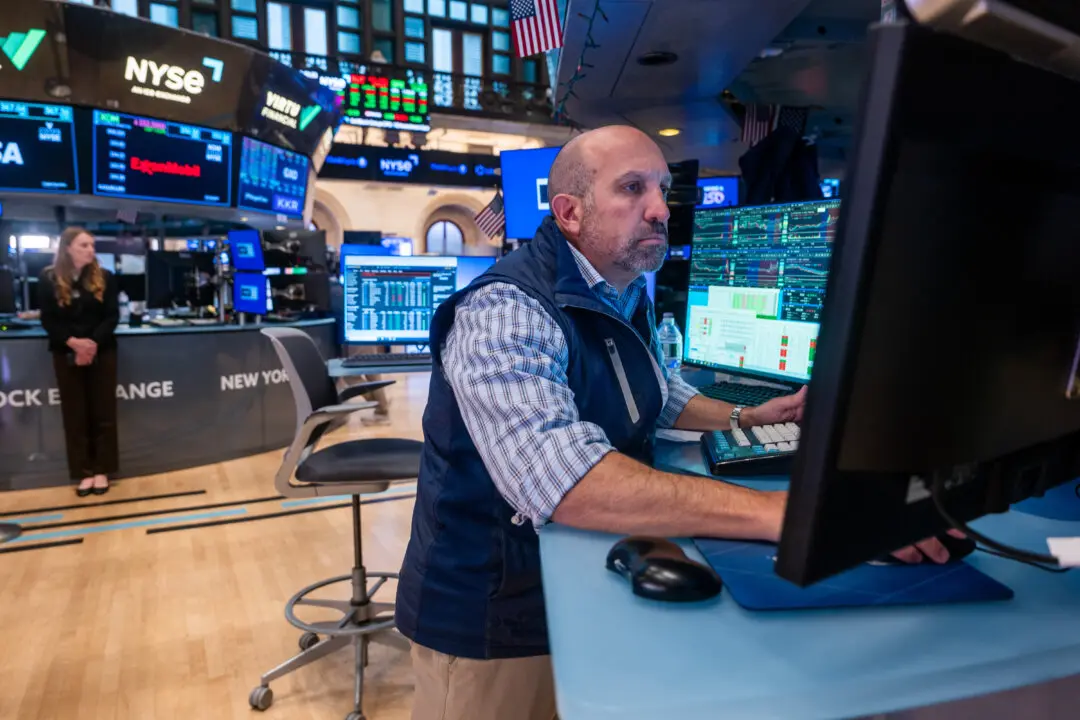
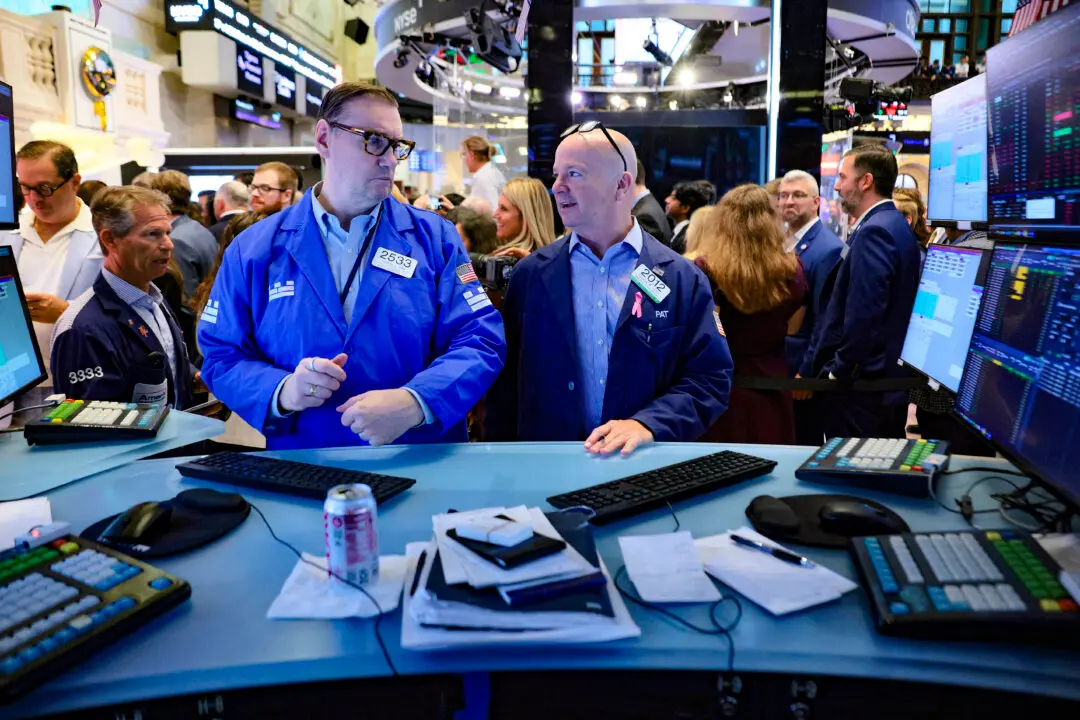
U.S. stocks closed the week lower amid uncertainty over the direction of monetary policy, ongoing tensions in the Middle East, and weak economic data.
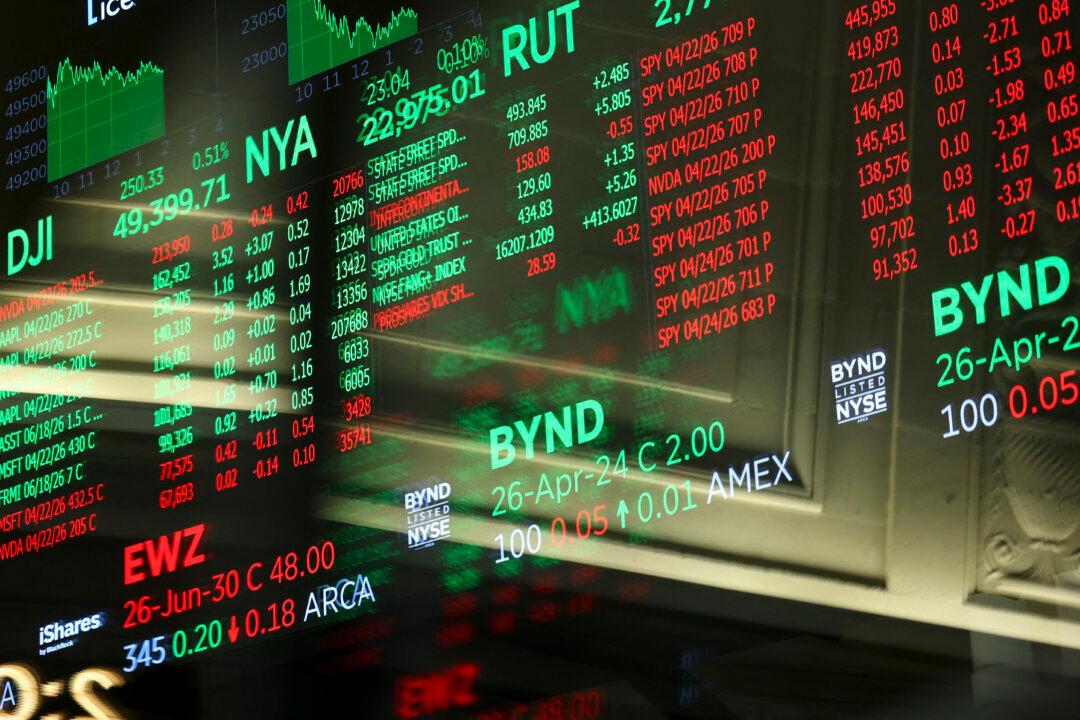
The S&P 500 and the Dow Jones indexes closed on June 20 at 5,967 and 42,206, down by 1.28 percent and 1.77 percent, respectively, for the week. The Nasdaq Composite Index fell by 1.09 percent to 19,447, while the Russell 2000 declined by 1.44 percent.
Wall Street opened the new shortened trading week on June 16 in positive territory as the Middle East conflict, which had brought an abrupt pause to the rally in equities at the end of the prior week, showed signs of de-escalating.
These signs helped push oil prices below $70 per barrel, easing fears of reaccelerating inflation and providing a boost to oil-dependent sectors, such as the airline industry.

Meanwhile, the G7 summit in Canada revived hopes for a swift solution to the trade tensions at the core of the summit’s agenda, adding to the positive sentiment.
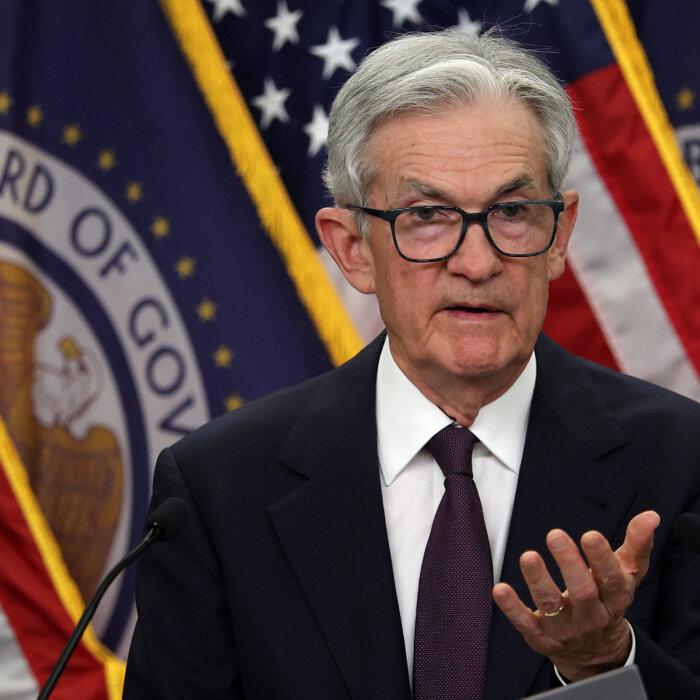
In addition, the anticipation of a relatively dovish statement on monetary policy following the Fed’s regular policy meeting on the afternoon of June 18 added to the bullish sentiment.
The semiconductor sector was robust, with AMD up by nearly 10 percent on the introduction of MI355 artificial intelligence chips to compete against Nvidia. Elsewhere in the tech sector, Meta gained more than 3 percent on plans to introduce advertising to WhatsApp.
The situation changed on the morning of June 17, as bears took the upper hand on Wall Street and hopes of a quick truce in the Middle East faded overnight.
That follows a downwardly revised 0.1 percent drop in April, which was well below the market forecast of a 0.7 percent decline and the most significant decrease in four months.
Bret Kenwell, an investment analyst at eToro, saw a silver lining in the report: The retail sales control group—a key measure used to calculate gross domestic product—rose by 0.4 percent, exceeding expectations of a 0.3 percent gain.
“Overall, it was a fairly tepid headline number,” he told The Epoch Times.
While the stock market has rebounded to near-record highs, Kenwell said, investors may still see volatility in economic data because of the lingering effects of trade policies.
“The economy and the consumer are holding up for now, but there are signs of vulnerability. That could present risks in the second half of the year, particularly if we see a further slowdown in jobs or spending,” he said.
The trade turned choppy on June 18, as a rally in equity indexes ahead of the Fed policy statement faded afterward because of the lack of clarity over the Federal Reserve’s next interest rate move.
“The Fed met, considered a big change environment with significant volatility across policies and geo-political events, and left rates unchanged,” Steve Wyett, chief investment strategist at BOK Financial, told The Epoch Times.
“While not unexpected, it highlights the Fed’s inability to forecast the outcome for growth and inflation.”
He pointed out that the updated statement of economic projections lowered growth expectations slightly and raised the inflation outlook somewhat while maintaining its outlook for two rate cuts this year and reducing the number of cuts next year.
“Interestingly, their long-term target for fed funds [rate] remains at 3 percent, although they do not think they will be at that rate before the end of 2027,” Wyett said.
“The market reaction is relatively muted, which is understandable. The hard data will still lead the Fed to action in the future.”
David Russell, global head of market strategy at TradeStation, said he sees the Fed remaining hawkish on inflation, but it’s becoming less of a surprise for the market.
“Policymakers see more price pressures from tariffs and likely from energy,” he told The Epoch Times.
“These pressures could leave room for positive surprises if falling home prices and weaker growth lead to slower inflation.
“Nobody expected dovish moves from the Fed today, so the statement didn’t significantly impact sentiment. Peak hawkishness might be priced in.”
“The LEI for the U.S. fell again in May, but only marginally,” said Justyna Zabinska-La Monica, senior manager of business cycle indicators at The Conference Board.
“The recovery of stock prices after the April drop was the main positive contributor to the Index. However, consumers’ pessimism, persistently weak new orders in manufacturing, a second consecutive month of rising initial claims for unemployment insurance, and a decline in housing permits weighed on the Index, leading to May’s overall decline.”
This suggests that the Fed may be too slow to cut interest rates, risking a recession—a concerning prospect for equities, she said.
“With the substantial negatively-revised drop in April and the further downtick in May, the six-month growth rate of the Index has become more negative, triggering the recession signal,” Zabinska-La Monica said.